Opportunity for Overseas Education for Minority Students

Comprehensive Schemes for the Development of Minority Communities
India, a land of unity in diversity, is home to numerous castes and communities. To preserve its cultural richness and unity, the Central and State Governments implement various social, educational, and economic schemes for the development of all sections of society, particularly the minority communities, ensuring their inclusion in the mainstream. As per the National Commission for Minorities Act, six religious communities—Muslims, Sikhs, Christians, Buddhists, Jains, and Zoroastrians (Parsis)—are officially recognized as minorities in India.
Overseas Scholarship Scheme
Despite their academic capabilities, many students from minority communities are unable to pursue higher education due to financial constraints. To support such talented students, the government offers the Overseas Scholarship Scheme.
For the financial year 2025–26, a provision of ₹15.15 crore has been made. Students applying for postgraduate courses must have a minimum of 55% marks in their undergraduate degree. The upper age limit is 35 years for postgraduate studies and 40 years for PhD courses. Only those students whose family income does not exceed ₹8 lakh annually, and a maximum of two students from a single family, are eligible. A total of 75 students are awarded scholarships under this scheme.
Applicants should not be beneficiaries of any other foreign education scholarship from the central or state governments or other institutions. They must be enrolled as full-time students in courses with a minimum duration of two years. Executive degrees, diplomas, or part-time courses are not eligible.
Infrastructure and Educational Support
Grants are provided for infrastructure facilities in government-approved private aided, unaided, and special schools and colleges with a high minority student population. In FY 2024–25, this scheme was implemented in 245 schools.
To encourage talented students from minority communities to pursue higher and professional education, another scholarship scheme supports students from families with an annual income of less than ₹8 lakh. It offers ₹50,000 (or actual fees) for medical, paramedical, technical, and professional courses, and ₹5,000 for post-secondary arts, commerce, and science courses.
To provide basic civic facilities in minority-concentrated areas, municipal corporations are granted up to ₹20 lakh, Class A municipalities ₹15 lakh, and Class B and C municipalities ₹10 lakh.
Government officials and staff are trained to research and resolve challenges faced by minorities in accessing education, healthcare, housing, employment, credit, and other basic services.
Skilling and Employment-Oriented Education
Vocational education for Muslims, Buddhists, Christians, Sikhs, Parsis, and Jains is being promoted through Industrial Training Institutes (ITIs) and hostels in minority-dominated areas like Mandvi and Chandivali in Mumbai. Second and third shift batches have been started to benefit 4,416 students. Government polytechnics have also introduced second-shift courses to impart job-oriented training.
A budget provision of ₹0.40 crore has been made to support the dietary needs of students residing in hostels.
Housing and Educational Infrastructure
Under the Prime Minister’s Jan Vikas Program, initiatives like hostel and school construction aim to improve living standards and provide basic facilities to minorities. A total fund of ₹200 crore has been allocated—₹80 crore from the state and ₹120 crore from the center.
For promoting higher education among girls, ₹3 crore has been allocated to construct hostels in 25 minority-dominated districts. Forty-three towns in these districts have been declared minority-concentrated areas. The State Minority Commission also conducts pre-recruitment training for government services and Marathi language foundation classes for minority candidates.
Through the support of the Commission and the Women’s Economic Development Corporation, grants are provided for self-help groups to uplift underprivileged minority women.
Madarsa Modernization and Urdu Language Promotion
Under the Dr. Zakir Hussain Madarsa Modernization Scheme, ₹11.55 crore was distributed to 190 eligible madarsas in FY 2024–25. Alongside religious education, students in 165 madarsas are also taught science, mathematics, social studies, Hindi, Marathi, English, and Urdu to bring them into the mainstream.
Urdu literary centers, known as “Urdu Ghars,” are operational in Nanded, Malegaon, and Solapur, with another under development in Nagpur. These centers aim to promote Urdu literature and foster intellectual exchange between Marathi and Urdu writers, poets, and thinkers.
Other Development Initiatives
Schemes are also in place for religious area development, skill training for women in self-help groups, youth and women’s empowerment, and pre-recruitment training for police jobs—all led by the Minority Development Department.
The opportunity for minority students to study abroad is not just a step toward individual progress but a stride toward the upliftment of their entire community. Therefore, students from minority groups are encouraged to take advantage of the government’s overseas education scheme and chart a new course for their future.
Maharashtra Shuts Schools Across Several Districts as Heavy Rain Alert Triggers Safety Measures
Mumbai, July 2026: Authorities across several districts in Maharashtra have declared a hol…
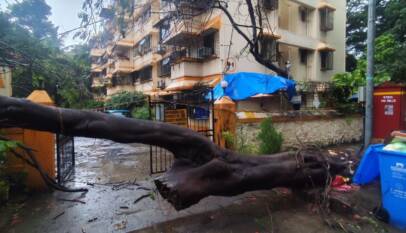
Maharashtra Shuts Schools Across Several Districts as Heavy Rain Alert Triggers Safety Measures
Mumbai, July 2026: Authorities across several districts in Maharashtra have declared a holiday for …