Trump and Putin Share Stage After High-Stakes Alaska Talks but Leave Ukraine Peace Deal Unfinished

First joint press conference in seven years highlights cautious progress, historic symbolism, and unresolved divides over war settlement
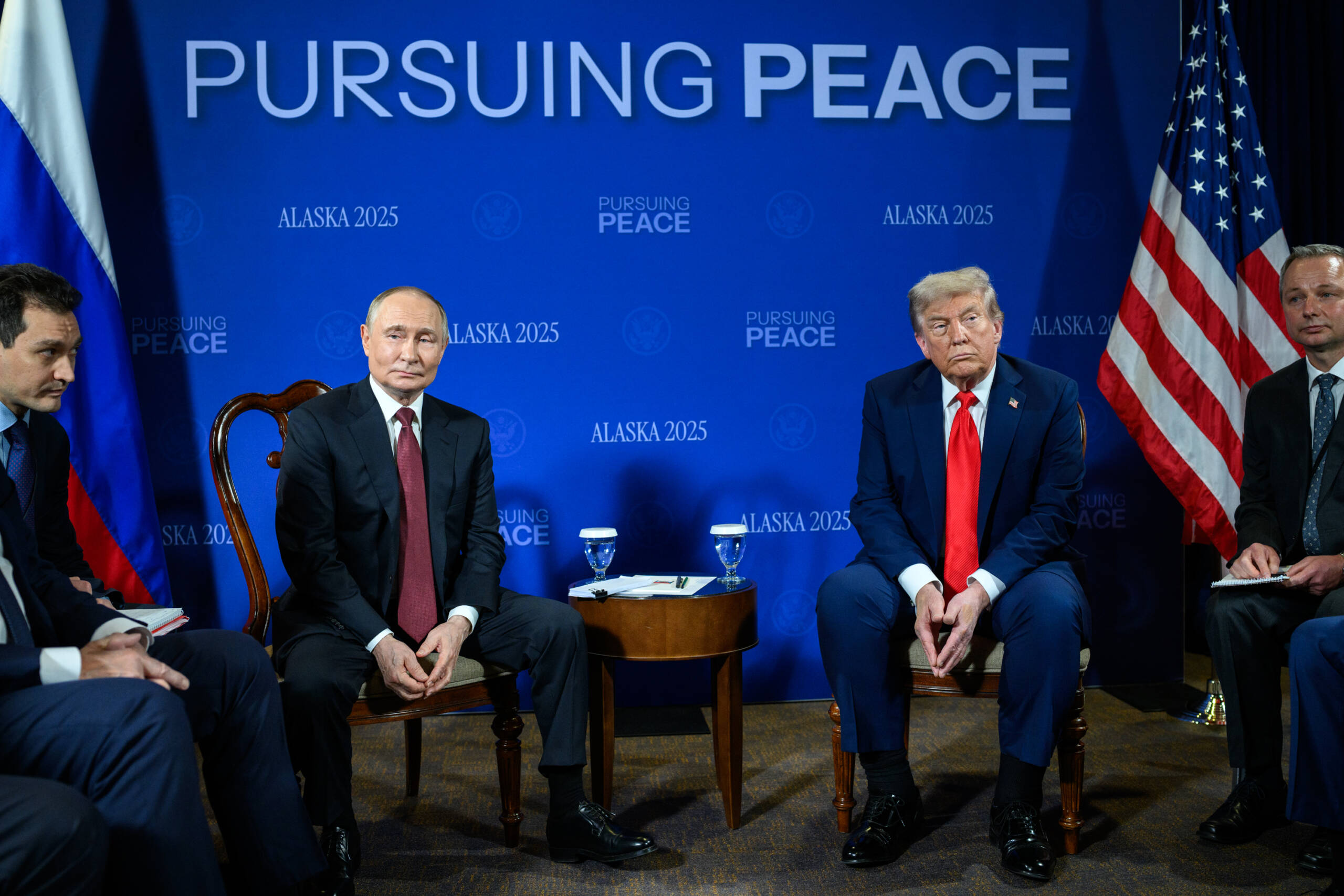
Alaska Aug 2025 — US President Donald Trump and Russian President Vladimir Putin stood side by side on Friday after nearly three hours of talks in Alaska, their first joint news conference in seven years. While both leaders hailed the discussions as “productive” and promised further engagement, neither offered concrete details of a breakthrough on Ukraine, leaving the war’s future clouded in uncertainty.
The press conference itself was a significant moment. Not since Helsinki in 2018, when Trump was heavily criticized for appearing to side with Russia over US intelligence agencies, has Putin shared a stage with an American president. President Joe Biden deliberately avoided a joint appearance in Geneva in 2021, underscoring the rarity of such an event.
This time, however, Trump welcomed Putin to Anchorage with ceremonial warmth. The two spoke briefly on a red carpet before slipping into a limousine together, chatting on the way to Joint Base Elmendorf-Richardson. Yet the high-stakes encounter unfolded in unexpected ways that underscored both the symbolism and the fragility of the diplomatic moment.
Talks Begin with Expanded Delegations
The meeting had originally been billed as a phased affair: one-on-one talks, followed by expanded sessions with senior officials, and then a working luncheon. Instead, Trump and Putin bypassed the private opening session and launched directly into a meeting that included two senior aides on each side.
On the US side, Trump was flanked by Secretary of State Marco Rubio and Special Envoy Steve Witkoff. Putin was joined by Foreign Minister Sergey Lavrov, Defense Minister Andrei Belousoy, and foreign policy aide Yuri Ushakov. The adjustment in format, aides said, reflected the leaders’ desire to “get straight to substance.”
Whether the larger luncheon session would take place remained unclear by the time the press conference began. Instead, the two leaders appeared before reporters earlier than expected, heightening speculation about the outcome of the talks.
Breaking Protocol at the Press Conference
In joint press conferences hosted by American presidents, it is customary for the US leader to speak first. But in Anchorage, Putin broke tradition, stepping up to the microphone while Trump stood silently a few feet away.
“Good day, dear neighbor, hope you’re well,” Putin began in Russian, referencing the greeting he said he had offered Trump on the tarmac. He leaned heavily on history, invoking Alaska’s past as Russian territory and stressing “geography and shared history” as ties binding the two nations.
“An in-person meeting was long overdue,” Putin said, adding that he and Trump now have “very good direct contact.” He cast the discussions as the start of a dialogue aimed at restoring partnership, not rivalry.
Only later in his remarks did Putin mention Ukraine, saying the leaders had agreed to “pave the path to peace.” Yet he avoided specifics, speaking instead about the need to address the “root causes” of Russia’s security concerns. Such language has long signaled demands that Kyiv and Europe reject, including the removal of President Volodymyr Zelensky’s government.
Trump: ‘No Deal Until There’s a Deal’
Trump followed with remarks that were at once upbeat and cautious.
“We haven’t quite got there, but we’ve got some headway,” he said. “There’s no deal until there’s a deal.”
He acknowledged that while progress had been made, no formal ceasefire agreement had been reached. “One is probably the most significant,” Trump said cryptically. “We didn’t get there, but we have a very good chance of getting there.”
He reiterated that the United States was not negotiating on Ukraine’s behalf: “I will call up NATO, the various people that I think are appropriate, and of course President Zelensky, and tell him about today’s meeting. But it is up to Ukraine to make a deal.”
Neither Trump nor Putin took questions from reporters, a move that frustrated correspondents but underscored the leaders’ control over the narrative.
Historic Symbolism, Lingering Divisions
The very fact of the joint appearance was seen as a diplomatic statement. Russian Ambassador to Washington Alexander Darchiev described the talks as “generally positive,” while state-run Tass reported that Putin conferred briefly with Press Secretary Dmitry Peskov before heading to the news conference.
Still, beneath the smiles and handshakes, fundamental divisions remained. Putin repeated familiar themes, calling Ukrainians “a brotherly people” and describing the war as “a tragedy for us and a terrible wound.” He said Russia was “sincerely interested in putting an end to it” but avoided committing to concrete steps.
Trump, for his part, set a clear marker before leaving Washington: “I won’t be happy if I walk away without some form of a ceasefire.” After the meeting, he acknowledged that standard had not been met.
“This is really setting the table today,” he said earlier in the day. “We’re going to have another meeting, if things work out, very soon — or we’re not going to have any more meetings at all, maybe ever.”
Global Stakes and Regional Ripples
The outcome of the Alaska summit carries significant implications beyond Ukraine. For Europe, it could mean the difference between escalating instability and the start of de-escalation. For India, it could determine whether a threatened 25 percent tariff on Russian oil imports materializes.
Markets watched closely for signals. A ceasefire, even preliminary, could stabilize energy prices, ease inflationary pressures, and calm trade disruptions. Failure, on the other hand, risks prolonging volatility and deepening geopolitical fractures.
Putin himself sought to frame the talks in broader terms, warning European states not to “torpedo the nascent progress” of the Anchorage discussions. He emphasized economic cooperation with the US and suggested that Russia was open to business ties once hostilities subside.
Echoes of Helsinki, Avoidance of Geneva
The Alaska press conference inevitably drew comparisons with past summits. In Helsinki in 2018, Trump faced a firestorm after appearing to accept Putin’s denial of Russian interference in the 2016 US election over his own intelligence agencies’ findings. The joint appearance was seen as a low point in American diplomacy.
By contrast, Biden in 2021 took no such risk, choosing to brief reporters alone after his Geneva meeting with Putin. The absence of a joint stage denied Moscow the opportunity to shape the narrative.
Anchorage represented a middle path: Trump gave Putin the platform but sought to balance symbolism with restraint. Unlike in 2018, Trump avoided effusive praise, instead stressing that progress remained incomplete.
Looking Ahead
Whether the Alaska talks represent a turning point or merely another chapter in stalled diplomacy remains unclear. Trump indicated that further meetings were possible but not guaranteed. Putin, meanwhile, left his options open, projecting optimism without committing to specifics.
Both leaders agreed on one point: the war cannot continue indefinitely. “We have to amend the situation to move on from confrontation to dialogue,” Putin said. “However strange it may sound in these conditions, we have the same roots. Everything happening is a tragedy.”
Trump echoed the sentiment, though with his trademark conditional phrasing: “There were many, many points that President Putin and I agreed on. But one of the biggest ones — we haven’t quite gotten there yet.”
As the two men exited the stage without taking questions, the suspense only deepened. The world was left to wonder whether Anchorage would be remembered as the beginning of a peace process — or just another summit that promised much but delivered little.
Team Maverick.



Amarnath Yatra Crosses Four Lakh Pilgrims as Devotees Continue Sacred Journey
Srinagar, July 2026 : The annual Shri Amarnath Ji Yatra achieved a significant milestone o…
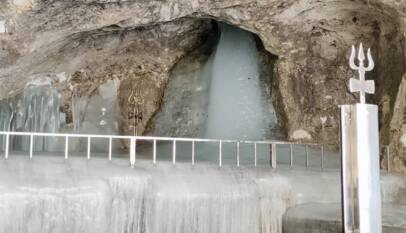
Amarnath Yatra Crosses Four Lakh Pilgrims as Devotees Continue Sacred Journey
Srinagar, July 2026 : The annual Shri Amarnath Ji Yatra achieved a significant milestone …