Amidst Fragile Democracy Manifesting to Gunfire, Grief, Fear, Honduranian’s Gears for General Elections on 30th November.

Way back in the early seventies, when the Legendary Satyajit Ray had penned a fictious name for a book “Honduras-e-Hahakar” ( Panic in Honduras or Honduras Horrors) supposedly written by his creation ‘Jatayu’ he didn’t realise that the same name would prove to be a trendsetter in the global geopolitical scenario in future.
Since December 2022, Honduras has not only restricted rights but also coincided with targeted violence against political activists, candidates, and community leaders in regions like Santa Bárbara and Yoro, highlighting a broader threat to democratic participation and human rights.
The numbers tell their own story. In 2025 alone, at least dozens were killed in crimes linked to political violence, even that not all had a strictly political motive. For a country of just over ten million inhabitants, dozen murders tied to elections are enough to keep people looking over their shoulders on the way to the polling station.
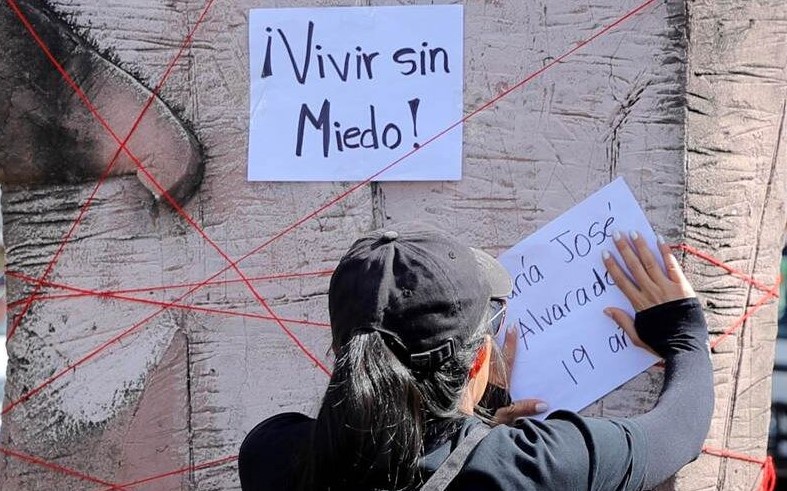
The list of victims reads like a cross-section of Honduran politics. In February, two mayoral candidates from the National Party were gunned down in the northern departments of Atlántida and Yoro. In July, armed men assassinated a sitting mayor from the western department of Intibucá, also from the National Party. In September, the violence crossed party lines again when a congressional candidate from the ruling Libre party in Yoro was killed.
Beyond the murders, there have been persistent reports of threats and intimidation against activists and local leaders from all three major parties: Nacional, Liberal, and Libre. The Presidential campaigns, observers note, have featured more insults and fearmongering than concrete proposals. Threats against election officials, including counsellors and magistrates, highlight the pervasive intimidation that chills voters and underscores the fragile state of electoral integrity, raising alarm for the audience.
On Sunday, despite fears and fatigue, more than six million Hondurans still chose to vote, holding onto hope for change amid a fragile democracy. In Honduras, the election process under a prolonged state of exception underscores a serious threat to democracy, making political violence and restrictions more alarming for the audience.
Since December 2022, a partial state of exception has restricted fundamental rights, such as the rights to move and assemble, in 226 of 298 municipalities, undermining democratic participation in elections.
“Honduras is approaching general elections skewered on a hat that no country aspiring to call itself democratic should tolerate: an electoral process under a state of exception”, wrote Gabriela Castellanos, executive director of the Consejo Nacional Anticorrupción (CNA), in a blunt message on social media, cited by EFE. What was supposed to be an emergency measure, she warned, had turned into “norm, routine, legal anaesthesia”.
For Carmen Julia Fajardo, dean of the Faculty of Social Sciences at the National Autonomous University of Honduras (UNAH), the situation is “alarming, and the curve is going up”, she told the Press, describing a rising tide of political violence that is both physical and symbolic. Women in politics, she added, are being targeted with particular fury, facing attacks that mix misogyny with partisan hatred. Fajardo called for a deeper culture of respect among political leaders, something that feels in short supply in a campaign where insults often land louder than ideas.
Castellanos’s quote on “legal anaesthesia” captures a broader mood. After years of corruption scandals, gang extortion, migration crises, and broken promises, a portion of the population no longer expected elections to bring much change. Others still clung to the belief that a ballot, even cast under the shadow of soldiers and curfews, was worth something.
Honduras walked into this vote with open wounds: a child’s coffin in a rural village, mayors and candidates gunned down, judges threatened, and rights formally suspended in most of the country. Yet people still lined up, voter ID in hand, under the sun and the rain.
The question hanging over the day was not only who would win, but whether the country could begin to step back from a political culture in which bullets, threats, and emergency decrees have become normal. Between the samba of campaign caravans and the silence of fresh graves, Hondurans went to the polls hoping, at the very least, that the next four years would ask less of their fear and more of their hope.
Team Maverick



Deschamps Admits France Fell Short as Spain End World Cup Dream with 2-0 Semifinal Win
Arlington (Texas), July 2026 : France head coach Didier Deschamps admitted his side was ou…

Deschamps Admits France Fell Short as Spain End World Cup Dream with 2-0 Semifinal Win
Arlington (Texas), July 2026 : France head coach Didier Deschamps admitted his side was …