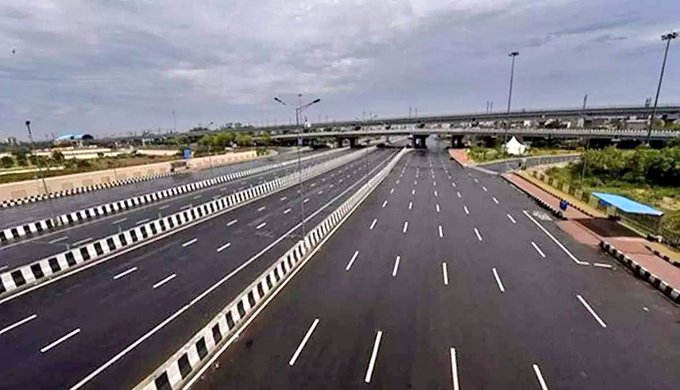
Raipur–Visakhapatnam Economic Corridor to Slash Travel Time to 5 Hours, Power Regional Growth by 2026

New Delhi, Dec 7: The upcoming 6-lane greenfield Raipur–Visakhapatnam Economic Corridor is emerging as a transformative infrastructure project that promises to dramatically reduce travel time between the two cities from nearly 12 hours to just 5 hours, while unlocking massive economic opportunities across central and eastern India. Scheduled for completion by December 2026, the corridor is being developed by the Ministry of Road Transport and Highways (MoRTH) at a total estimated cost of Rs 16,482 crore.
Spanning a distance of 465 km, the access-controlled highway will replace the longer and slower stretch of the existing NH-26, which currently runs about 597 km. The project will thus save 132 km in distance, drastically cutting travel time and delivering major fuel savings, lower logistics costs, and faster freight movement for businesses and transport operators.
Built under the PM Gati Shakti National Master Plan, the corridor will pass through the forested heartland of Chhattisgarh, the mineral-rich districts of Odisha, and the strategic hilly terrain of Andhra Pradesh. Once operational, it will link key production zones directly to the Visakhapatnam Port and the Chennai–Kolkata National Highway, significantly boosting access to national and global markets.
According to the ministry, what once took nearly half a day of exhausting highway travel will soon be completed in less than half that time, ushering in faster logistics, seamless inter-state connectivity, and higher trade efficiency. For industries in Chhattisgarh and Odisha—particularly mining, steel, power, cement, and agriculture—the project is expected to be a game changer by enabling faster exports and smoother supply chains.
Beyond industry, the corridor is also expected to fuel tourism, job creation, real estate development, and rural transformation along its route. From truckers and traders to small farmers and local entrepreneurs, the benefits of the project are already being felt on the ground.
For Vishal, a lorry owner who regularly transports goods between Raipur and Visakhapatnam, the corridor represents a dramatic shift in everyday operations. “Earlier, the journey used to take nearly one and a half days. Once the new highway is ready, I can start in the morning and reach by night,” he said. He added that the shorter distance will reduce diesel consumption, maintenance costs, and driver fatigue—directly improving profitability for transporters.
The ripple effects are also transforming rural land values and farmer sentiments. A farmer from Odisha recalled how agricultural land prices skyrocketed after the highway project gained momentum. “Earlier, our land was valued at around Rs 15 lakh per acre. Now it is close to Rs 1.5 crore. Farmers here are genuinely happy because progress has reached our doorstep,” he said.
Similar emotions are echoed in Vizianagaram district of Andhra Pradesh, where land acquisition for the greenfield highway initially caused anxiety among villagers. “We are farmers. At first, we felt sad to give our land. It was not easy,” said one resident. “But now, as the corridor is getting ready, we feel hopeful. Our land value has more than doubled, and we know this development will bring more opportunities for our children.”
Srinivasulu, a farmer from Jami village, also testified to the transformation. “The value of our remaining land has increased sharply. Villagers are feeling happy about this upcoming greenfield highway. It is changing our future,” he said.
Beyond economics, the corridor will dramatically enhance mobility and access for some of the most remote and tribal districts of the country. Regions such as Dhamtari, Keshkal and Kanker in Chhattisgarh; Borigumma, Nabarangpur and Koraput in Odisha; and Ramabhadrapuram and Araku in Andhra Pradesh will be brought closer to urban markets, healthcare, education and employment hubs. This deeper integration into the mainstream economy is expected to reduce regional disparities and improve overall quality of life.
From a safety and efficiency standpoint, the new access-controlled 6-lane highway, designed for speeds of up to 100 km per hour, will also help decongest the old 2-lane NH-26, which has long been plagued by traffic bottlenecks, accidents, and slow freight movement. The modern corridor will offer better road safety, predictable travel times, and improved comfort for both passenger and cargo traffic.
As India races toward becoming a $5 trillion economy, infrastructure corridors like Raipur–Visakhapatnam are playing a crucial role in knitting together production centres, ports and markets. When the corridor opens in 2026, it is expected not only to reshape transport dynamics but also to redefine the economic geography of large parts of eastern and central India.
Team Maverick.
(The content of this article is sourced from a news agency and has not been edited by the Mavericknews30 team.)








Preserve Maharashtra’s Saint Heritage, Develop Pilgrimage Centres: CM Devendra Fadnavis
Revised Development Plans for Gangakhed, Amravati and Katol Approved; ₹115 Crore Projects …
Preserve Maharashtra’s Saint Heritage, Develop Pilgrimage Centres: CM Devendra Fadnavis
Revised Development Plans for Gangakhed, Amravati and Katol Approved; ₹115 Crore Projects Get Green …