Growing Shift Towards Organic Farming: Farmer Couple Benefits from Natural Agriculture

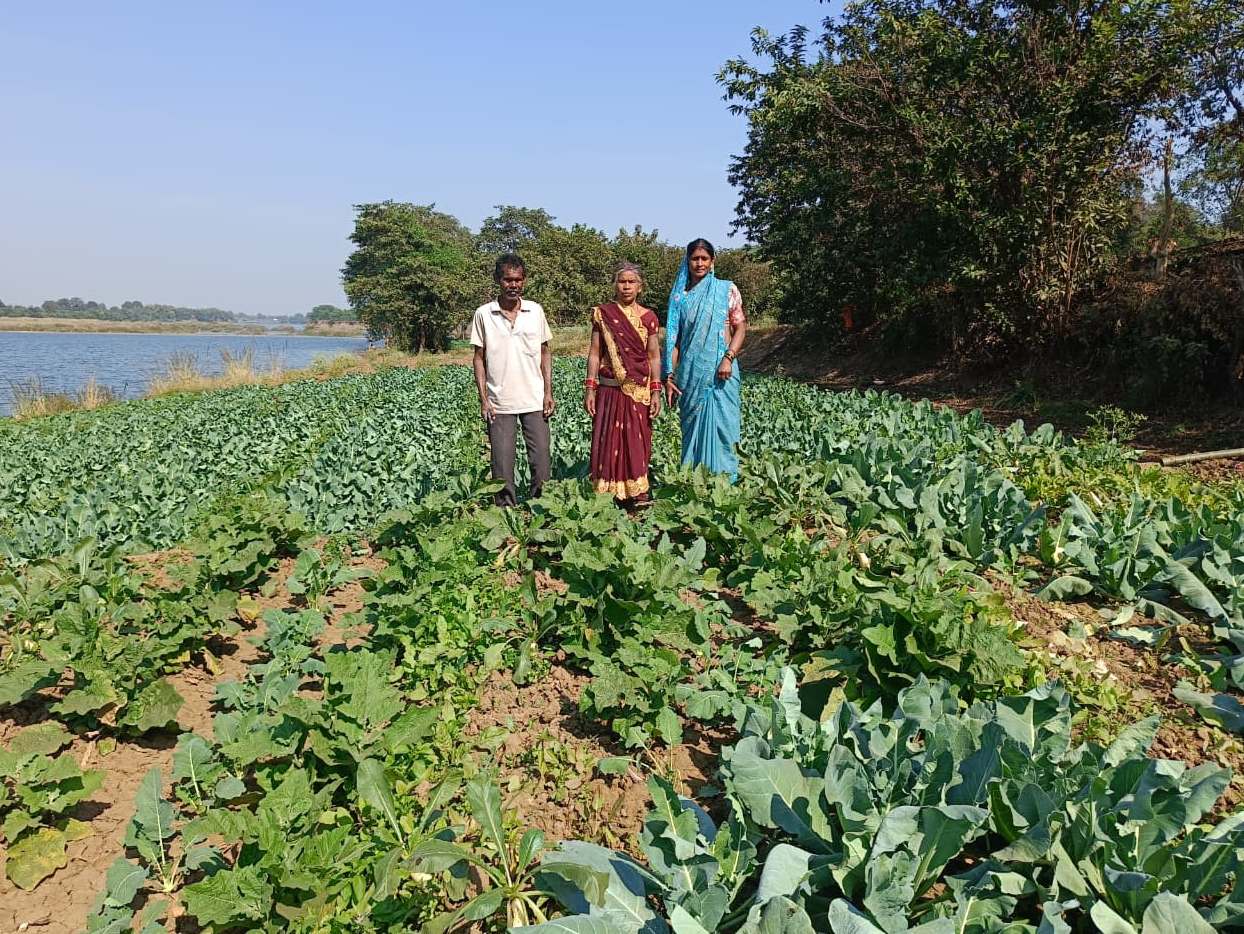
Raipur, January 2026 : The inclination of farmers towards chemical-free and organic farming is steadily increasing across the state. Under the National Mission on Natural Farming, sustained efforts are providing farmers not only with training and technical guidance but also helping them achieve a significant rise in income. By adopting natural farming practices, a farmer couple from Mokhla village in Rajnandgaon district has set a notable example of success.
During 2025, clusters covering 150 hectares were developed in the Rajnandgaon development block under the National Mission on Natural Farming to encourage farmers to take up organic and chemical-free cultivation. As part of this initiative, farmers associated with the Pragati Women Self-Help Group in Mokhla village were trained in the preparation of natural inputs such as jeevamrit, beejamrit, ghan jeevamrit, dashparni ark and other organic formulations, along with guidance on their use at different crop stages.
Among the participants were 68-year-old farmer Mrs Manbhautin Bai Nishad and her 72-year-old husband Mr Makhan Nishad, residents of Mokhla village located on the banks of the Shivnath River. The couple owns a total of 2.34 acres of agricultural land, of which 1.17 acres is owned and the remaining 1.17 acres is taken on lease. Earlier, by cultivating paddy and horticultural crops through conventional methods, they earned an annual income of around ₹50,000 to ₹60,000.
Mrs Nishad said that observing the adverse effects of excessive use of chemical fertilizers and pesticides on health and the environment prompted them to shift to natural farming. Initially, they faced challenges due to lack of information and fears of reduced yield. However, after receiving proper training, their dependence on chemical-based farming ended completely.
She explained that while chemical farming involved an expenditure of ₹20,000 to ₹22,000 per acre, natural farming inputs such as jeevamrit, ghan jeevamrit and neemastra can be prepared at a much lower cost using locally available household materials. The use of cow dung and urine from indigenous cattle, along with soil and local leaves, has improved soil fertility and increased beneficial microorganisms.
As a result of natural farming, the quality of their produce has improved, and organic agricultural products are fetching better prices in the market. Traders are now directly purchasing produce from their fields, strengthening the couple’s financial condition. In the 2025–26 rabi season, they are cultivating vegetables along with tiwra, lentils and mustard using natural farming methods.




Museums will be named after India’s National Heroes, not invaders: Chief Minister
Grand museum named after Chhatrapati Shivaji Maharaj being constructed at a rapid pace: CM…

Museums will be named after India’s National Heroes, not invaders: Chief Minister
Grand museum named after Chhatrapati Shivaji Maharaj being constructed at a rapid pace: CM …