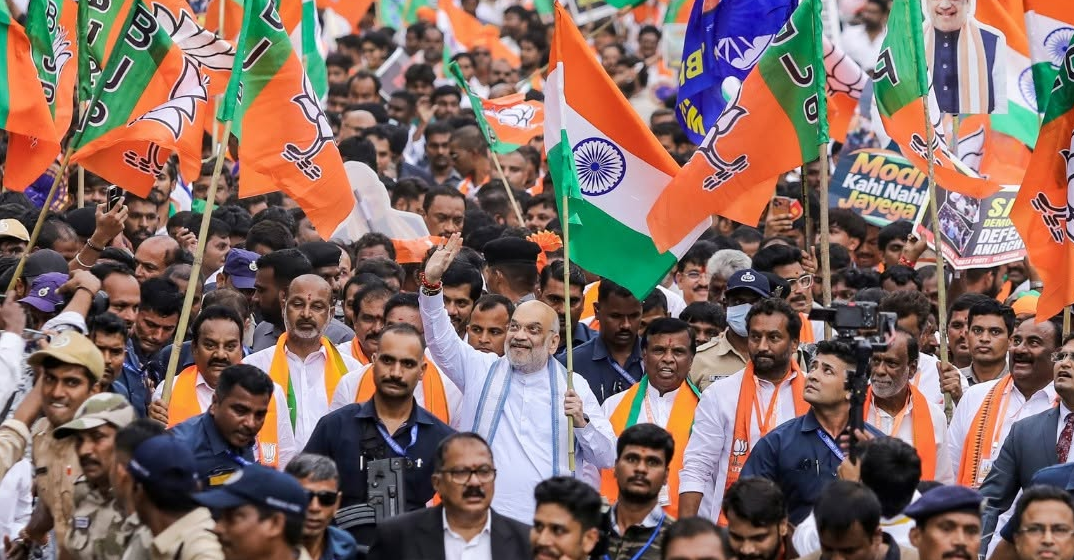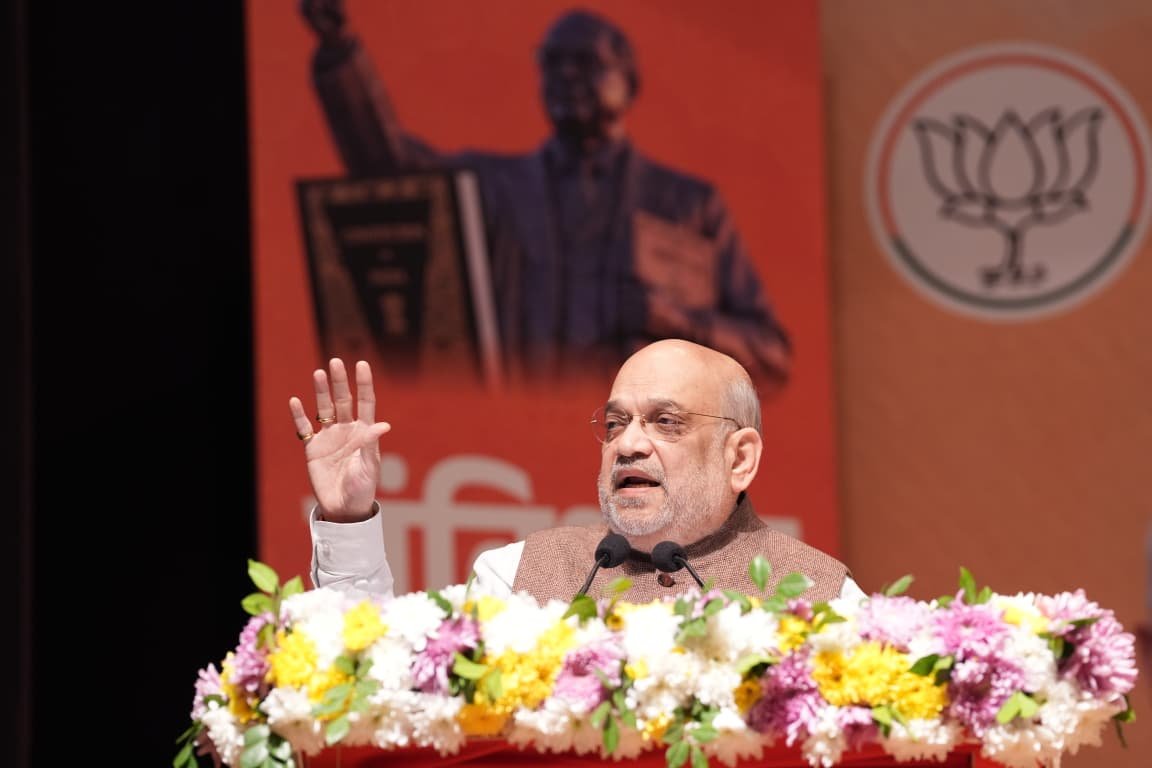
New Delhi, November 2026: Union Home Minister Amit Shah on Thursday launched a sharp attack on opposition parties, particularly the Congress, accusing them of using the Constitution for political appearances without understanding its underlying principles. He urged those who display copies of the Constitution in public to study its original manuscript and appreciate the historical and cultural values reflected in it.
Addressing a gathering on Samvidhan Gaurav Diwas, Shah said the Constitution should not be viewed merely as a legal document or a manual for governance. Instead, he described it as a reflection of India's freedom struggle, the sacrifices of its people and the aspirations of those who fought against British rule.
Paying tribute to freedom fighters, the Home Minister recalled the period between 1857 and 1947, when thousands of people participated in the struggle for independence. He said their sacrifices and aspirations were incorporated into the Constitution by its framers.
“For 90 years, from 1857 to 1947, scores of freedom fighters dedicated their life to ensure the nation's freedom. The result of all those sacrifices were drafted by the Constitution makers into a document. The Constitution carries the hope and aspirations of those freedom fighters,” Shah said.
Constitution Is More Than a Book, Says Shah
The Home Minister said understanding the Constitution required citizens to look beyond its written provisions and examine the principles and historical experiences that shaped it.
Referring to British rule, Shah alleged that fundamental human rights had been severely violated during the 200 to 250 years of colonial domination. He said India, once celebrated for its cultural richness and prosperity, had gradually been reduced to a society affected by an inferiority complex.
He described the Constitution as a roadmap provided by its makers to restore the country's lost confidence, dignity and position.
Shah said the framers had established a democratic system in which citizens would decide who should govern the country. At the same time, they ensured that elected representatives would exercise power within the limits prescribed by the Constitution.
“The makers of the Constitution had decided that people will have the right to decide whom to bring to power. They had also provided a path for those coming to power to rule within the constraints of the Constitution,” he said.
He maintained that every Indian had a responsibility to respect and uphold the Constitution. However, he alleged that after independence, successive governments had largely treated it as an administrative guide, while the task of familiarising citizens with its broader spirit and values received insufficient attention.
Shah Recalls Modi's Decision to Mark Constitution Day
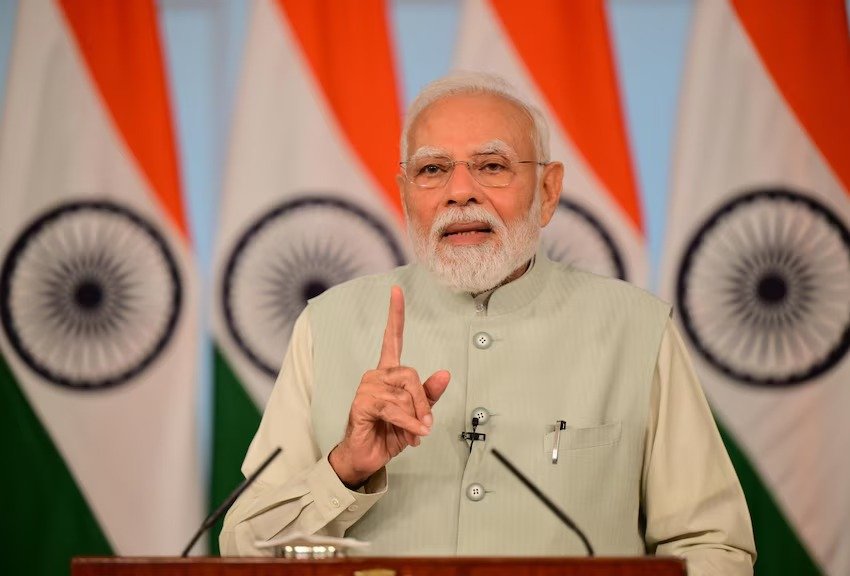
Shah referred to Prime Minister Narendra Modi's announcement in 2015 to observe November 26 as Constitution Day, also known as Samvidhan Gaurav Diwas. He said the initiative was intended to take constitutional values to the people and encourage greater public awareness about the country's founding document.
Highlighting the role of Constituent Assembly Chairman Rajendra Prasad, Shah praised his patience, endurance and ability to accommodate differing viewpoints during the debates on the Constitution.
He said those who studied the proceedings of the Constituent Assembly would recognise Prasad's contribution in ensuring that ideas were considered on their merit, irrespective of the political or ideological background of those proposing them.
Original Constitution Reflects India's Cultural Heritage
The Home Minister also challenged opposition parties that, according to him, were critical of India's cultural traditions. He urged them to examine the original handwritten manuscript of the Constitution, pointing out that it contains illustrations depicting important personalities and episodes from Indian history and civilisation.
Shah listed illustrations of Lord Ram's return to Ayodhya, Lord Buddha, Lord Mahavir, Guru Gobind Singh, Rani Lakshmibai, the Dandi March and Netaji Subhas Chandra Bose.
In an apparent reference to Lok Sabha Leader of Opposition Rahul Gandhi, who has frequently been seen carrying a copy of the Constitution, Shah suggested that he should spend time examining the original manuscript preserved in Parliament.
“Those who roam carrying a copy of the Constitution, I request them to take out 15 minutes, visit the Parliament Library and look at the pictures illustrated (under the leadership of) Nandalal Bose (in the original handwritten manuscript of the Constitution),” he said.
Democracy and Constitutional Institutions
Shah said India had witnessed governments led by different political parties over the decades, but the constitutional framework had ensured continuity in the democratic process.
He argued that citizens from economically weaker backgrounds and those without established political or family connections had also been able to reach positions of power through elections.
According to the Home Minister, public faith in democracy, the Constitution and constitutional institutions had grown over the years. He emphasised that constitutional principles must be reflected in the everyday functioning of institutions and in the treatment of citizens.
“Those who use the Constitution just for show, I urge them to understand it spirit instead of reading it just as a text, which may prove to be beneficial for them in the future,” Shah said.
Shah Highlights Modi Government's Welfare Initiatives
Explaining what he described as the core constitutional values, Shah summarised them through three principles: “coverage, reach, and dignity”.
He said the Modi government had sought to translate these principles into action through welfare programmes and infrastructure development. Referring to the opening of bank accounts for economically weaker sections, he said financial inclusion had helped bring more people into the formal banking system.
He also cited infrastructure expansion and the growth of the digital economy, arguing that these initiatives had improved the delivery of government benefits to the last beneficiary. Ensuring dignity for the poor, he added, was an important part of the government's approach.
The Home Minister also referred to the abrogation of Article 370 in Jammu and Kashmir and the government's efforts to eliminate Naxalism. He claimed that the BJP-led government had resolved problems that had persisted for six decades within 12 years.
Shah's address combined a tribute to the freedom struggle and the Constitution's framers with a defence of the Modi government's policies and criticism of the opposition. His central message was that the Constitution should be understood not merely as a written text, but as a framework embodying India's democratic aspirations, cultural heritage and commitment to the dignity of its citizens.