New Delhi, Sep 2026 : The Cabinet Committee on Security (CCS) is expected to approve Hindustan Aeronautics Limited’s (HAL) ₹13,500 crore design and development plan for the Indian Multi-Role Helicopter (IMRH), marking a major step forward for India’s efforts to build an indigenous medium-lift military helicopter, according to reports.
The proposed approval would move the IMRH programme beyond the costing committee clearance stage and into formal design and development. The ₹13,500 crore allocation is intended to finance the initial phase of the programme, covering detailed design and development before the construction and testing of prototypes.
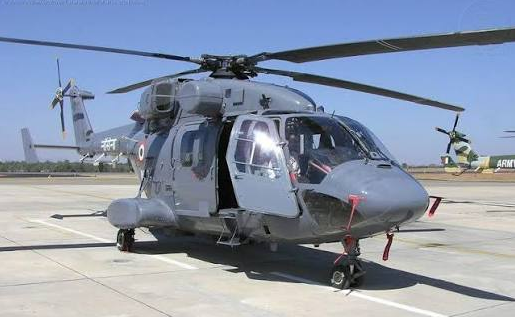
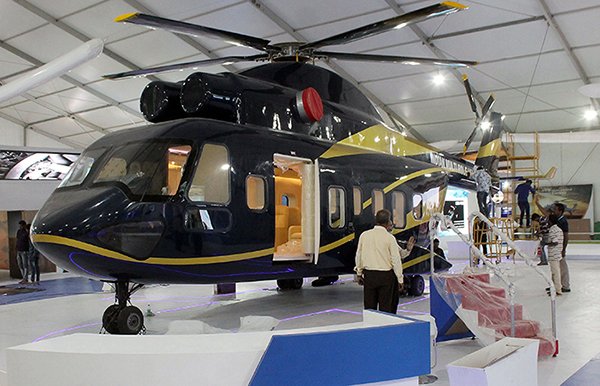
HAL is developing the IMRH as a 13-tonne, twin-engine helicopter for the Indian Army and Indian Air Force. The platform is expected to undertake a wide range of missions, including troop transportation, logistics, disaster relief, humanitarian assistance and combat support. One of its principal objectives is to eventually replace India’s ageing fleet of Russian-origin Mi-17 helicopters, which remains a key component of the country’s military transport and utility helicopter capability.
The programme also has a naval component. HAL is developing the Deck-Based Multi-Role Helicopter (DBMRH) for the Indian Navy, with modifications required for operations from aircraft carriers and other warships. The naval variant is expected to feature folding rotor blades, corrosion-resistant materials and reinforced landing gear, allowing it to withstand the demanding conditions of shipborne operations.
A crucial element of both helicopter programmes is the development of the new-generation Aravalli turboshaft engine. HAL and French aerospace major Safran have finalised a contract for the engine, which will power both the IMRH and DBMRH. The engine is being developed through the SAFHAL joint venture between HAL and Safran Helicopter Engines and is expected to fall in the 3,500–4,000 shaft-horsepower class.
The Aravalli programme is particularly significant for India’s aerospace ambitions because it is intended to cover the complete cycle of design, development, manufacturing, supply and lifecycle support within the country. The contract signed in August 2026 represents a shift from earlier arrangements centred largely on licensed production towards deeper cooperation involving joint intellectual property development.
The engine’s development schedule will have a direct bearing on the helicopter programme. Since both the IMRH and DBMRH are twin-engine platforms, the Aravalli will need to achieve sufficient maturity before it can be fully integrated into the helicopters and subjected to flight testing. HAL is targeting prototype rollout around 2028, flight trials in 2029 and certification by 2031, with progress on the engine expected to remain closely linked to these milestones.
The IMRH programme is also expected to generate substantial demand for HAL’s helicopter manufacturing ecosystem. The planned fleet replacement could eventually cover more than 240 Mi-17 helicopters operated across India’s armed forces. Such an order would give HAL a significant long-term position in the medium-lift rotorcraft segment and provide greater predictability for domestic suppliers involved in avionics, composites, metallurgy, transmission systems and other aerospace components.
The anticipated CCS clearance is expected to unlock funding for detailed engineering, industrial preparation and prototype development. HAL has also outlined plans to invest around ₹12,000 crore by 2030 in advanced helicopter and engine manufacturing infrastructure, potentially creating additional capacity for future military and civilian programmes.
The IMRH is strategically important from an import-substitution perspective. Replacing older Russian-origin helicopters with an indigenous platform could reduce India’s long-term dependence on foreign suppliers for maintenance, spares and upgrades. It could also help mitigate supply-chain vulnerabilities arising from geopolitical tensions and changing international defence relationships.
The Aravalli engine adds another layer of strategic importance. Aircraft propulsion remains one of the most technologically challenging areas of aerospace development, and greater domestic capability in turboshaft engines would strengthen India’s ability to design, manufacture and maintain complex helicopter platforms without excessive external dependence.
The engine could also have applications beyond military helicopters. Potential future markets could include offshore transportation, utility operations and VVIP travel, depending on certification and platform development. A broader customer base could help establish an indigenous ecosystem for maintenance, repair and overhaul (MRO), while generating long-term revenues through engine servicing, upgrades and lifecycle support.
HAL and Safran already have a longstanding association in helicopter propulsion. Their cooperation dates back to the Artouste engines used in India’s Cheetah and Chetak helicopters and later extended to the Shakti engine family powering platforms such as the Advanced Light Helicopter, Light Combat Helicopter and Light Utility Helicopter.
The Aravalli partnership represents a significant expansion of that relationship, with the focus shifting towards a new generation of medium-lift rotorcraft and greater domestic technological ownership.
HAL’s order book has also expanded sharply, reaching ₹2,54,538 crore as of May 2026, compared with ₹1,89,302 crore a year earlier. Against this backdrop, the IMRH and DBMRH programmes could become important long-term pillars of the company’s helicopter business.
If approved by the CCS, the ₹13,500 crore development plan would therefore represent more than a funding decision for a single helicopter. It would set the stage for a new indigenous medium-lift rotorcraft family, strengthen domestic engine technology, expand India’s aerospace manufacturing base and potentially create thousands of skilled jobs across engineering, metallurgy, composites and related industries.
(Disclaimer :The content of this article is sourced from a news agency and has not been edited by the Mavericknews30 team.)