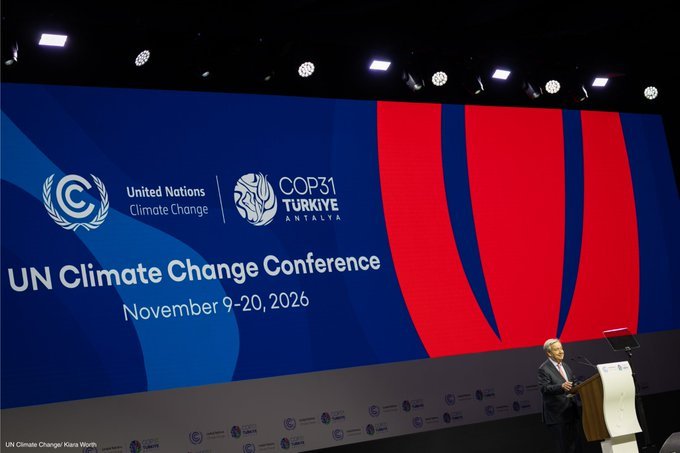
NEW DELHI, Nov 2026 : United Nations Secretary-General Antonio Guterres has expressed serious concern over the growing climate crisis, calling for concrete and effective action to address global warming and reduce dependence on fossil fuels. He stressed that merely acknowledging the threat of climate change would not be enough, and that countries must translate their commitments into meaningful measures to protect the environment and limit greenhouse gas emissions.
Guterres' message comes amid growing global concern over rising temperatures and the increasingly visible effects of climate change. From extreme heat and irregular rainfall to droughts and floods, changing weather patterns are creating challenges for communities, economies and ecosystems across the world.
The UN chief has particularly highlighted the need to reduce reliance on fossil fuels, including coal, petroleum and natural gas, which remain major sources of energy for electricity generation, transportation and industrial activity.
Guterres Stresses Need for Concrete Climate Action
In his message on the climate crisis, Guterres underlined the importance of moving beyond expressions of concern and implementing practical measures to address the problem. He emphasised that climate change is a shared global challenge that requires coordinated efforts by governments and institutions across countries.
The effects of global warming are not confined to any single nation or region. Rising temperatures and environmental changes have implications for agriculture, water availability, public health, livelihoods and economic stability. Addressing these challenges requires long-term strategies supported by effective implementation.
The UN Secretary-General's call for stronger climate action places particular emphasis on reducing fossil fuel dependence, improving energy systems and adopting environmentally sustainable alternatives.
Fossil Fuels and Greenhouse Gas Emissions
Coal, petroleum and natural gas form the backbone of energy production and several industrial processes across the world. However, burning these fuels releases carbon dioxide and other greenhouse gases into the atmosphere, contributing to the greenhouse effect and the rise in global temperatures.
Reducing fossil fuel consumption is therefore an important component of efforts to limit greenhouse gas emissions and tackle climate change.
The transition towards cleaner energy sources is expected to play a significant role in this process. Solar power, wind energy and other renewable energy technologies can help reduce dependence on conventional fuels while supporting growing energy requirements.
Expanding renewable energy infrastructure, improving energy efficiency and adopting cleaner technologies in industries and transportation could contribute to lowering carbon emissions.
Renewable Energy Transition Key to Tackling Global Warming
The shift from fossil fuel-based energy systems to cleaner alternatives is an important part of the wider climate action agenda. Increasing the use of solar and wind power can help countries diversify their energy mix and reduce the environmental impact of electricity generation.
However, such a transition requires investment, technological development and supportive government policies. Countries also need to improve energy efficiency across sectors, including manufacturing, buildings and transportation.
The pace of the transition may vary depending on the economic conditions, technological capabilities and energy requirements of individual countries. Governments therefore face the challenge of balancing environmental protection with economic development and reliable energy access.
Guterres' emphasis on reducing fossil fuel dependence draws attention to the need for practical changes in the way energy is produced and consumed.
Climate Change Increasing Risks to Agriculture and Livelihoods
Rising global temperatures are associated with changes in weather patterns, increasing concerns over extreme weather events and their impact on vulnerable communities.
Heatwaves, irregular rainfall, prolonged dry spells and floods can disrupt agricultural production, damage infrastructure and place pressure on water resources. These developments can also affect food security, public health and the livelihoods of people who depend on agriculture and natural resources.
Farmers and rural communities are particularly exposed to climate-related disruptions because their incomes and production cycles are closely linked to weather conditions. Changes in rainfall patterns and rising temperatures can affect crop yields, water availability and agricultural planning.
Climate-related risks also have implications for cities, where extreme heat and flooding can affect public services, infrastructure and the health of residents.
These challenges underline the importance of reducing emissions while also strengthening preparedness for the effects of climate change.
International Cooperation Essential for Climate Action
The climate crisis requires cooperation among countries because greenhouse gas emissions and their environmental consequences cross national boundaries. No single country can address the challenge independently.
At the same time, countries have different economic capacities, development priorities and energy requirements. Climate policies must take these differences into account while encouraging collective action to protect the environment.
Developing countries, in particular, face the challenge of meeting rising energy demands while pursuing cleaner and more sustainable development pathways. Investment, access to technology and appropriate policy frameworks are important for supporting this transition.
Long-term climate strategies must therefore be accompanied by practical implementation, including greater adoption of renewable energy, improvements in energy efficiency and measures to reduce emissions across key sectors.
Focus on Sustainable Development and Emission Reduction
Guterres' message highlights the urgency of turning climate commitments into measurable outcomes. Reducing fossil fuel dependence, expanding clean energy and strengthening environmental protection are central to efforts to address global warming.
The transition to sustainable energy systems will require coordinated action from governments, businesses and communities. Policies encouraging renewable energy, technological innovation and responsible resource use can help accelerate the shift towards a lower-emission economy.
As climate change continues to pose challenges to ecosystems, economies and human well-being, the UN chief's call reinforces the need for sustained global cooperation and effective action.
His central message is that addressing the climate crisis requires more than statements of concern. Countries must take concrete steps to reduce greenhouse gas emissions, limit dependence on fossil fuels and promote cleaner energy alternatives to safeguard the environment for future generations.
(Disclaimer :The content of this article is sourced from a news agency and has not been edited by the Mavericknews30 team.)