Important Initiative to Establish Dehradun as a Major Centre for Global Disaster Management Discussions
Three-Day International Conference Organised to Mark Three Years Since the Historic Success of the Silkyara Rescue Operation
Experts, Scientists, Academicians and Representatives of Disaster Management Institutions from More Than 50 Countries Participate
Various Sessions of the Conference Being Held Simultaneously Across Six Continents, with Participation from More Than 30 States and Union Territories
Extensive Discussions to Be Held on Modern Technology, Innovation, Research and International Cooperation in Disaster Management
Special Discussions on the Vulnerability of Himalayan Regions, Climate Change and Strategies to Deal with Natural Disasters
Chief Minister Says: The Objective of Disaster Management Should Not Be Limited to Relief and Rescue, but Should Include Risk Prediction, Preparedness and Building a Safe Future
Emphasis on Giving the Highest Priority to Environmental Balance and Human Safety in Development Plans
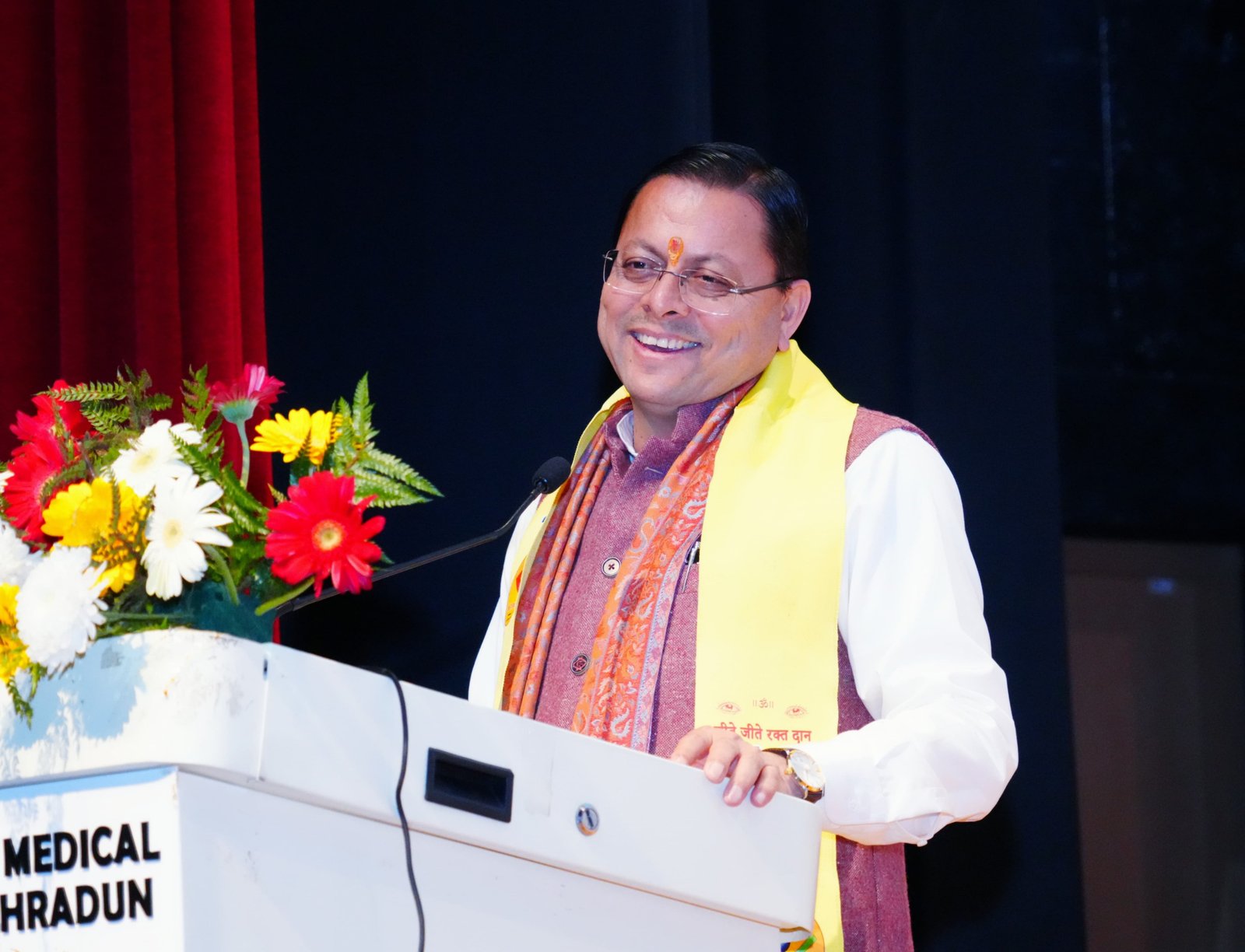
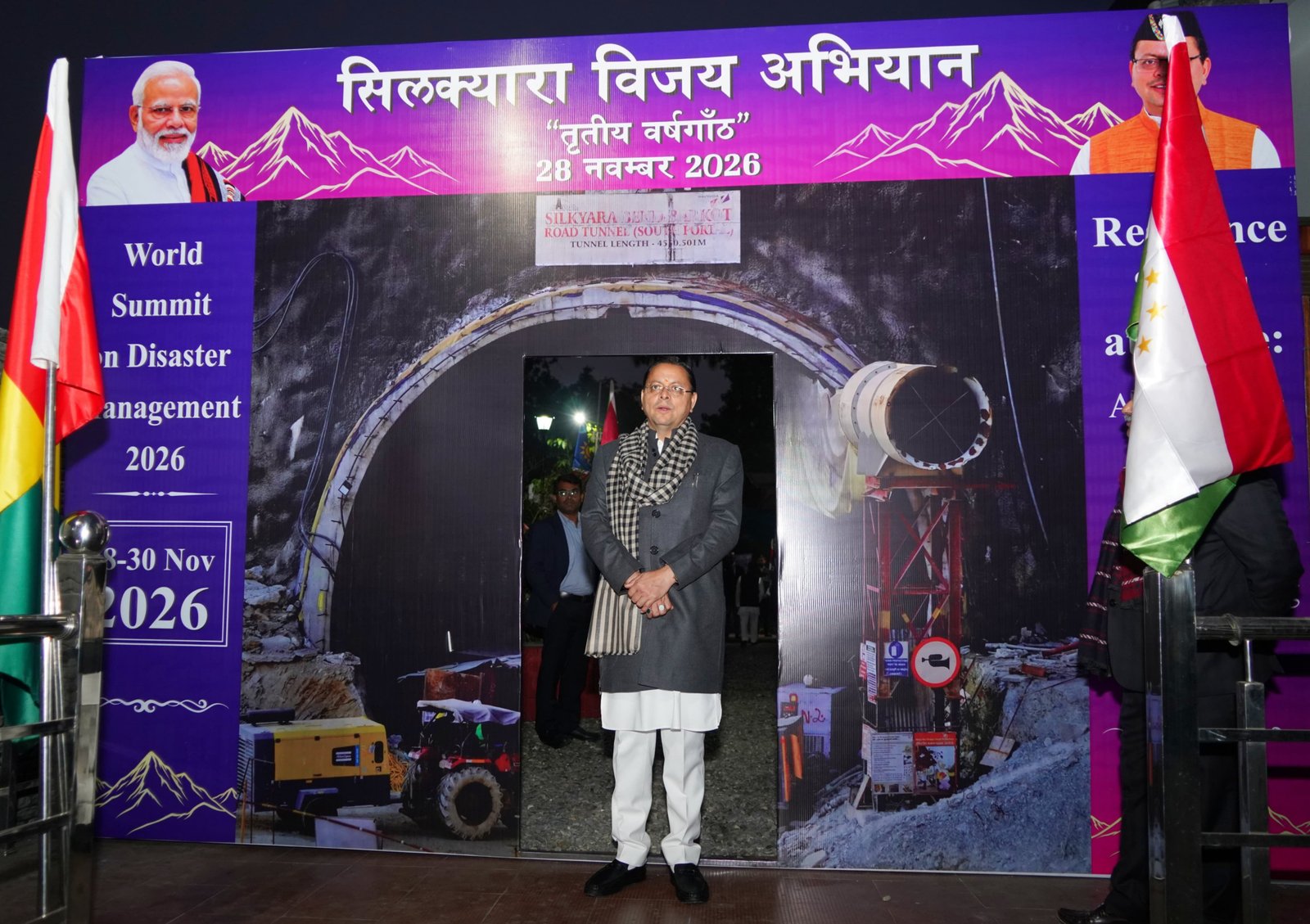
Chief Minister Pushkar Singh Dhami today inaugurated the World Disaster Management Conference 2026 at the Chief Minister's residence. On this occasion, the Chief Minister announced a contribution of Rs 1 crore towards the corpus fund of the Himalayan Institute of Technology, Dehradun. Representatives from more than 50 countries, disaster management experts, scientists, academicians, representatives of various universities and technical institutions, and organisations associated with disaster management are participating in this three-day international conference.
Uttarakhand Becomes a Common Platform for Global Experiences and Collective Efforts
Describing the organisation of the conference as an important opportunity for Uttarakhand, the Chief Minister said that this event was a meaningful initiative towards establishing the state as a major centre in the fields of disaster management, research and global cooperation. Through the conference, experiences, modern technologies, innovations and research from different countries around the world would be shared, along with discussions on coordinated strategies to deal with disasters.
Welcoming the guests and participants present at the conference, the Chief Minister expressed his gratitude to all the institutions and organisers associated with the event, including the Himalayan Academy of Science and Technology. He said that the conference was bringing together different regions on a common platform, from the West Indies to Australia, from Gujarat to the Northeast, and from Kashmir to Tamil Nadu.
The participation of all 13 districts of Uttarakhand, various states and Union Territories of the country, and nearly 50 countries was proof that disaster management was no longer a subject concerning just one country or region, but a shared responsibility of all humanity. This event also reflects the spirit of Vasudhaiva Kutumbakam — the world is one family.
Silkyara Rescue Operation: A Historic Victory of Humanity, Courage and Collective Determination
The Chief Minister said that November 28 holds special significance for Uttarakhand. During this period in 2023, 41 workers trapped inside the Silkyara tunnel were safely rescued after 17 days of relentless efforts.
Recalling that difficult period, he said the entire country had been praying for the safety of those workers. The concern of the workers' families outside the tunnel, the hopes of the people of the state and people's faith in Baba Baukhnag Ji provided strength to everyone during that difficult operation.
The Chief Minister said that the safe rescue of the 41 workers was not merely the success of a rescue operation, but a historic victory of humanity, courage, patience and collective determination. He particularly appreciated the patience and courage of all the workers, including Gabbar Singh Negi.
He said that during the operation, Prime Minister Narendra Modi continuously kept himself informed about the situation. The Prime Minister was in communication with him every day and provided the necessary guidance and support at every level. The Chief Minister described the Prime Minister's support as a source of reassurance, similar to that provided by a guardian during difficult times.
From Rat Miners to the Army and Rescue Teams — Every Contribution Became a Link in the Chain of Success
The Chief Minister expressed his gratitude to the engineers, scientists, rat miners, Army, NDRF, SDRF, Central and state agencies, administrative officers and local citizens who contributed to the Silkyara rescue operation.
He said that when major machines faced challenges, the rat miners used their skills and courage to achieve important success in the final stage. This operation became an excellent example of the coordination of modern science and technology with human sensitivity, experience, patience and collective efforts.
The Chief Minister said that during the Silkyara rescue operation, a large number of foreign experts and representatives had also participated in another international disaster management programme organised in Dehradun. At that time, Uttarakhand had shown the entire world that even under difficult circumstances, coordinated efforts, a scientific approach and strong determination could make seemingly impossible tasks possible.
Challenges of Climate Change: Disaster Management Is Now a Shared Responsibility of the Entire World
The Chief Minister said that today the entire world is facing serious challenges arising from climate change. In some places, incidents of excessive rainfall and floods are occurring, while in others, droughts, landslides, forest fires and extreme weather conditions are affecting people's lives.
The impact of these disasters is not limited to the loss of human lives and property, but also affects the economy, agriculture, natural resources and social structure. In such circumstances, joint efforts at the global level, exchange of experiences and effective action plans are necessary for disaster management.
He said that under the leadership of Prime Minister Narendra Modi, the country was moving beyond a reactive system in disaster management towards forecasting, advance preparedness and risk reduction.
Carrying out relief and rescue operations after a disaster is as necessary as ever, but it is even more important to identify potential risks in time and develop effective arrangements in advance to minimise the loss of human lives and property.
Protecting the Himalayas Means Protecting the Future of Crores of People
The Chief Minister, referring to the vulnerability of the Himalayan region, said that the entire Himalayan region, including Uttarakhand, is extremely sensitive from an environmental and geographical perspective.
The Kedarnath disaster of 2013, the Chamoli disaster of 2021, the Silkyara tunnel incident and various natural disasters that have occurred in recent years have made it clear that maintaining a balance between development and the environment in Himalayan regions is extremely important.
The challenges faced by the entire Himalayan region, including Himachal Pradesh, Sikkim, Arunachal Pradesh, Jammu and Kashmir, Nepal, Bhutan and Tibet, are largely similar. Therefore, special attention should be given to the problems of the Himalayan region and their solutions at this conference.
He said that the rivers originating in the Himalayas are the basis of life for crores of people. The glaciers, forests, biodiversity and ecosystems here are connected with the water and environmental security of the entire country and region.
Scientific studies of the effects of climate change on glaciers, excessive rainfall, landslides, cloudbursts and incidents such as floods, along with the development of systems that provide timely warnings, are the need of the hour.
Disaster Management System Will Be Strengthened Through Modern Technology and Traditional Knowledge
The Chief Minister said that coordination between traditional knowledge and modern technology is extremely important in disaster management.
Through artificial intelligence, machine learning, remote sensing, GIS, satellite monitoring and drone technology, disaster-related risks can be assessed more effectively.
The benefits of these technologies should reach the last village of the state so that warnings can be issued in time and arrangements can be made to move people to safe locations.
He said that disaster management should not be limited only to relief and rescue, but should also be linked with disaster risk reduction, advance preparedness, and effective rehabilitation and reconstruction after disasters.
'Resilience Starts at Home': Preparation to Deal with Disasters Begins at Home and in the Community
The Chief Minister said that the conference theme, 'Resilience Starts at Home — Anticipating Risks, Building Resilience, Transforming Future', is highly relevant.
Preparation to deal with disasters cannot remain limited only to government institutions or experts. It should begin at home, in villages, schools, offices and local communities.
Every citizen should have information about the safety measures to be adopted during a disaster. Trained youth, panchayats, local institutions and community-based warning systems can play an important role in reducing the impact of disasters.
Discussions Simultaneously Across Six Continents Will Give New Direction to International Cooperation
He said that the hybrid and decentralised format of this conference is commendable.
Through sessions being organised simultaneously across six continents, efforts have been made to bring experts and institutions from different countries onto one platform, while also reducing carbon emissions caused by travel.
The participation of more than 30 states and Union Territories and more than 30 partner institutions in the conference would strengthen the possibilities of extensive cooperation in the field of disaster management.
Uttarakhand's Disaster Management Preparations: Extensive Efforts from Early Warning to Rehabilitation
The Chief Minister said that the Uttarakhand government was continuously strengthening disaster management arrangements.
Special attention was being given to strengthening the SDRF, providing modern equipment, developing early warning systems, monitoring sensitive areas, improving coordination among various agencies and training local communities.
Along with carrying out quick relief and rescue operations during disasters, priority was also being given to rehabilitation and reconstruction in affected areas.
Emotional Episode of Human Sensitivity and Trust During the Dharali Disaster
Referring to the disaster in the Dharali region of Uttarkashi, the Chief Minister said that despite difficult weather and adverse conditions, he had personally reached the affected area by helicopter.
There, he met the affected people, listened to their problems and reviewed the status of relief and rescue operations.
During this visit, a woman from Gujarat, considering him her religious brother, tied a rakhi on his wrist.
The Chief Minister said that this emotional episode was not merely a personal experience for him, but a symbol of sensitivity and responsibility towards every family affected by a disaster.
During such difficult times, the trust and affection of people inspire the government to stand by them.
Research, Training and Community Participation Will Build a Safe Uttarakhand
The Chief Minister said that scientific research, technological innovation, training and community participation were being encouraged to make disaster management more effective in Uttarakhand.
Modern technology was being used in the state to assess disaster risks, strengthen warning systems and increase monitoring in sensitive areas.
He expressed confidence that the discussions taking place at this conference would prove useful not only for Uttarakhand, but also for the entire Himalayan region and other vulnerable regions of the world.
Sustainable Development Is Possible Only Alongside Human Safety and Environmental Balance
The Chief Minister said that no development project could be more important than human life.
Therefore, aspects relating to safety, environmental balance and disaster management should be incorporated into every development plan.
A safe, sustainable and prosperous future can be built only by establishing a balance between development and ecology.
He said that the Uttarakhand government was committed to the development of the state with Vikalp Rahit Sankalp — an unwavering resolve with no alternative. In this commitment, environmental protection, public safety and preparedness for disasters would be given the highest importance.
The Chief Minister wished the conference success and expressed hope that the deliberations held here would pave the way for new policies, technologies and international cooperation in the field of disaster management.
He expressed his gratitude to all those who contributed to the Silkyara rescue operation, experts associated with disaster management and the organisers of the conference.
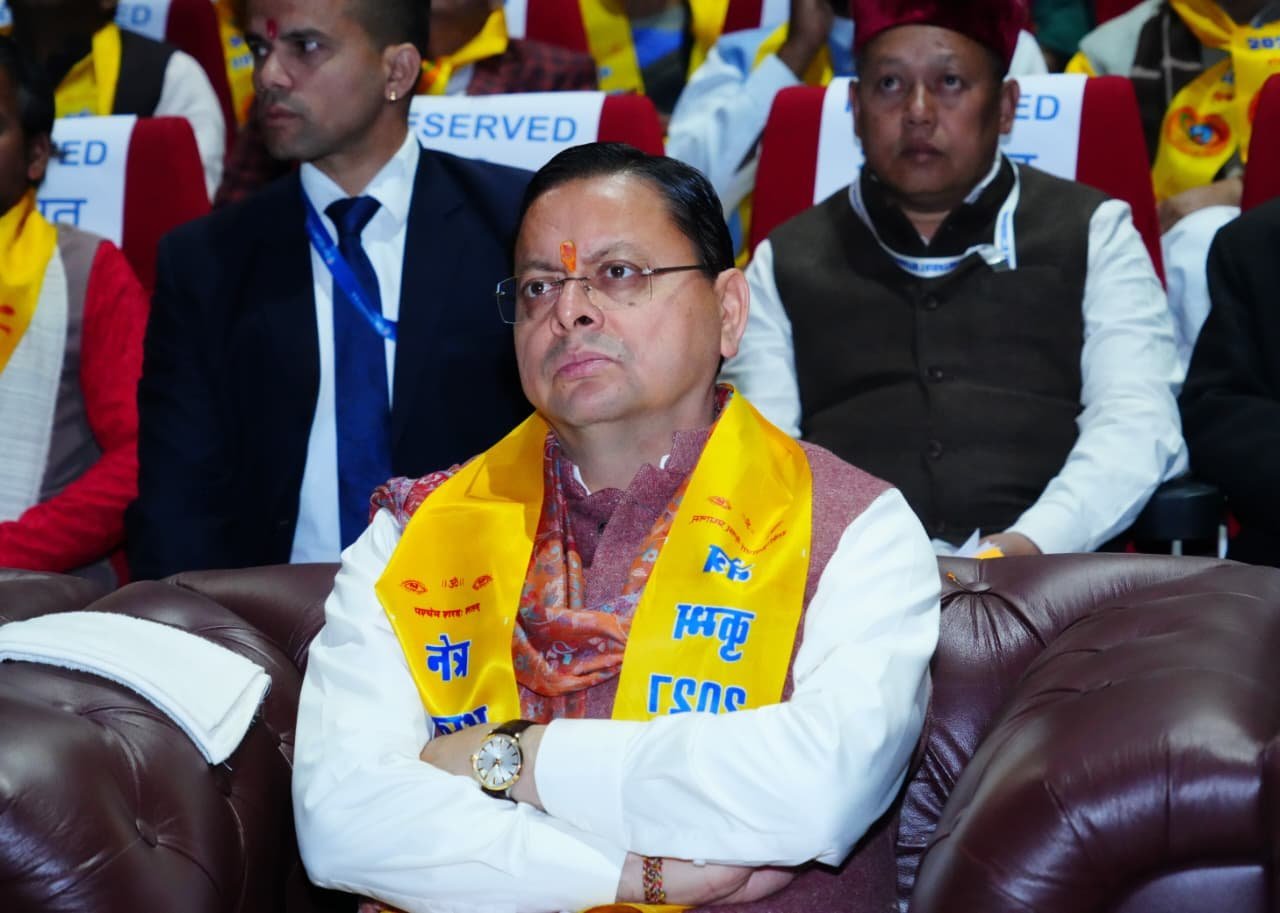
On this occasion, Vice-Chairman of the Uttarakhand Disaster Management Advisory Committee Vinay Kumar Rohilla, Vice-Chancellor of Doon University Dr Surekha Dangwal, Padma Bhushan awardee Dr Anil Prakash Joshi, Member of the National Disaster Management Authority Dr Dinesh Kumar Aswal, representatives from various countries, disaster management experts, scientists, academicians and officials of the concerned departments were present.