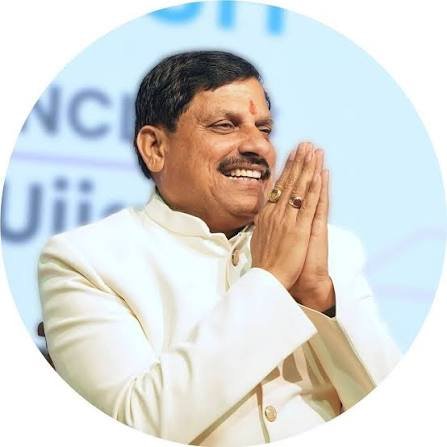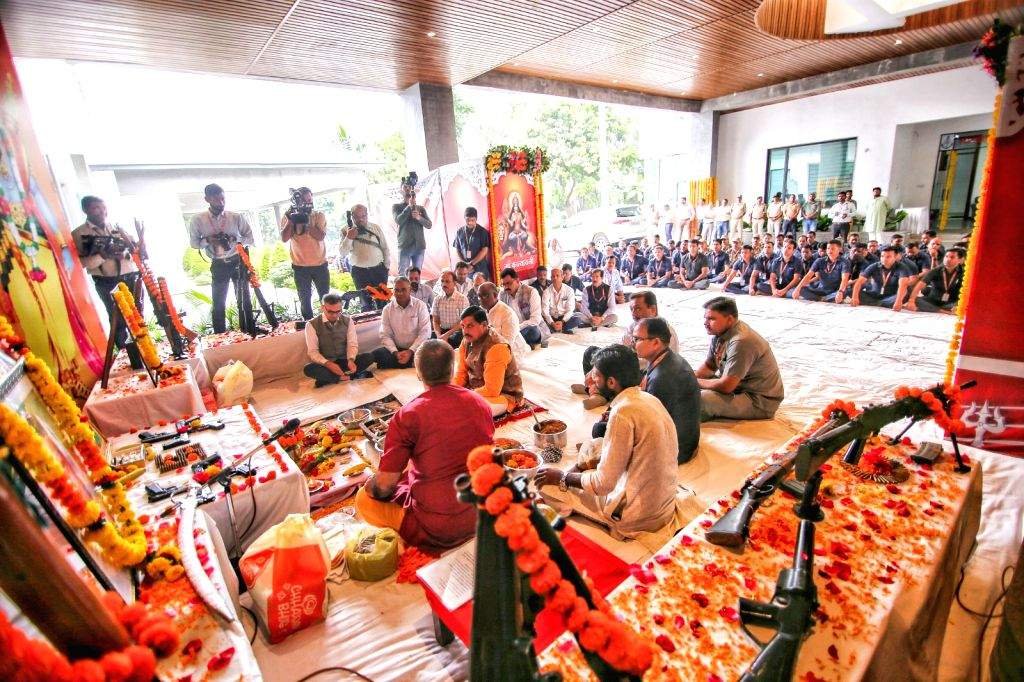
Chief Minister Dr. Mohan Yadav said Shastra Poojan (worship of weapons) symbolises respect for the valour of the Indian Armed Forces, national security and freedom. Under the leadership of Prime Minister Shri Narendra Modi, the country is setting new benchmarks of strength in the land of Lord Shri Ram. The Shastra Poojan ceremonies to be held across Madhya Pradesh on Vijayadashami aim to honour national security, military capability and self-reliance, while strengthening public confidence in the country's security.
Vijayadashami symbolises the victory of truth over falsehood and the resolve to stand against injustice. In India's Sanatan tradition, Shastra Poojan conveys the message of using power judiciously, protecting the weak, upholding dharma and justice, and fulfilling the duty of safeguarding the nation. To promote these cultural values and express respect for national security, the State Government has decided to organise Shastra Poojan ceremonies across Madhya Pradesh on Vijayadashami.
Chief Minister Dr. Yadav will perform Shastra Poojan in Indore on October 20. Assembly Speaker Shri Narendra Singh Tomar will attend the ceremony in Gwalior, while senior MLA Shri Hemant Khandelwal will participate in Betul. Ministers will attend ceremonies organised in various districts as chief guests.
Shastra Poojan Symbolises the Responsible Use of Power and Dedication to Duty
The significance of Shastra Poojan in Indian tradition extends beyond religious rituals. It also holds strategic, cultural and historical importance. By worshipping weapons on Vijayadashami, people reaffirm their commitment to the judicious use of power, self-defence and the fight against injustice. The tradition underscores that strength is not meant for aggression or oppression, but for protecting society, the nation and the vulnerable.
According to tradition, Lord Shri Ram worshipped Goddess Shakti and his weapons before defeating Ravana. The Mahabharata tradition also recounts that the Pandavas retrieved and worshipped their weapons on Vijayadashami after keeping them concealed during their period of exile.
Throughout Indian history, valiant warriors, including Chhatrapati Shivaji Maharaj, observed the tradition of worshipping weapons and setting out on military campaigns on Vijayadashami.
In Sanatan culture, Shastra (scriptures) and Shastra (weapons) hold equal importance. Scriptures provide guidance on knowledge, values and conduct, while weapons serve as instruments to resist injustice and protect society and the nation. The principle “Dharmo Rakshati Rakshitah”—dharma protects those who protect it—also inspires people to fulfil their duties with strength and commitment to safeguarding justice and human values.
Respect for the Valour of the Indian Armed Forces and National Security
The tradition of Shastra Poojan is also associated with the courage, discipline and commitment to national defence demonstrated by the Indian Army, police and security forces. The sacrifice, dedication and sense of duty of soldiers deployed along the borders form the foundation of the country's security. Through Shastra Poojan on Vijayadashami, respect is expressed for India's sovereignty, national pride and the safety of its citizens.
Under the leadership of Prime Minister Shri Narendra Modi, India is becoming stronger and more capable. Special emphasis is being placed on national security, self-reliance in defence and the modernisation of military capabilities. The actions of the Indian Armed Forces during Operation Sindoor demonstrated their military expertise, courage and resolve to protect the nation.
Shastra Poojan reinforces the message that a nation must remain vigilant, disciplined and strong to safeguard peace and harmony.
Worship of Shakti Inspires Public Welfare and Nation-Building
In Indian culture, the worship of Shakti is directed towards lokmangal—the welfare of all. Worshipping Goddess Durga inspires inner strength, courage, respect for women's power and the determination to fight injustice. The central message of Shastra Poojan is that power must be exercised with restraint and discipline and used for the welfare of humanity.
Vijayadashami is also an occasion for introspection and self-improvement. Along with the burning of Ravana's effigy, people must resolve to abandon evils such as arrogance, greed, discrimination and indifference towards their duties. Social unity, discipline, hard work and dedication to the national interest form the foundation of a strong and self-reliant India.
Ministers to Perform Shastra Poojan in Districts
The State Government has designated ministers as chief guests for Shastra Poojan ceremonies to be organised in various districts. In districts where ministers are unable to attend, the respective District Collectors and Superintendents of Police will perform Shastra Poojan. Local public representatives will also be invited to the ceremonies.
The State Government has appealed to citizens to perform Shastra Poojan in their homes on Vijayadashami in accordance with tradition. The respective District Collectors and Superintendents of Police will ensure all necessary arrangements for the ceremonies.
District-wise List of Chief Guests
District | Chief Guest |
Indore | Chief Minister Dr. Mohan Yadav |
Gwalior | Assembly Speaker Shri Narendra Singh Tomar |
Mandsaur | Deputy Chief Minister Shri Jagdish Devda |
Rewa | Deputy Chief Minister Shri Rajendra Shukla |
Khandwa | Minister Shri Kunwar Vijay Shah |
Dhar | Minister Shri Kailash Vijayvargiya |
Narsinghpur | Minister Shri Prahlad Singh Patel |
Jabalpur | Minister Shri Rakesh Singh |
Sehore | Minister Shri Karan Singh Verma |
Narmadapuram | Minister Shri Uday Pratap Singh |
Mandla | Minister Smt. Sampatiya Uikey |
Dewas | Minister Shri Tulsiram Silawat |
Morena | Minister Shri Aidal Singh Kansana |
Jhabua | Minister Sushri Nirmala Bhuria |
Sagar | Minister Shri Govind Singh Rajput |
Bhopal | Minister Shri Vishvas Kailash Sarang |
Datia | Minister Shri Narayan Singh Kushwaha |
Alirajpur | Minister Shri Nagar Singh Chauhan |
Bhind | Minister Shri Rakesh Shukla |
Shajapur | Minister Shri Inder Singh Parmar |
Vidisha | Minister of State Smt. Krishna Gaur |
Damoh | Minister of State Shri Dharmendra Singh Lodhi |
Anuppur | Minister of State Shri Dilip Jaiswal |
Rajgarh | Minister of State Shri Gautam Tetwal |
Katni | Minister of State Shri Lakhan Patel |
Agar Malwa | Minister of State Shri Narayan Singh Panwar |
Raisen | Minister of State Shri Narendra Shivaji Patel |
Satna | Minister of State Smt. Pratima Bagri |
Chhatarpur | Minister of State Shri Dilip Ahirwar |
Singrauli | Minister of State Smt. Radha Singh |
Betul | Senior MLA Shri Hemant Khandelwal |