Inaugurates Geetanjali Fire Station, taking the number of operational fire stations to 71, government targets 120 stations
20 specialised fire response motorcycles to provide quick assistance in narrow lanes and densely populated areas
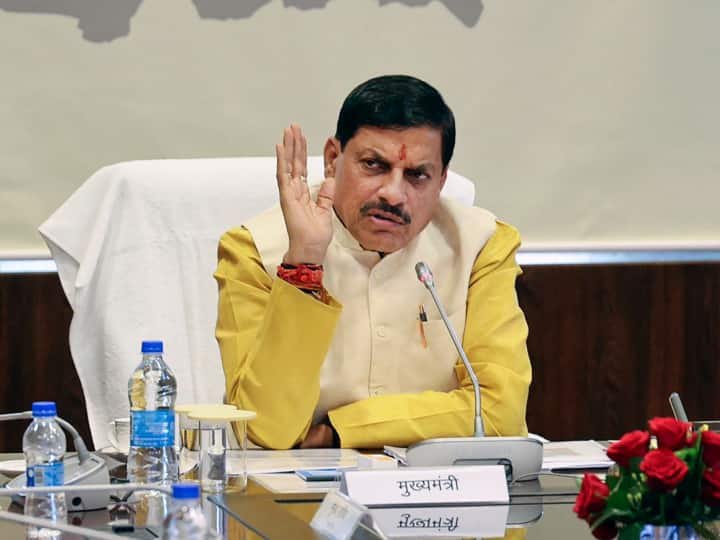
Government committed to providing fast, effective and professional fire and rescue services to every Delhi resident in an emergency: CM Rekha Gupta
Delhi Fire Service being modernised to meet the challenges of urbanisation and densely populated areas: Home Minister Ashish Sood
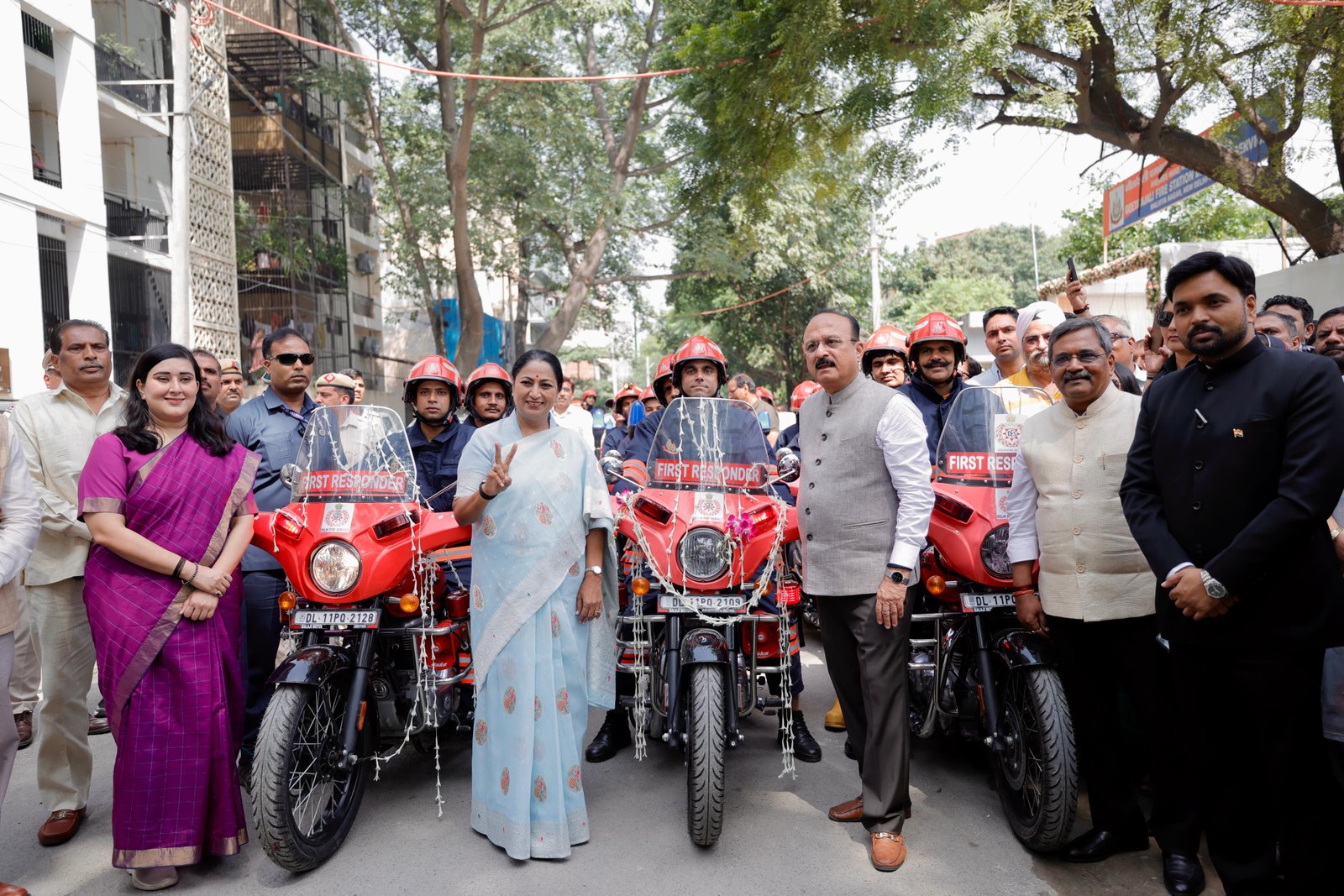
New Delhi, September 2026 : As part of the ‘Seva Sankalp Abhiyan’, Delhi Chief Minister Smt. Rekha Gupta on Wednesday inaugurated the Geetanjali Fire Station in the Malviya Nagar area. On the occasion, she also inducted and flagged off 20 fire response motorcycles and 26 Quick Response Vehicles (QRVs) for the Delhi Fire Service. The Chief Minister said the Delhi government is committed to ensuring that every resident of the capital has access to fast, effective and professional fire and rescue services during emergencies.
She said that with changing times and Delhi’s growing population, the fire safety system must also be equipped with modern technology, better resources and faster response capabilities. The capacity of the Delhi Fire Service is being strengthened in phases in this direction. MP Ms. Bansuri Swaraj, Delhi government Cabinet Minister Shri Ashish Sood, MLA Shri Satish Upadhyay, senior Delhi Fire Service officials, firefighters and other dignitaries were present on the occasion.
‘Seva Sankalp’ centred on the safety of every citizen
CM Rekha Gupta said the core objective of the ‘Seva Sankalp Abhiyan’ is to make the lives of Delhi residents safer, more convenient and more secure. The efforts being made in the area of fire safety are part of this broader commitment. She said Delhi’s emergency services are being continuously strengthened through better infrastructure, faster response capabilities, strategic deployment and modern equipment.
She said a modern fire service is not limited to responding to fire incidents but also plays an important role in providing quick relief and rescue during different kinds of emergencies. The government is therefore working to continuously strengthen the Delhi Fire Service with modern technology, better mobility and adequate resources. The government’s clear objective, she said, is to ensure that whenever an emergency occurs anywhere in Delhi, help reaches citizens in the shortest possible time. The deployment of new fire stations and Quick Response Vehicles is an important step in this direction.
Focus on modern fire safety as urbanisation grows
Delhi Home Minister Ashish Sood said rapid urbanisation, densely populated areas, narrow roads and increasing traffic are creating new challenges for fire services. It is therefore necessary to strengthen the fire safety system with modern capabilities suited to local requirements. He said that under the leadership of Chief Minister Rekha Gupta, the government is providing resources according to the needs of different areas. Along with large fire tenders, arrangements for Quick Response Vehicles and fire response motorcycles are also being strengthened for narrow lanes and densely populated areas.
He said special attention is being given to modernising the Delhi Fire Service. Modern wireless networks, command centres, new vehicles and advanced equipment are being used to strengthen the response capabilities of the fire service. Strengthening modern infrastructure, faster response systems and a capable firefighting force is a priority for making Delhi safer, he said.
Delhi now has 71 operational fire stations
With the commissioning of the Geetanjali Fire Station, the number of operational fire stations under the Delhi Fire Service has risen to 71. The station has 16 firefighters, a small fire tender, a Quick Response Vehicle and the necessary firefighting and rescue equipment. The station will provide quick assistance during fires and other emergencies in Malviya Nagar, Geetanjali, Shivalik, Khirki, Press Enclave, Deoli, Nai Basti, Adarsh Enclave, Dera village and surrounding areas. The availability of a nearby fire station, particularly in densely populated areas, will help reduce the time taken to reach an incident site.
The Delhi government has set a target of 120 fire stations to further strengthen the fire service infrastructure. This includes a state-of-the-art fire service training centre at Budhanpur Majra. Work is currently being carried out in phases on eight new fire stations, one vehicle workshop and training facilities. At the same time, efforts are also underway to develop land and other basic infrastructure for 23 additional fire stations as required in the future.
Fire service response to reach narrow lanes faster
Twenty specialised fire response motorcycles have been deployed to reduce the time taken by large fire tenders to reach narrow roads, crowded markets and densely populated areas of Delhi. Equipped with compressed air foam and water mist backpack systems, two 2-litre high-pressure air cylinders, portable fire extinguisher systems and dual-mode nozzles, the motorcycles will enable trained firefighters to reach incident sites quickly, carry out an initial assessment and begin immediate firefighting and rescue operations. They will also help contain situations until additional resources arrive.
26 new QRVs take total strength to 50
The Delhi Fire Service has added 26 new Quick Response Vehicles (QRVs), taking the total number of QRVs in the department to 50. These vehicles will be deployed at strategic locations to reduce response time during emergencies. The QRVs are equipped with a 125-litre ultra-high-pressure pump firefighting system, with a minimum capacity of 100 litres of water and 25 litres of foam. They also have a high-pressure pump capable of generating a minimum pressure of 180 bar, a 60-metre high-pressure hose and a multi-system nozzle with five different modes. The Delhi government is working to strengthen the QRV network in phases, with a target of increasing their number to 100.
Fire service to be strengthened with modern equipment
Along with expanding fire stations, the government is also focusing on procuring modern firefighting and rescue equipment. This includes provisions for the purchase of nine hydraulic platforms, four urban search and rescue vehicles, four light and breathing apparatus vehicles, 44 multi-purpose vehicles, 17 command and control vehicles and 18 small rescue vehicles, among other specialised equipment.