Aug 2026 : Rescue teams, soldiers and volunteers continued a desperate search for survivors across western Colombia on Tuesday after the country was struck by its strongest earthquake in a century. The powerful 7.4-magnitude quake killed at least 241 people, injured more than 1,670 and left thousands facing the loss of homes, belongings and livelihoods.
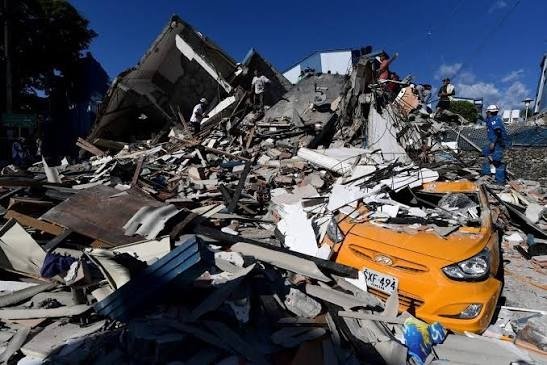
The devastation was particularly severe in Pereira and Cali, where entire blocks were reduced to piles of concrete and twisted metal. Families spent the night in parks and open spaces as repeated aftershocks shook already damaged neighborhoods and raised fears of further collapses.
Emergency crews deployed cranes, sniffer dogs, heavy machinery and specialized rescue equipment to search collapsed apartment buildings, offices and homes. Volunteers worked alongside firefighters and soldiers, often using nothing more than shovels, picks and their bare hands to remove debris. Human chains were formed to move bricks and chunks of masonry away from unstable structures.
At several locations, rescuers repeatedly stopped their work and called into the rubble, listening carefully for signs of life. In Cali, volunteer Andres Felipe Mejia said a rescuer asked anyone trapped beneath the debris to whistle. A whistle was heard in response, prompting teams to intensify their efforts.
Rescuers later managed to pull a man and a baby from a pancaked building, although the man's wife remained trapped beneath the ruins.
In Pereira, army personnel and search-and-rescue teams accompanied by trained dogs combed through collapsed structures. Rescue workers carefully examined exposed steel rods and concrete slabs, knowing that survivors could be trapped in small pockets beneath the wreckage.
Families Wait for News
For many families, the rescue operation became an agonising vigil. Jorge Gonzalez stood beside a collapsed building in Pereira waiting for news of his aunt, who remained buried beneath the rubble.
"I arrived yesterday and I haven't left," he said, determined to remain at the site until rescuers recovered her.
For others, survival brought little comfort as they confronted the destruction of homes built over decades. Stella Galvis said she escaped with her young son and partner but lost virtually everything.
"We survived by a miracle," she said, describing the moment she managed to get her child out of their collapsing home.
From the air, parts of Cali presented a devastating picture, with grey rubble replacing residential blocks. Cars were crushed under fallen walls and concrete slabs, while residents searched through the debris for important belongings.
One young couple was seen climbing over a mound of broken masonry and recovering a box from a child's bright red bedside table.
Thousands Forced Into Parks
The continuing aftershocks forced many survivors to remain outdoors. In Pereira, one park was transformed into an emergency shelter, with tents, mattresses and basic supplies provided for families whose homes were destroyed or considered unsafe.
"We lost everything, but we're alive," said 23-year-old John Tabasco, who was staying there with his wife and seven-month-old son.
The disaster has also exposed the enormous emotional and financial cost of the earthquake. Seventy-nine-year-old Jaime Alzate spoke of families spending decades working to purchase a home, only to see it destroyed within minutes.
"You finally get it and in just a few days it all goes down the drain," he said.
Hospital Forced to Evacuate
The earthquake also caused major disruption to Colombia's healthcare system. Part of the Hospital Universitario del Valle in Cali collapsed, forcing doctors to move patients into a parking area and provide treatment outdoors.
Three floors housing pediatric, internal medicine and neonatal services ultimately gave way. The hospital's capacity was reduced from around 590 patients to approximately 350, adding further pressure to an already strained emergency response.
Despite the destruction, communities across the affected areas mobilised rapidly. Thousands of people brought drinking water, food, medicines and other supplies to affected neighborhoods. Blood donation centres also saw long queues as residents volunteered to help those injured.
"It's about wanting to help your community, your city and your country," blood donor Ferney Cabrera said.
International Assistance Arrives
President Abelardo de la Espriella declared a state of emergency and, during a visit to Pereira, pledged rent assistance for families whose homes had been destroyed or rendered uninhabitable.
International support also began arriving. The United States announced $15.5 million in emergency assistance, while governments and organisations around the world offered condolences and aid.
But the immediate priority remained the search for survivors.
As aftershocks continued to shake western Colombia, rescue teams worked through unstable buildings and mountains of rubble. Every sound could offer hope — a voice, a knock, a whistle or even the faintest movement.
For families gathered outside collapsed homes, the rescue operation remained a race against time, with crews refusing to abandon the search while there was still a possibility that someone might be alive beneath the ruins.
(The content of this article is sourced from a news agency and has not been edited by the Mavericknews30 team.)