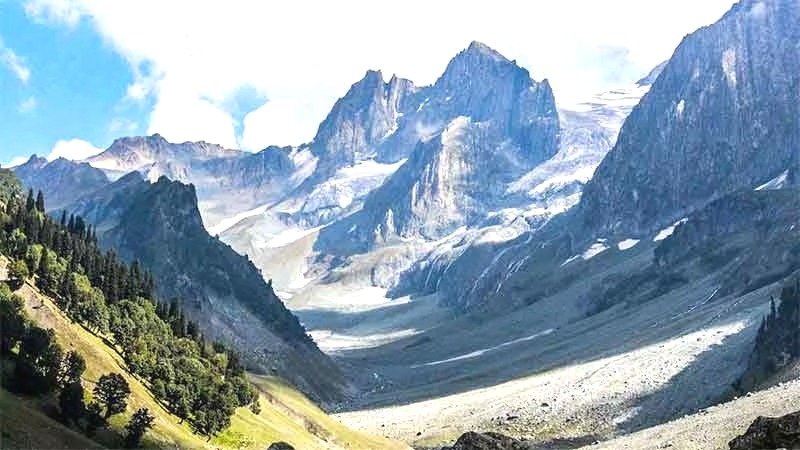
New Delhi/Srinagar; November 2026: It was in February 2023, the Geological Survey Of India (GSI) in its much sensible report had established the fact that India has an estimated 5.9 million tons of Lithium, housed in the Salal-Haimana area of the Reasi district in Jammu and Kashmir, the white gold presents a severe paradox, advocating that India is standing at a historic crossroads.
Earlier the dependency of Lithium encompassed a quadrilateral consisting of Argentina, Bolivia, Chile, and China. In India, by the virtue of the Minerals and Minerals (Development and Regulation) Amendment Act, 2023, the Indian government is allowing the mining of critical and strategic minerals (including lithium) without the mandatory public hearing requirement. Under this amendment, the projects will be appraised by Expert Appraisal Committees (EACs) at the central level, which signifies a shift in the emphasis on public participation under the established procedures of Environmental Impact Assessment (EIA). This approach of the government to a centralised appraisal system has been met with fierce criticism. It was noted that bypassing the social license to operate risks alienating the very communities the government seeks to benefit.
Without local buy-in, mining projects often face long legal battles and social unrest. Cases like the Niyamgiri Hills conflict show that bypassing public consultation will only lead to “less structured, more volatile forms of protest and legal challenges”.
As J&K authorities prepare to mine lithium, locals are scared; the people whose only source of income is agriculture, find themselves at a loss yet again, fearing for their livelihoods and their lands. The history of large infrastructure projects in the district doesn’t inspire much confidence either, as for them, development has often arrived as disruption (the Salal hydropower project). The Himalayan region is considered to be one of the most ecologically sensitive zones on earth. Mining in such an environment is inherently risky and unpredictable.
The extraction is primarily done in two ways:
·The First involving brine (salty water) or hard rock deposits.
·The Second necessitates digging up lithium-rich rock, crushing it and processing it chemically to extract white gold, which leads to significant soil removal.
These processes are extremely energy intensive, with being known to trigger landslides and slope instability, with the added risk of higher seismic activity. Mountains that have taken millennia to form can be destabilised in a single generation. As long as the earth itself is fragile, every drill becomes a gamble.The green future may be achieved at the cost of an already stressed ecosystem, raising the question: If clean energy demands dirty sacrifices, can it truly be called sustainable?
The residents of Reasi barely have enough water for their crops, and with the lithium mining project underway, they believe that it will use up the little water they have, leaving them unable to sustain their crops and, in turn, themselves. Being an extremely water-intensive process which is almost 02 million litres of water per ton of lithium production, it is reasonable to assume that extracting this metal in an already taut-strung district will cause more problems than solutions, creating a direct conflict between human necessity and industrial ambition. The ice caps are melting, and the glaciers are retreating at an alarming rate due to climate change. Mining operations threaten to accelerate this downward trend.
The environmental consequences do not stop at geology and water; they also extend an ashen hand towards biodiversity. There is severe destruction of wildlife habitats. This, in turn, leads to the displacement of animals and plant species and an imbalance in the food chain. The harmonised ecosystem is disrupted, snowballing into a shift in dynamics and affecting the surroundings.
On the otherside, the communities of the Salal region face the prospect of their fields being replaced by mining pits and tailings dams, adding to the anxieties. Compounding this is the complete lack of transparency in the decision-making processes. Recent legislative changes have further complicated this issue.
A Delhi-based energy expert, Samya Dutta, highlighted that mandatory assessments haven’t been properly conducted or shared with the public. She states: “For any major project, Environmental Impact Assessment (EIA) and Social Impact Assessment (SIA) are mandatory. If such assessments have not been conducted, then on what basis are tenders being issued?” Dutta is also criticising the fact that there is a lack of public information regarding how much
Coming to the omnipotent question – when lithium will be extracted, how exactly the resources are being mapped, and how many people will be displaced. The learned Apex Court of India has mandated that rehabilitation and compensation must be settled before land acquisition. Although if the information is not disseminated to the public, then it becomes difficult to track whether these compensations were made or not for the marginalised communities. This whole scenario suggests the hidden truth, one quote from the digital age resonating with a haunting clarity.
Ultimately, the paradox of white gold forces India to confront a difficult truth. The path to sustainability cannot ignore justice, whether it is environmental or social. Having Lithium in the country promises independence in energy, technological leadership, and economic growth. Nevertheless, without strong and appropriate safeguards, participation of communities and the application of sustainable extraction technologies, the transition risks repeating the mistakes of the past.
This raises a critical concern of ‘how’ India should go about acquiring this resource while keeping the people and the present ecology in mind. Because if not, then it will just become another chapter in the history of India, which was looking at progress but only resulted in disruption.
Team Maverick.