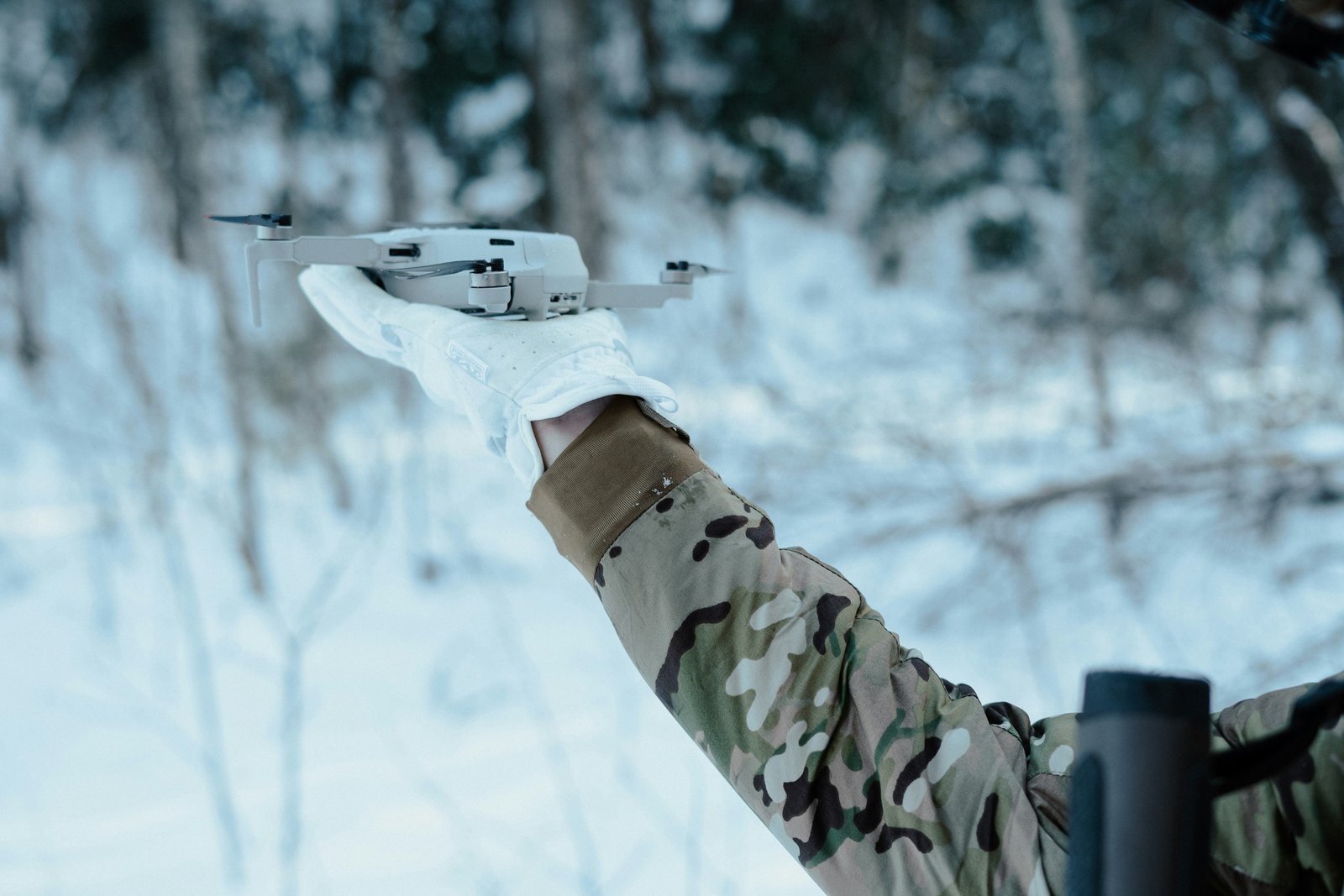
New Delhi, Oct 2026 The Indian Army has placed an order for 225 First-Person View (FPV) drones with Gurgaon-based Aerodrone Robotics Pvt Ltd following a competitive evaluation process and extensive field trials conducted at altitudes of up to 17,500 feet. The procurement marks another step in the Army’s efforts to strengthen its unmanned capabilities for challenging operational environments along the country’s northern and western frontiers.
The drones were evaluated against key operational parameters, including endurance, speed, accuracy and overall battlefield performance. Trials were conducted in terrain resembling conditions faced by troops deployed along the Line of Actual Control (LAC) with China and the Line of Control (LoC) with Pakistan.
High-altitude drone operations are particularly important because Indian troops routinely serve at elevations ranging from 12,000 feet to more than 18,000 feet, including in the Siachen Glacier region. Unmanned platforms can support frontline personnel by undertaking surveillance, logistics and payload delivery tasks, potentially reducing dependence on pack animals, personnel and helicopters.
The Army is developing a layered unmanned systems capability, spanning small tactical units such as Ashni platoons to larger Battlefield Air Support battalions. FPV drones are expected to complement these capabilities by enabling rapid deployment of equipment and supplies to forward positions, particularly where helicopter operations are expensive, weather-dependent or difficult to sustain.
However, operating drones in mountainous terrain presents significant technical challenges. At elevations of around 15,000 feet, air density can be 40 to 50 per cent lower than at sea level, reducing the lift and thrust generated by propellers and affecting flight performance.
The thinner air can also place additional demands on propulsion systems. Motors receive less cooling airflow and may overheat under heavy loads. Manufacturers may need to use larger propellers, higher-pitch designs or higher-KV motors to compensate, although these modifications can increase power consumption.
Extreme cold presents another obstacle. Lithium-based batteries become less efficient in freezing conditions, resulting in voltage drops and shorter flight durations. A drone capable of flying for approximately six minutes at sea level may manage only two to three minutes at extreme altitudes. Battery pre-heating and insulation can therefore be important for reliable deployment.
Communication is equally critical. Mountain ridges and steep valleys can obstruct radio signals, disrupting control links and live video feeds. Radio-frequency interference and electronic noise can further affect receiver performance, making robust communication systems essential for operations in the Himalayas.
To assess these challenges, the Army has conducted trials with Indian drone manufacturers in Ladakh and Himachal Pradesh’s Spiti region. The exercises provided realistic conditions to evaluate logistics and FPV drone categories, helping the Army identify suitable platforms and areas requiring further development.
Recent conflicts, including the war in Ukraine and the conflict involving Israel, have highlighted the growing military use of unmanned systems for surveillance, logistics, precision strikes and communications. These developments have accelerated interest in adaptable and cost-effective drone technologies.
Aerodrone Robotics specialises in military unmanned aerial systems and develops platforms for combat, surveillance and logistics missions. The company also provides operator training and technical support. It says its platforms are military-hardened and use internally developed software, allowing system configurations to be adapted to specific operational requirements.
The order supports the Army’s broader modernisation programme and India’s Atmanirbhar Bharat initiative, which seeks to strengthen domestic defence manufacturing and develop indigenous technologies suited to demanding battlefield conditions.
(Disclaimer :The content of this article is sourced from a news agency and has not been edited by the Mavericknews30 team.)