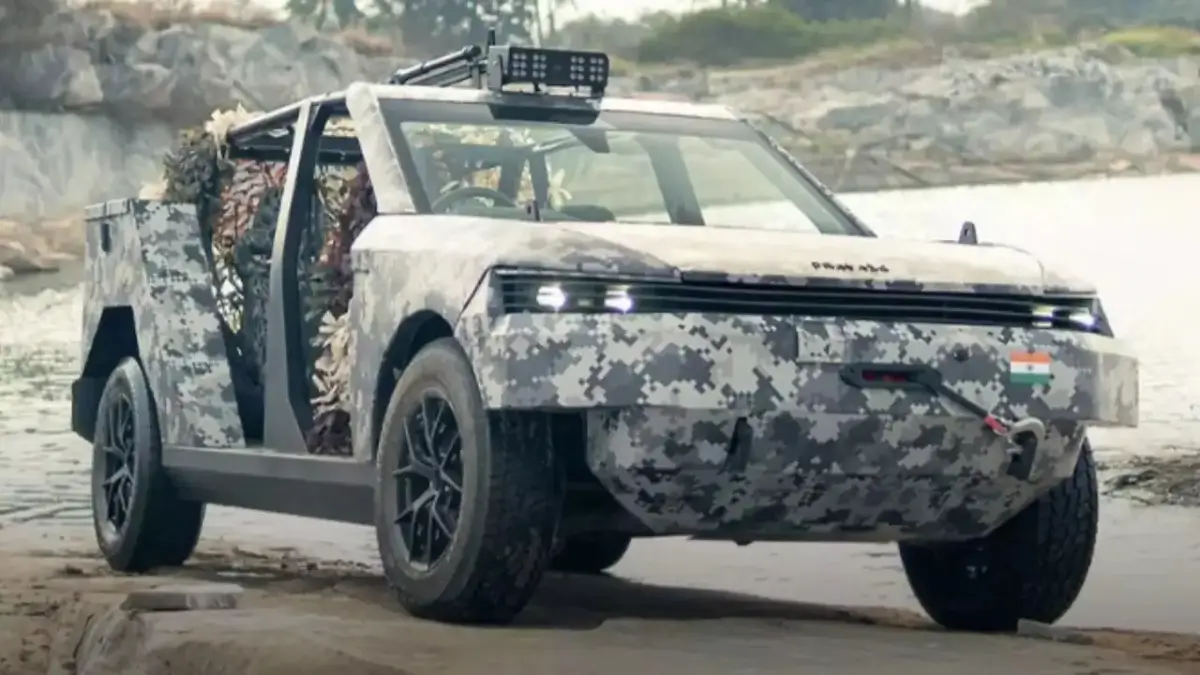
Bengaluru-based Pravaig Dynamics has developed VEER, an electric all-terrain vehicle designed for stealth reconnaissance and forward operations. Army trials and iDEX recognition mark important milestones, but formal induction into service is still awaited.
Hyderabad, Nov 2026 : Founded in Bengaluru by Siddhartha Bagri and Dhawal Khullar, Pravaig Dynamics spent several years developing its technology largely away from the public eye. The company began work around 2011 but came into wider public view around 2020, when it unveiled concepts for the civilian electric vehicle market, including the Extinction MK1, Extinction MKII and Defy SUV.
Over time, Pravaig's strategy shifted towards the defence sector, where it identified an opportunity to apply electric mobility to specialised military requirements. This led to the development of VEER, officially designated as the Electric Tactical All-Terrain Vehicle (E-TATV), a platform designed for operations in which stealth and low detectability can be more important than outright speed or endurance.
Unlike conventional military vehicles powered by diesel engines, VEER uses an electric drivetrain that produces very little noise at low speeds. Its reduced acoustic signature, combined with a lower thermal signature, is intended to make it suitable for forward patrolling, reconnaissance and intelligence, surveillance and reconnaissance (ISR) missions.
The vehicle is designed for the demanding final tactical mile, where troops may need to approach sensitive locations without drawing attention. In such situations, the sound and heat generated by conventional vehicles can compromise an operation. VEER's electric architecture seeks to reduce these signatures, potentially giving personnel greater flexibility during surveillance and movement in forward areas.
The platform has undergone Army trials in different operating environments, including mountainous regions and desert terrain. Evaluations across these conditions are important for assessing its performance on uneven surfaces, under varying temperatures and during operations where charging infrastructure may be limited.
According to the latest 2026-generation specifications shown in company factory footage, VEER is powered by a 108 kWh battery pack weighing approximately 550 kg and containing around 5,500 cells. Its dual electric motors are stated to produce about 400 horsepower, allowing the vehicle to accelerate from 0 to 100 kmph in approximately 5.6 seconds.
The vehicle has a stated payload capacity of around 1,000 kg and a real-world driving range exceeding 400 km. Pravaig has indicated that under Ladakh operating conditions, the range could extend to between 520 km and 550 km. These conditions, including thinner air and steady-speed driving, are cited by the company as factors that can favour electric vehicle performance.
VEER has a fully loaded weight of approximately three tonnes. Its suspension offers around 250 mm of travel, a feature intended to help it negotiate rough terrain and challenging off-road conditions. The combination of payload capacity, ground-handling capability and electric power is aimed at supporting specialised military roles rather than conventional troop transport alone.
Its construction is another distinctive aspect of the platform. Factory footage shows body panels being laser-cut and shaped using a nine-axis CNC bending machine before being mounted on a tubular space-frame structure. This approach differs from the ladder-frame architecture commonly associated with conventional military vehicles. The manufacturing process appears relatively labour-intensive and reflects the company's approach to building a specialised, low-volume platform.
VEER also incorporates a flex-fuel range extender to address one of the key challenges associated with electric vehicles in remote operational areas. While the vehicle primarily runs on battery power, the generator can operate on petrol or ethanol when battery reserves are depleted. This arrangement is intended to provide additional operational flexibility during missions conducted far from charging facilities.
The range extender is particularly relevant for military operations in remote locations, where access to charging infrastructure cannot always be guaranteed. It offers a backup power source while retaining the low-noise advantages of electric propulsion during battery-powered movement.
A major development milestone came in March 2025, when Atima Corporation, a wholly owned subsidiary of Pravaig, secured the ninth iDEX Open Challenge for the E-TATV concept. The challenge was conducted through the Defence Innovation Organisation under the Ministry of Defence's Department of Defence Production.
The recognition provided institutional support for the concept and marked an important step in its development. Combined with Army trials across terrains stretching from the Himalayas to Rajasthan, it has brought VEER into the wider discussion around India's emerging defence technology ecosystem.
However, iDEX recognition and military trials should not be confused with formal procurement or induction into service. They indicate that the platform has received institutional attention and is being evaluated, but do not establish that the Indian Army has placed an order or adopted the vehicle for operational use.
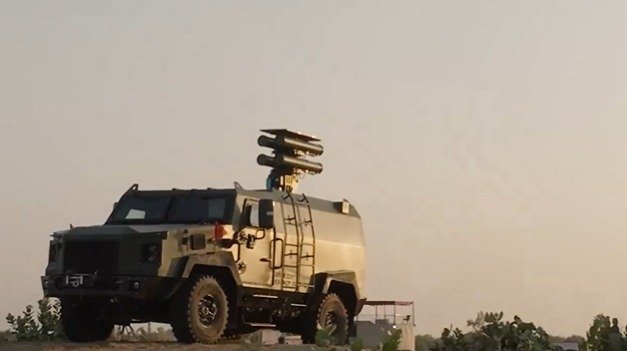
Reports about proposed weaponised versions, including variants equipped with anti-tank systems or machine guns, also require caution. Such configurations have not been officially verified and should not be interpreted as confirmation of operational deployment. No official Army or Ministry of Defence contract announcement has been made.
Pravaig's manufacturing plans appear consistent with the current development and early-production phase. The company has stated that its pilot production line can manufacture approximately 100 vehicles a month, equivalent to around 1,200 annually, while a larger facility is being established. This capacity suggests an initial focus on specialised requirements rather than immediate mass production.
The company has also clarified that specifications reported between 2023 and 2025 relate to earlier generations of VEER. Figures such as the 90.9 kWh battery pack and lower payload capacity should therefore be distinguished from the specifications attributed to the 2026-generation vehicle.
For investors and industry observers, the project's commercial prospects remain closely linked to defence procurement decisions. iDEX recognition has created an opportunity for further development and possible future orders, but substantial revenue growth will depend on whether the platform progresses through evaluation and receives formal procurement approval.
VEER represents an attempt to adapt electric mobility to a specialised military role. Its reduced acoustic and thermal signatures, all-terrain design, substantial payload capacity and flex-fuel range extender are intended to address the requirements of forward patrolling and reconnaissance missions.
The vehicle has undergone trials and received official recognition through the iDEX process. However, its induction into military service remains uncertain. Its future will depend on the outcome of further evaluations and procurement decisions by the defence establishment.
The project also reflects a broader trend in India's defence sector, where start-ups are seeking to develop specialised technologies for modern military requirements. Whether VEER moves from a trialled platform to an operational vehicle will be an important test of how far indigenous electric mobility can extend into India's defence capabilities.
(Disclaimer :The content of this article is sourced from a news agency and has not been edited by the Mavericknews30 team.)