Ayodhya, November 2026 : Uttar Pradesh Chief Minister Yogi Adityanath on Monday said the Saryu-Kamala Express would strengthen the centuries-old cultural, spiritual and familial ties between Ayodhya and Mithila, while giving fresh momentum to India-Nepal relations.
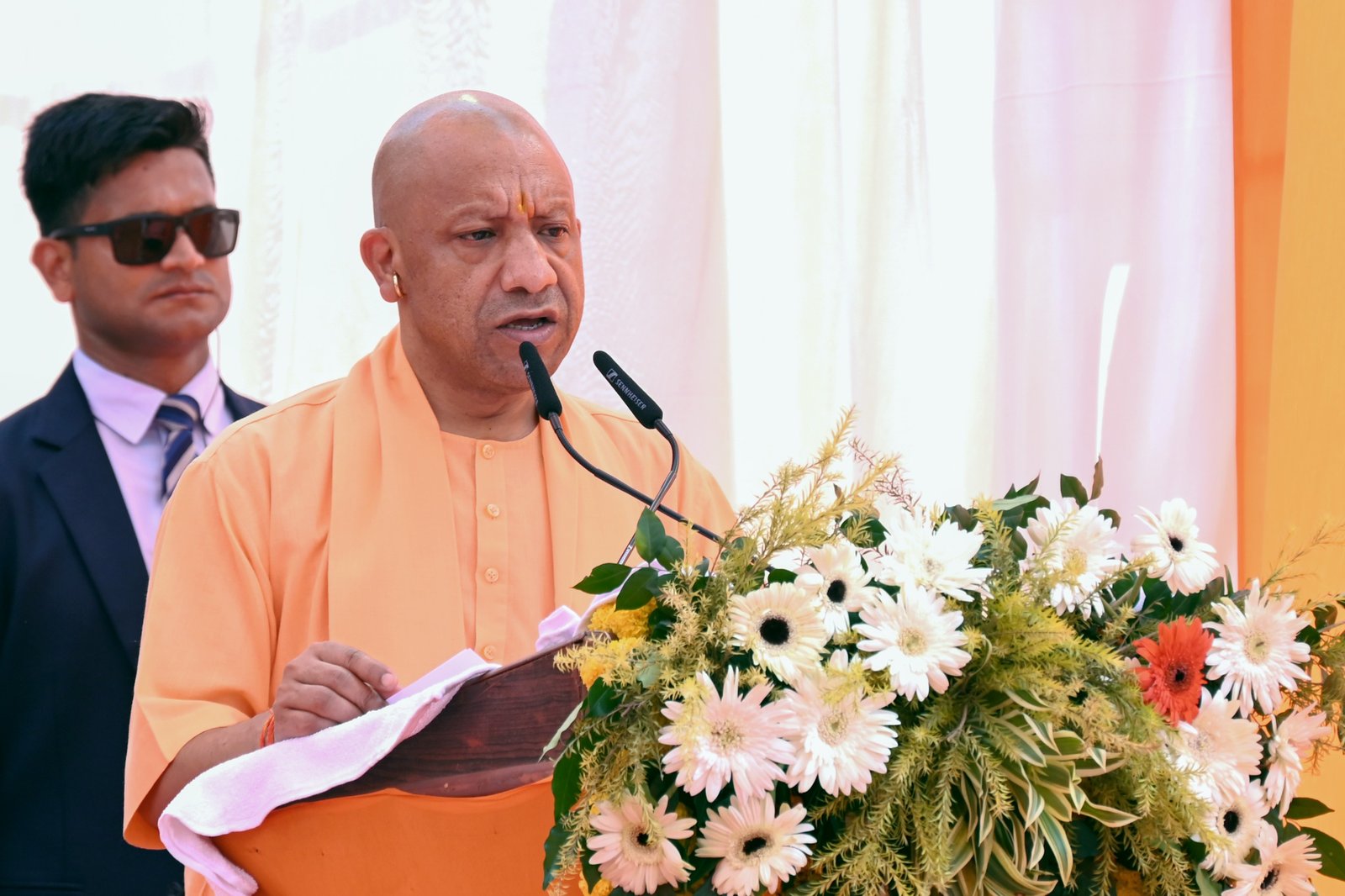
Speaking at the launch ceremony of the Saryu-Kamala Express at Ayodhya Cantt railway station, the Chief Minister said the new train service would strengthen the enduring friendship, religious faith and economic ties between India and Nepal. He described it as an example of Prime Minister Narendra Modi’s vision of “heritage and development”.
The direct rail service between Ayodhya Dham and Janakpur Dham is expected to make travel easier for pilgrims, traders and ordinary citizens of both countries. It will enable devotees from Nepal to visit Ram Lalla in Ayodhya and provide Indian pilgrims with direct access to Mata Janaki’s birthplace at Janakpur.
The train will pass through Punaura Dham in Sitamarhi, Bihar, and stop at 10 important stations across Uttar Pradesh, Bihar and Nepal. According to the Chief Minister, the service is expected to promote religious tourism, trade, local handicrafts and employment opportunities in the region.
A Historic Connection Rooted in the Ram-Janki Tradition
The Chief Minister said India and Nepal share much more than a political or geographical relationship. Their ties have been shaped by thousands of years of shared faith, culture, affection and family connections. The relationship is often described through the Ram-Janki tradition as a roti-beti ka rishta — a bond of shared food, family and marriage.
He recalled the journey of Lord Shri Ram and Lakshman to Mithila with Maharishi Vishwamitra and the arrival of Maharaja Dasharath’s wedding procession from Ayodhya to Janakpur for the marriage of Lord Ram and Mata Sita. These episodes, he said, remain deeply embedded in the cultural memories of both regions and are celebrated during traditional occasions, including Vivah Panchami.
People in Ayodhya continue to regard Janakpur as their in-laws’ home, while people in the Mithila region consider Lord Shri Ram their honoured guest, reflecting the affection and closeness between the two communities.
Yogi Adityanath said that when the Vivah Panchami celebrations take place at the Ram-Janki marriage pavilion in Janakpur, devotional and auspicious songs also resonate in Ayodhya. He recalled that the religious flag was installed atop the Shri Ram Janmabhoomi Temple on Vivah Panchami last year.
Referring to the nearly 500-year-long struggle associated with the Shri Ram Janmabhoomi movement, the Chief Minister said the contribution and support of Nepal’s saints, youth, women and ordinary devotees would always be remembered. He added that hundreds of devotees from Janakpur Dham, regarded as Mata Janaki’s parental home, had travelled to Ayodhya with ceremonial gifts and blessings during the consecration of Ram Lalla.
Shared Spiritual Heritage from Pashupatinath to Kashi Vishwanath
Highlighting the religious and spiritual links between the two countries, the Chief Minister referred to the longstanding connection between Nepal’s Pashupatinath Temple and the Kashi Vishwanath Temple in Varanasi. Devotees from Uttar Pradesh, he said, have travelled to Muktinath and Pashupatinath for generations.
He also cited the tradition of offering khichdi sent from Nepal at the Gorakhnath Temple during Makar Sankranti and the annual pilgrimage of devotees from Nepal to the Devipatan Shaktipeeth during Chaitra Navratri as examples of the shared religious bond.
Referring to the common Buddhist heritage, he said Lord Buddha was born in Lumbini in Nepal, while several important milestones in his life, spiritual journey and teachings are associated with Uttar Pradesh. Kapilvastu-Piprahwa, Shravasti, Sarnath and Kushinagar continue to preserve this shared legacy.
The Chief Minister also recalled that the sacred Piprahwa relics of Lord Buddha were brought back to India from Hong Kong in July 2025 after 127 years. Piprahwa is located in Uttar Pradesh’s Siddharthnagar district, close to the India-Nepal border.
He further highlighted the natural and cultural links between the two countries through their rivers. Rivers originating in Nepal’s Himalayan region, including the Karnali, Gandaki, Rapti and Mahakali, flow into Uttar Pradesh as the Ghaghara, also known as the Saryu, Gandak, Rapti and Sharda, nourishing the region’s agricultural land and supporting local communities.
According to the Chief Minister, the waters of the Saryu and the auspicious traditions of Janakpur reflect the shared cultural identity of the two regions.
Open Border and Neighbourhood First Policy Strengthen Ties
Yogi Adityanath described the open border between India and Nepal as a unique example of mutual trust. Thousands of people cross between the two countries every day for trade, employment, education, healthcare and family-related activities. He said India and Nepal stand by each other during difficult times.
He added that the policies of the Central and state governments are guided by the spirit of the “Neighbourhood First” approach.
The Chief Minister said seven districts of Uttar Pradesh — Pilibhit, Lakhimpur Kheri, Bahraich, Shravasti, Balrampur, Siddharthnagar and Maharajganj — share a border of approximately 600 kilometres with Nepal.
Prime Minister Narendra Modi, he said, has emphasised expanding road, digital, energy, information and railway connectivity between the two countries through highways, information highways and trans-national connectivity networks. The Saryu-Kamala Express is an important step in strengthening railway links.
The Chief Minister recalled that Prime Minister Modi had flagged off the Janakpur-Ayodhya bus service in 2018 from the premises of the Mata Janaki Temple in Janakpur. Yogi Adityanath said he had the opportunity to welcome the first bus when it arrived in Ayodhya. The new rail service, he said, would take the relationship between the two religious destinations further.
Connectivity and Trade Infrastructure Expanding Along the Nepal Border
The Chief Minister outlined several infrastructure projects being developed in Uttar Pradesh’s border areas to improve connectivity and trade with Nepal.
He said the state’s first land port at Rupaidiha, along the Nepal border, is ready. A significant share of India’s exports to Nepal passes through this route. Plans are also being prepared to develop industrial and logistics corridors around the Rupaidiha border area.
Under the Lucknow-Rupaidiha corridor, the four-lane Barabanki-Bahraich highway is being developed. Once completed, it is expected to reduce travel time between Rupaidiha and Nepalgunj by nearly half.
The Rupaidiha-Nepalgunj Road area in Bahraich has also been connected to the broad-gauge and electrified railway network through Nanpara and Bahraich. This is expected to improve public connectivity and economic activity in the border region.
Work on the Sonauli-Bhairahawa Integrated Check Post is also progressing rapidly. Facilities being developed there include a public terminal building, cargo terminal building and warehouses.
The Chief Minister said that an 80-kilometre-long Gorakhpur-Sonauli road project, built at a cost of Rs 1,450 crore, was inaugurated last week. Plans are also underway to develop a four-lane corridor connecting the Nepal border with Prayagraj through Siddharthnagar and Basti.
He also referred to the proposed 750-kilometre-long, six-lane Gorakhpur-Shamli Greenfield Expressway, which is expected to strengthen connectivity between western Uttar Pradesh, eastern Uttar Pradesh and the Nepal border.
In addition, the Shri Ram-Janki Marg, connecting Ayodhya to Janakpur through Sitamarhi, is taking shape. These projects, he said, would create new opportunities for trade, tourism and social interaction between India and Nepal.
Modern Infrastructure Giving a Boost to Religious Tourism in Ayodhya
The Chief Minister said Ayodhya, which had faced neglect in the past, is now developing with modern and world-class infrastructure.
The Maharishi Valmiki International Airport has connected the city of Lord Shri Ram with destinations across India and abroad. He noted that Ayodhya, which earlier had only single-line railway connectivity, now has double railway lines and operates modern trains such as the Vande Bharat and Amrit Bharat services.
The Saryu-Kamala Express, he said, would give fresh momentum to both the Ramayana Circuit and the Buddhist Circuit from the perspective of religious tourism.
The train will pass through Sitamarhi, regarded as the birthplace of Mata Janaki. A grand temple dedicated to Mata Sita and a spiritual township are being developed at Punaura Dham in the district.
Stops at 10 Stations to Promote Tourism, Trade and Employment
Yogi Adityanath said the Saryu-Kamala Express would stop at 10 important intermediate stations across Uttar Pradesh, Bihar and Nepal. These stops are expected to create opportunities for religious tourism, trade, hospitality, local handicrafts and transport services in border areas.
He said the increased movement of passengers could generate thousands of employment opportunities and strengthen people-to-people connections and mutual trust between the two countries.
The Chief Minister particularly highlighted the women associated with Mithila painting in Janakpur. He said the train service could contribute to their economic empowerment by improving access to markets and creating new opportunities for local artisans.
Better transport connectivity, he added, would help local handicrafts reach wider markets and expand economic opportunities for women artisans.
Yogi Adityanath said Uttar Pradesh is at the centre of both the Ramayana and Buddhist circuits, which extend into Nepal. The Saryu-Kamala Express, therefore, would serve not merely as a means of transport but as an important link connecting the cultural heritage, religious tourism and economic activities of the two countries.
Dignitaries Attend the Launch Programme
Prime Minister Narendra Modi, Nepal Prime Minister Balendra Shah and Union Railway Minister Ashwini Vaishnaw attended the programme from Delhi.
Those present at Ayodhya Dham included Uttar Pradesh Agriculture Minister and district in-charge minister Surya Pratap Shahi, Ayodhya Mayor Girish Pati Tripathi, MLA Ved Prakash Gupta, District Panchayat Chairperson Roli Singh, Member of the Legislative Council Hariom Pandey, MLAs Ramchandra Yadav, Amit Singh Chauhan and Abhay Singh, former MP Lallu Singh, Northern Railway General Manager Rajesh Pandey and Divisional Railway Manager Sunil Kumar Verma.