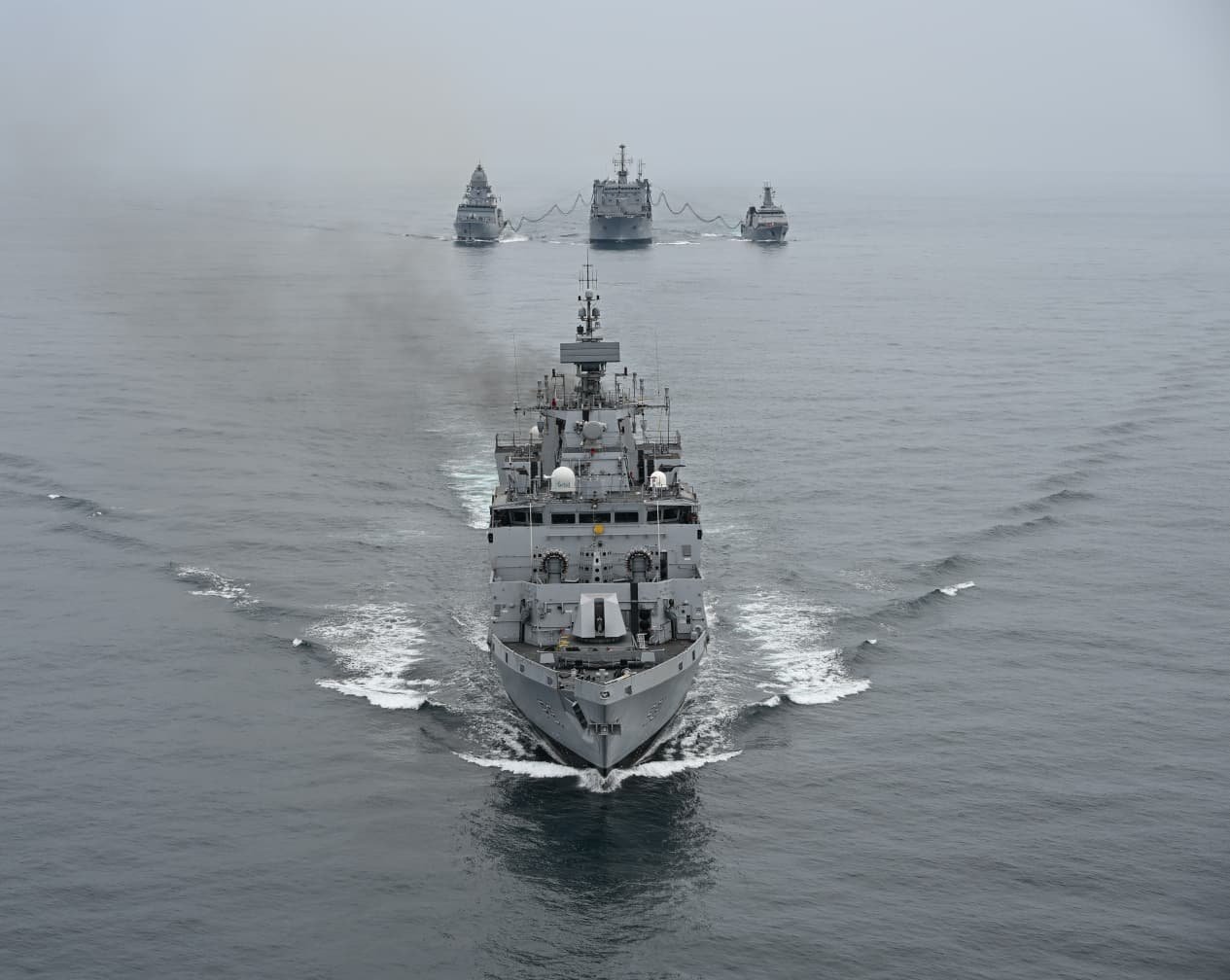
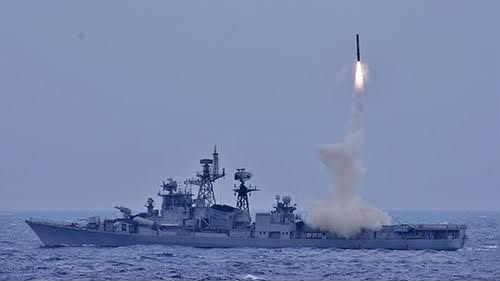
New Delhi, Aug 2026 : The Indian Navy is rapidly expanding the deployment of BrahMos supersonic cruise missiles across its frontline fleet, with around 20 major surface warships already equipped with the weapon system and plans to extend the capability to nearly all major surface combatants by 2030.
The expansion is aimed at significantly strengthening India’s maritime strike and sea-denial capabilities amid an increasingly competitive security environment in the Indian Ocean Region and the wider Indo-Pacific.
The BrahMos, capable of speeds of around Mach 2.8, is designed to deliver high-speed precision strikes against surface targets. Its integration across a growing number of destroyers, frigates and missile vessels is giving the Navy greater flexibility in conducting long-range maritime strike operations.
More than six BrahMos-capable warships have reportedly joined the fleet over the past year, underlining the pace at which the Navy is modernising its surface combatant force.
Among the recent additions is INS Mahendragiri, the sixth Nilgiri-class stealth frigate under Project-17A. The warship incorporates more than 75 per cent indigenous content and is equipped with eight BrahMos missiles along with advanced combat and surveillance systems.
The Nilgiri-class represents a new generation of Indian stealth frigates designed to undertake a range of missions, including anti-surface, anti-air and anti-submarine warfare. The class includes INS Nilgiri, INS Udaygiri, INS Himgiri, INS Taragiri, INS Dunagiri and INS Mahendragiri.
Each of these warships is equipped with BrahMos missiles, medium-range surface-to-air missile systems, anti-submarine warfare capabilities and embarked helicopters, significantly expanding their operational versatility.
The Navy and Indian shipbuilding industry have also sought to reduce construction timelines through modern production techniques. The adoption of Integrated Modular Construction has helped cut delivery schedules, enabling multiple Project-17A frigates to enter service within a relatively short period.
Alongside the induction of advanced frigates, India is developing the Next Generation Missile Vessels (NGMVs). Six high-speed vessels are planned under the programme, with BrahMos forming a central element of their offensive capability. The vessels are expected to begin joining the Navy from 2027 onwards.
Being constructed by Cochin Shipyard Limited, the NGMVs are designed for high-speed maritime strike missions. They are expected to feature advanced sensors, layered defensive systems and propulsion technology capable of supporting speeds exceeding 33 knots. Their operational concept is focused on rapid movement, engagement and withdrawal, making them particularly suitable for coastal and littoral operations.
The Navy’s broader objective is to ensure that by 2030, almost every major surface combatant—including destroyers, frigates and missile corvettes—is capable of deploying BrahMos or an advanced derivative of the missile.
This will involve both the integration of BrahMos on new warships and upgrades to existing platforms. The effort forms part of India’s larger push towards an increasingly self-reliant maritime force under the broader MAHASAGAR vision and the government’s emphasis on indigenous defence production.
BrahMos remains central to India’s naval strike architecture because of its combination of speed, precision and low-altitude sea-skimming flight profile. Its high speed is intended to reduce the reaction time available to adversary air-defence systems.
The missile programme is also evolving, with extended-range variants and more advanced versions being pursued. Longer-range BrahMos variants could substantially increase the Navy’s ability to engage targets at greater distances, while future high-speed configurations could further expand its strategic utility.
The expansion is being supported by India’s growing naval-industrial ecosystem. More than 200 Indian companies, including MSMEs, have contributed to Project-17A frigate construction, while indigenous propulsion, sensors and combat systems are increasingly being incorporated into frontline platforms.
The growing domestic contribution is intended to reduce dependence on foreign suppliers while strengthening India’s defence manufacturing base.
By 2030, the widespread deployment of BrahMos-capable warships could significantly transform the Indian Navy’s surface warfare profile, providing greater strike flexibility, strengthening deterrence and enhancing India’s ability to safeguard its maritime interests across the Indian Ocean and the wider Indo-Pacific.
(Disclaimer :The content of this article is sourced from a news agency and has not been edited by the Mavericknews30 team.)