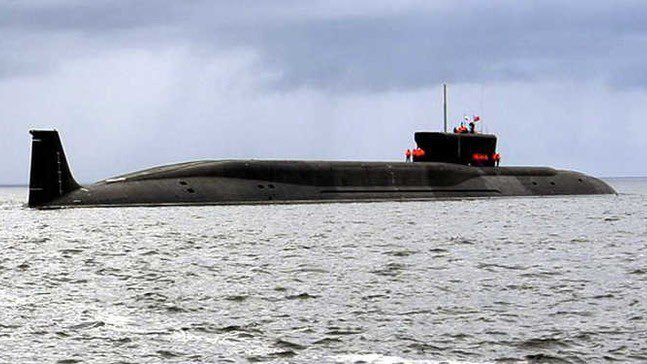
New Delhi, Aug 2026 : India’s fourth Arihant-class nuclear-powered ballistic missile submarine, INS Arisudan, is undergoing advanced sea trials and is expected to complete the process by the end of 2026, paving the way for its likely commissioning in 2027.
The induction of the submarine would mark an important milestone in India’s efforts to strengthen its sea-based nuclear deterrent. INS Arisudan would become the fourth operational boat in the Arihant-class fleet, following INS Arihant, INS Arighaat and INS Aridhaman.
The submarine, identified as S4* during its construction, was launched at the Ship Building Centre in Visakhapatnam in October 2024 in the presence of Defence Minister Rajnath Singh. Following harbour integration and extensive system validation, it reportedly began sea trials after departing Visakhapatnam in December 2025.
The trials are expected to continue through 2026, covering the submarine’s propulsion, navigation, weapons and other critical systems before commissioning preparations begin.
INS Arisudan represents an enlarged version of the Arihant-class design. The stretched configuration is understood to provide additional internal space for missile systems while retaining the survivability and low-noise characteristics essential to strategic submarines. Its displacement is estimated at around 7,000 tonnes, compared with approximately 6,000 tonnes for the original INS Arihant.
One of the major improvements in the stretched variants is their expanded missile-launch capability. The earlier Arihant and Arighaat submarines are equipped with four vertical launch system tubes designed primarily for K-15 Sagarika submarine-launched ballistic missiles.
The larger submarines are understood to feature eight launch tubes, allowing greater flexibility in carrying strategic missiles. Depending on the configuration, the vessels can accommodate K-4 submarine-launched ballistic missiles, with a reported range of around 3,500 km, or a larger number of shorter-range K-15 missiles.
The increased missile capacity is expected to enhance the reach and flexibility of India’s sea-based nuclear deterrent.
The Arihant-class forms an important component of India’s nuclear triad, alongside land-based ballistic missiles and nuclear-capable aircraft. The submarine leg is particularly significant because nuclear-powered ballistic missile submarines can remain concealed underwater for extended periods, making them difficult to detect and target.
This survivability provides India with a credible second-strike capability in line with its declared nuclear doctrine.
The addition of a fourth SSBN would also provide greater flexibility in managing patrol, maintenance and training cycles. With more submarines available, the Navy would be better positioned to maintain an effective sea-based deterrent while individual vessels undergo scheduled maintenance.
India’s submarine programme assumes greater strategic importance amid the expansion of China’s naval and nuclear capabilities. Beijing continues to strengthen its fleet of nuclear-powered submarines and expand its overall maritime presence across the Indo-Pacific.
Pakistan’s nuclear posture also remains a major consideration for India’s strategic planners, making survivable nuclear assets an important element of national security.
The development of secure infrastructure for strategic submarines is another part of this effort. The INS Varsha project near Visakhapatnam is intended to provide protected facilities for India’s nuclear-powered submarine fleet, enhancing operational security and survivability.
The Arihant programme represents decades of indigenous technological development following India’s decision to build a credible nuclear triad. The successful completion of INS Arisudan’s sea trials and its subsequent commissioning would demonstrate further progress in India’s ability to design, build and operate nuclear-powered strategic submarines.
The submarine is also expected to serve as a bridge towards India’s next-generation S5-class SSBNs, which are planned to be significantly larger and carry greater missile capacity.
If INS Arisudan completes trials as scheduled and enters service in 2027, it will strengthen India’s underwater deterrent while marking another major step in the country’s long-term nuclear submarine programme.