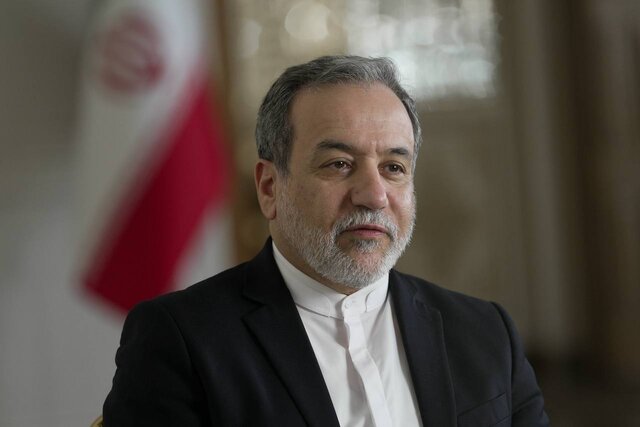
Tehran, October 2026 : Iranian Foreign Minister Seyed Abbas Araghchi has said Tehran will not surrender its sovereign rights under external pressure, while remaining open to negotiations based on mutual respect and credible guarantees. He also revealed that Iran had conveyed a seven-day proposal to the United States through Qatar to facilitate the reopening of the strategically important Strait of Hormuz.
Araghchi made the remarks on Saturday while addressing the 52nd Session of the Council of Foreign Ministers of the Organisation of Islamic Cooperation (OIC) in Baghdad, Iraq, according to a statement issued by Iran’s Foreign Ministry.
“Iran does not accept coercion, threats or intimidation,” he said, reiterating Tehran’s position that any diplomatic engagement must respect its sovereignty and legitimate interests.
The Iranian foreign minister reaffirmed his country’s commitment to safe and secure navigation through the Strait of Hormuz, a vital international shipping route for global energy supplies. He argued that the waterway had remained open before the United States and Israel launched attacks against Iran on February 28.
According to Araghchi, Tehran had submitted a concrete seven-day plan to Washington through Qatar. He said the strait could be reopened within seven days if the necessary conditions were fulfilled.
“The choice now rests with the United States,” he added, as reported by Xinhua news agency.
Iran Defends Regional Security Position
Araghchi said Iran would continue defending its people, sovereignty and legitimate interests by all available means. He maintained that Iran had not attacked neighbouring countries but had targeted US military bases and installations located in those states.
He stressed that the territory, airspace and infrastructure of regional countries should be used to promote collective security rather than facilitate attacks against neighbouring states.
“No state can build lasting security at the expense of the security of others,” Araghchi said.
He argued that regional disputes should be resolved by countries within the region, warning against allowing external powers to use unresolved issues as a pretext for further conflict.
“We believe the problems of our region are best resolved within the region, by its own states, before they become a pretext for the wars of distant powers,” he said.
Background to the Conflict
The latest diplomatic remarks come amid tensions that escalated after the United States and Israel launched joint attacks on Tehran and other Iranian cities on February 28. Iran responded with waves of missile and drone strikes targeting Israel and US military bases and assets across the region, while tightening its control over the Strait of Hormuz.
A ceasefire between the warring parties was reached on April 8. Subsequently, on June 18, Iran and the United States signed a memorandum of understanding aimed at ending the conflict across the region.
Under the understanding, the two countries were scheduled to hold negotiations within 60 days, with August 17 set as the deadline for reaching a final agreement covering Iran’s nuclear programme and sanctions relief.
However, the negotiations failed to achieve sufficient progress towards a comprehensive settlement as tensions continued to rise.
Araghchi’s latest statement signals Tehran’s willingness to consider a negotiated arrangement on maritime security, while maintaining that any agreement must include credible guarantees and respect Iran’s sovereign rights. The proposed seven-day plan now places the next step on Washington, according to the Iranian foreign minister.
(Disclaimer :The content of this article is sourced from a news agency and has not been edited by the Mavericknews30 team.)