Dubai, Aug 2026 : Iran’s Supreme Leader Seyyed Mojtaba Khamenei has ordered a major overhaul of the country’s senior military leadership, appointing new commanders to six key positions as Tehran moves to rebuild its defence command structure following the deaths of several senior officers during the recent conflict with the United States and Israel.
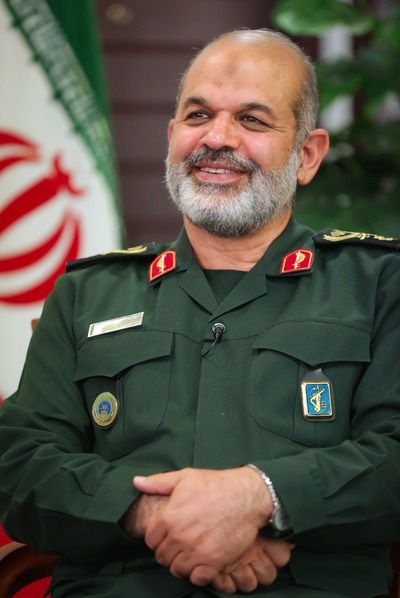
The reshuffle puts veteran Revolutionary Guards commander Ahmad Vahidi in charge of the Islamic Revolutionary Guard Corps (IRGC), while Major General Ali Abdollahi has been formally appointed chief of staff of Iran’s armed forces. The appointments are being seen as a significant effort to restore continuity and strengthen military coordination after the loss of senior commanders.
The changes follow the deaths of senior IRGC and military commanders during the conflict. Iranian authorities have described the slain officers as martyrs and have moved quickly to fill key command positions.
In separate decrees, Khamenei appointed Brigadier General Kioumars Heidari as deputy chief of the armed forces’ general staff, Major General Mostafa Izadi as deputy commander of the IRGC, Rear Admiral Ali Azmaei as commander of the IRGC Navy and cleric Hossein Taeb as head of the Basij volunteer force.
Vahidi Takes Charge of IRGC
Vahidi, a veteran security and military official, has held a number of senior positions in Iran’s defence and political establishment. He previously served as interior minister and defence minister and has spent decades in the Revolutionary Guards and other security institutions.
In appointing Vahidi to lead the IRGC, Khamenei cited the “honourable and proud martyrdom” of his predecessor and Iran’s continuing confrontation with what he described as “global arrogance”.
The Supreme Leader instructed the new IRGC commander to strengthen the country’s military capabilities, maintain maximum deterrence and ensure readiness for what he described as powerful offensive operations against adversaries. He also called for strengthening the ideological and cultural foundations of the Revolutionary Guards and improving its command and management structures.
The appointment comes as Iran seeks to demonstrate that the loss of senior commanders has not disrupted the operational structure of the powerful military organisation.
Abdollahi Named Armed Forces Chief
Major General Ali Abdollahi, who had been serving as acting chief of staff and commander of the Khatam al-Anbiya Central Headquarters, was formally appointed chief of the armed forces’ general staff.
Khamenei directed Abdollahi to enhance Iran’s defence capabilities and prepare the armed forces to confront conventional, cognitive and hybrid threats. He also called for closer integration between the General Staff and the Khatam al-Anbiya Central Headquarters, which serves as Iran’s unified wartime military command.
The move could further centralise military planning and coordination between Iran’s conventional armed forces and the IRGC. Abdollahi previously headed the Khatam al-Anbiya Central Headquarters, which plays a key role in coordinating operations involving Iran’s military branches.
Four Other Senior Appointments
The reshuffle also fills several other important positions.
Kioumars Heidari, the former commander of the Army Ground Forces, has been appointed deputy chief of the armed forces’ general staff. Major General Mostafa Izadi, who has held senior strategic and planning positions, has been named deputy commander of the IRGC.
Rear Admiral Ali Azmaei, who had been serving in an acting capacity following the death of IRGC Navy commander Admiral Alireza Tangsiri, has been formally appointed to lead the naval force.
Hossein Taeb, a veteran security official and former head of the IRGC intelligence organisation, has been appointed commander of the Basij. The volunteer paramilitary force plays a significant role in domestic mobilisation and security operations.
Rebuilding Iran’s Military Command
The appointments represent one of the most significant changes to Iran’s military leadership in the aftermath of the recent conflict. Tehran is attempting to rebuild its command structure while maintaining deterrence and military readiness.
The new leadership team brings together commanders with extensive experience across the IRGC, regular armed forces, intelligence services and defence planning. Several have held senior positions for decades and have experience dating back to the 1980-88 Iran-Iraq war.
The leadership changes also come as Iran continues efforts to strengthen its missile, drone and naval capabilities. The restructuring is therefore likely to have implications beyond simply replacing fallen commanders, as Tehran seeks to improve coordination and prepare its armed forces for future security challenges.
The appointments underscore the Iranian leadership’s determination to project continuity and resilience despite the significant losses suffered during the conflict. At the same time, the emphasis on deterrence, offensive readiness and integrated military command signals that Tehran intends to maintain a strong defence posture amid continuing tensions with the United States and Israel.