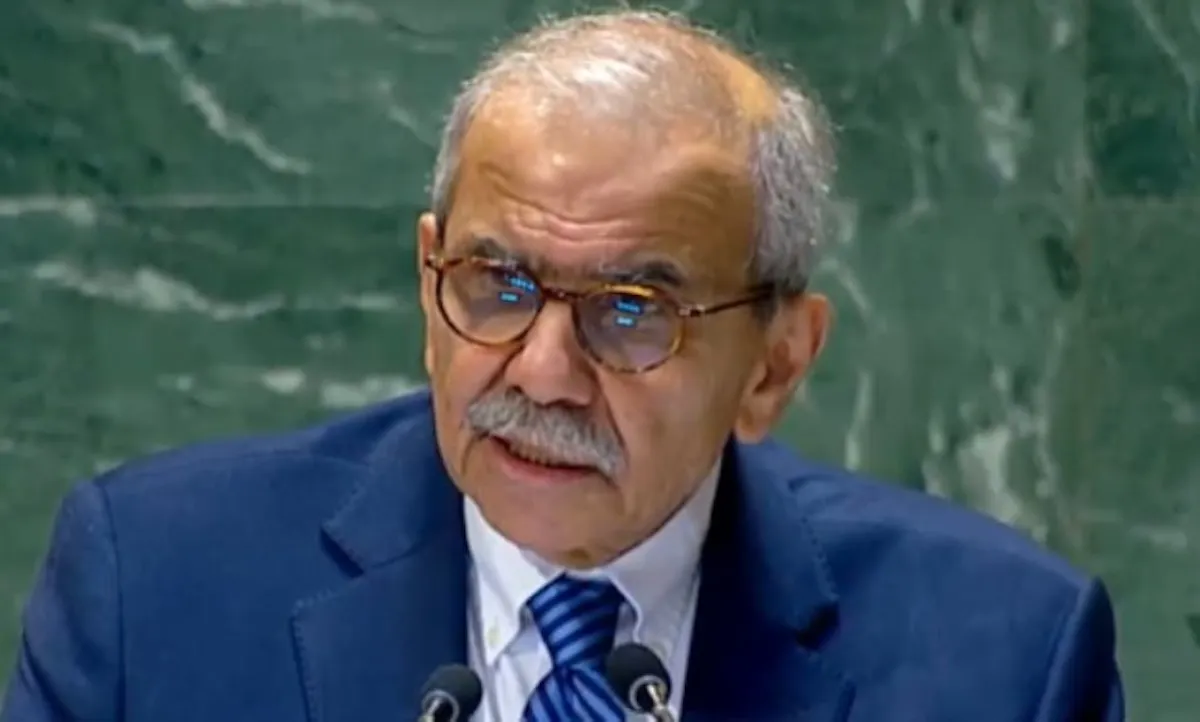
Beirut, Aug 2026 : Lebanese Prime Minister Nawaf Salam has called for a clear timetable for Israel’s withdrawal from Lebanese territory, as diplomatic efforts involving Lebanon, Israel and the United States continue amid persistent tensions along the southern border. At the same time, Hezbollah leader Naim Qassem has sharply criticised the Lebanese government’s negotiating position, accusing officials of exposing the Lebanese army to Israeli pressure while failing to secure meaningful concessions.
Salam raised the issue during a meeting with US Ambassador to Beirut Michel Issa and General Joseph Clearfield, who heads the US military coordination group for Lebanon. According to a statement from the Prime Minister’s Office, the discussions focused on the military track of negotiations with Israel and the deteriorating situation in southern Lebanon. Salam urged Israel to halt what he described as destruction operations, expand the designated pilot areas and establish a specific timetable for withdrawing its forces from Lebanese territory.
Lebanese Parliament Speaker Nabih Berri also held talks with the same US officials and accused Israel of continuing military violations inside Lebanon. Berri pointed to the demolition of villages, destruction of agricultural land, forest fires and damage to heritage sites, saying such actions were undermining efforts to restore stability along the border.
Berri maintained that a return to lasting calm depended primarily on Israel ending its military operations and withdrawing its forces to the internationally recognised border. US Ambassador Issa described his discussions with Lebanese officials as positive and said negotiations would continue, although he did not announce a date for the next round of talks.
The diplomatic process, however, faces significant opposition from Hezbollah. Qassem criticised Beirut’s approach, arguing that the Lebanese government was accepting arrangements that placed the country’s military under excessive pressure. He questioned how Lebanese authorities could accept what he called the continued humiliation of the Lebanese army while Israeli forces remained capable of carrying out attacks and exerting pressure on its positions.
Qassem also alleged that Israel was attempting to impose an oversight mechanism that would influence the deployment and internal operations of the Lebanese army. He specifically referred to Zawtar al-Gharbiyeh, described as the first designated pilot zone, claiming that Israeli forces had continued striking homes and demolishing tunnels even after Lebanese troops were deployed in the area.
The Hezbollah leader challenged the Lebanese government to demonstrate tangible results from the negotiations, asking officials to identify what he described as even a single achievement from the seven rounds of talks held so far.
The United States, meanwhile, has linked the cessation of Israeli military operations to Hezbollah’s disarmament. Ambassador Issa told reporters that attacks would stop if Hezbollah surrendered its weapons, underscoring one of the central disputes in the negotiations.
A trilateral framework agreed in June between Lebanon, Israel and the United States envisages the disarmament of Hezbollah alongside a gradual Israeli withdrawal from southern Lebanon. Israeli forces currently maintain positions in several locations on the Lebanese side of the border, making the sequencing of disarmament and withdrawal one of the most contentious issues.
Israel has continued to insist that Hezbollah must first give up its weapons. Israeli Defence Minister Israel Katz said Thursday that Israel would not withdraw from Lebanese territory until the group was disarmed. Lebanese authorities, meanwhile, have accused Israeli forces of continuing operations in the south, including demolishing homes and displacing residents.
The next round of negotiations is expected to resume in early September, although major differences remain over Hezbollah’s weapons, Israeli military positions and the role of the Lebanese army in securing the border.
The humanitarian toll has also continued to mount. Lebanese authorities said Israeli attacks since March 2 have killed 4,335 people, wounded 12,277 and displaced more than one million residents. With negotiations yet to resolve the fundamental disagreements between the parties, Beirut is pushing for a withdrawal timetable while Israel continues to make disarmament a precondition for ending its military presence.