State Moves Towards ‘Zero Bureaucracy’; 174 New Services Launched
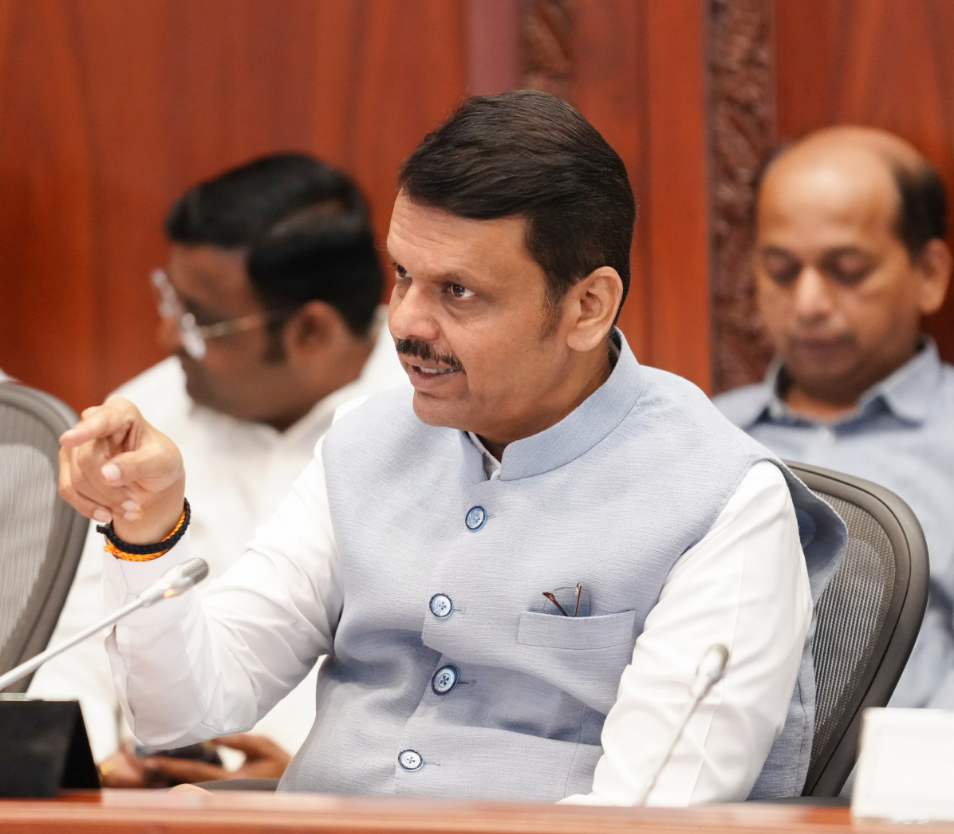
Mumbai, November 2026: Chief Minister Devendra Fadnavis has directed all state departments and district administrations to accelerate the Government Process Re-engineering (GPR) initiative and work in coordination to provide citizens with a new digital governance experience by January 26. The initiative aims to ensure that government services and welfare schemes reach people transparently, efficiently and with minimal human intervention.
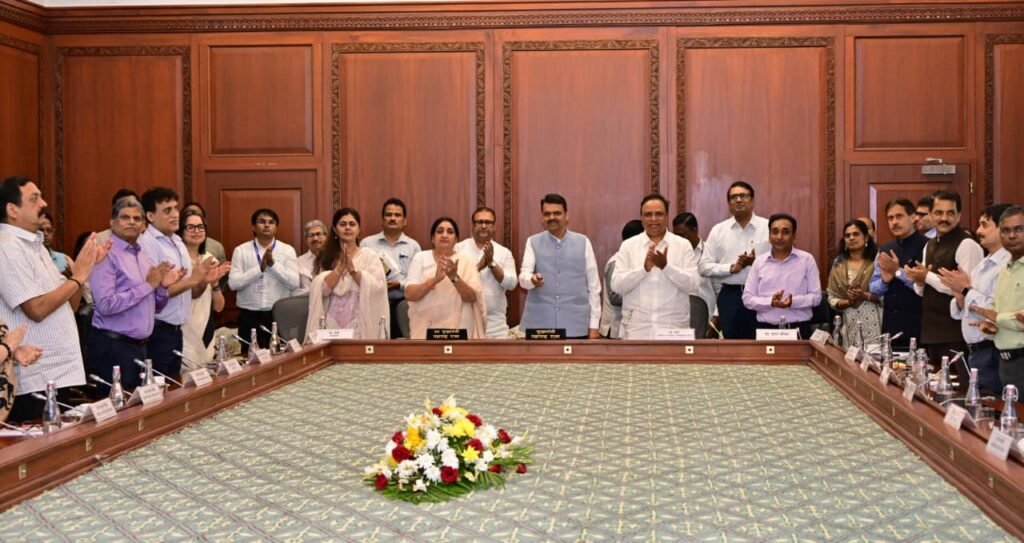
A total of 174 government services and projects were launched by Chief Minister Fadnavis at Sahyadri Guest House in Mumbai. Deputy Chief Minister Sunetra Ajit Pawar, Minister Pankaja Munde, Minister Adv. Ashish Shelar, Chief Secretary Rajesh Agrawal, Additional Chief Secretaries, Principal Secretaries, Secretaries of various departments and representatives of the Samagra and Information Technology departments attended the programme.
Fadnavis said continuous efforts had been underway over the past one-and-a-half to two years to ensure that government schemes and services reach citizens without difficulty. The objective is to transform administration based on three principles: transparency, efficiency and accountability.
“Zero Bureaucracy” is the government's goal, he said, adding that the focus is on simplifying administrative procedures, eliminating unnecessary steps and reducing human intervention.
Of the 1,129 administrative processes identified for re-engineering across the state, 397 have been completed so far, representing approximately 35 per cent of the target. As part of this initiative, 174 services have been launched on digital platforms. These include 76 services on the MAITRI 2.0 platform, 74 on Aaple Sarkar 2.0 and 24 under the Direct Benefit Transfer system through MahaDBT 2.0.
The Chief Minister said Mahasarathi would serve as an important platform for data-driven governance, helping improve the accuracy of government schemes and the efficiency of service delivery.
A structured procedure has been established for implementing the initiative. Following approval by the high-level committee, the concerned departments will issue government resolutions, after which the required digital architecture and service delivery processes will be developed. So far, 729 government resolutions have been issued and approximately 350 services have been streamlined.
The government plans to introduce several more important services by December 24. Fadnavis directed departments to prioritise pending approvals and technical requirements and complete the necessary technical work by December 31.
Digital Services to Reduce Documentation Burden
Fadnavis said digital governance would help eliminate unnecessary affidavits, reduce the repeated submission of documents by citizens and accelerate the transition towards paperless administration.
He stressed the need to strengthen service centres, ensure regular monitoring and improve grievance redressal mechanisms. District collectors and district-level administrative machinery should play an active role in implementing these reforms, he said.
Several digital systems were launched by the Chief Minister on the occasion. These included RTS 2.0, MahaDBT 2.0, MAITRI 2.0, MahaUpalabdhi, the State-Central Government Correspondence Management System, the Government Accommodation Allotment Management System and the Maharashtra Aadhaar Dashboard.
Through MahaUpalabdhi, pensioners and beneficiaries of various government schemes will be able to generate digital life certificates directly on their mobile phones. This will reduce the need for beneficiaries to visit offices in person to establish that they are alive.
The Chief Minister said the newly developed system for managing correspondence with the Central Government would help track communications and monitor the action taken on them. Other digital platforms would bring greater transparency to the allotment of government accommodation and improve the management of Aadhaar-related services.
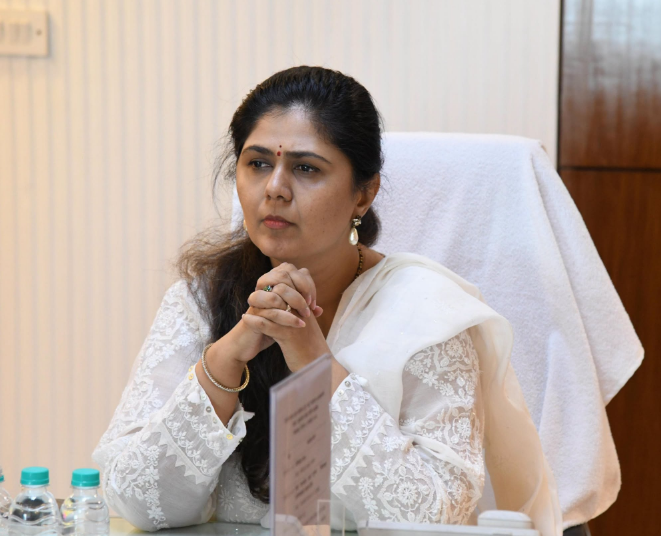
Animal Husbandry Department Scheme to Promote Rural Entrepreneurship: Minister Pankaja Munde
Animal Husbandry Minister Pankaja Munde outlined a scheme aimed at encouraging rural youth to become entrepreneurs through self-employment opportunities.
She said the scheme, developed with the support of Chief Minister Devendra Fadnavis and through MahaIT, would be implemented entirely online and in a transparent manner.
The initiative will promote entrepreneurship in rural areas in sectors such as egg production, dairy, poultry, meat production, goat rearing and pig farming. It is also expected to facilitate the development of production clusters in rural areas.
Under the scheme, general-category beneficiaries will receive a 50 per cent subsidy, while women and beneficiaries belonging to Scheduled Castes and Scheduled Tribes will be eligible for a 75 per cent subsidy.
After applications are received in the first phase, plans will be prepared for setting up clusters across different districts.
Digital Services Strengthen Citizens’ Constitutional Rights: Minister Ashish Shelar
Minister for Electronics, Information Technology and Artificial Intelligence Adv. Ashish Shelar highlighted the significance of the digital governance initiative in the context of Constitution Day.
He said that citizens must be able to access government schemes and benefits through transparent, efficient and timely administrative procedures to ensure that the rights guaranteed by the Constitution are realised in practice.
The addition of 74 citizen services to RTS 2.0, the expansion of schemes available through MahaDBT and the extension of services on the MAITRI platform were important steps towards more citizen-centric governance, he said.
Administrative Reforms to Be Implemented in Six Stages: Chief Secretary Rajesh Agrawal
Chief Secretary Rajesh Agrawal reviewed the progress of the Government Process Re-engineering initiative.
He said that efforts from the outset had focused on strengthening MahaIT, developing the backend infrastructure for the Mahasarathi platform and creating an API bridge to connect with various Central Government databases.
He attributed the progress achieved so far to the active participation of secretaries from all departments and field-level officers.
The administrative process re-engineering initiative focuses on six key areas: eliminating unnecessary services; automatically providing certificates and documents using information already available with the government; integrating services of a similar nature; reducing the number of fields in application forms and the documents required; reducing approval stages; and decentralising administrative powers.
More than 100 unnecessary services have been eliminated so far, while the requirement for supporting documents has been reduced by more than 50 per cent.
Most departments have also decentralised powers by delegating authority to field-level officers. Chief Secretary Agrawal urged these officers to make appropriate use of the powers entrusted to them.