
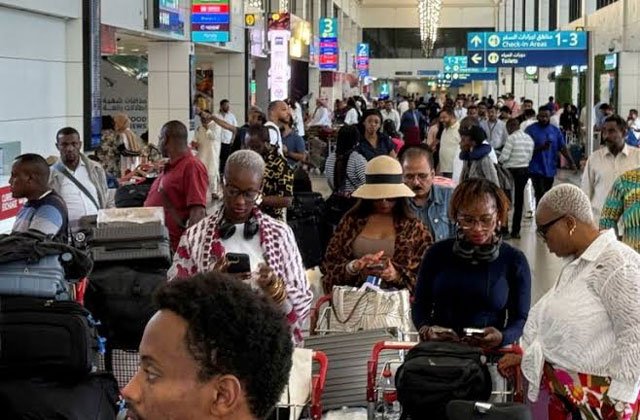
Dubai, Aug 2026 : Aviation operations across the Middle East and eastern Mediterranean faced significant disruption on Sunday, with 25 flight cancellations and 1,108 delays reported across six major airports amid airspace restrictions, geopolitical tensions and heavy summer travel demand.
Antalya Airport in Türkiye recorded the highest number of disruptions, with 318 delayed flights and 10 cancellations. The popular Mediterranean gateway is experiencing heavy seasonal passenger traffic, while adjustments to flight paths due to restrictions on certain air corridors have added to operational pressures.
At Dubai International Airport, one of the world’s busiest transit hubs connecting Asia, Europe and Africa, 255 flights were delayed and three were cancelled. Delays at the airport have wider consequences for international aviation, as disruptions can affect aircraft rotations, connecting services and passenger transfers across multiple airline networks.
Sharjah International Airport also reported considerable disruption, with 92 delays and five cancellations. Airlines operating across the Gulf have been monitoring aviation safety advisories and modifying routes around areas considered higher risk. Such diversions can increase flight times and fuel consumption.
In Egypt, Cairo International Airport recorded 189 delayed flights and two cancellations. The airport serves as a major link between Europe, Africa and the Middle East, meaning disruptions can affect passengers travelling on multi-sector international itineraries.
Saudi Arabia’s major aviation hubs were also affected. King Abdulaziz International Airport in Jeddah recorded 128 delayed flights and three cancellations, while King Khalid International Airport in Riyadh reported 126 delays and two cancellations.
The widespread disruptions have put additional pressure on airport infrastructure and ground operations, including gate management, baggage handling, staffing and aircraft scheduling. Even relatively short delays can create a chain reaction when aircraft operating multiple sectors are unable to depart on time.
Among airlines, SunExpress recorded the highest level of disruption, with 220 delays and 10 cancellations. The carrier’s extensive leisure network in Türkiye was particularly affected by congestion and operational challenges surrounding Antalya.
Air Arabia, headquartered at Sharjah International Airport, reported 80 delays and five cancellations. Saudi national carrier Saudia recorded 56 delays and three cancellations, while Royal Jordanian reported 32 delays and two cancellations. Oman Air recorded 24 delays and one cancellation.
Yemenia, also known as Yemen Airways, reported three cancellations and one delay.
The interconnected nature of the region’s aviation network means that disruption at major hubs such as Dubai, Jeddah and Antalya can quickly spread to other destinations. Aircraft operating on subsequent routes may arrive late, while passengers can miss connecting flights and airlines may be forced to rearrange crews and aircraft.
Airlines and aviation authorities are continuing to monitor regional security conditions and airspace availability and are making operational adjustments where required. Passengers travelling through affected airports have been advised to check their flight status directly with their airlines before leaving for the airport, as schedules can change at short notice.
Travellers with international connections have also been advised to allow additional time between flights, particularly when transiting through major regional hubs.
The disruptions come during the peak summer travel season, when airports are already handling high passenger volumes. The combination of strong demand, restricted air corridors and security-related route changes has placed additional pressure on airlines and airport infrastructure.
Longer flight paths and holding patterns can also increase fuel consumption, operating costs and emissions. The duration of the disruption will depend largely on regional airspace conditions, security developments, airport capacity and the ability of airlines to adjust routes and schedules.
For carriers operating across the Middle East and eastern Mediterranean, flexible scheduling, alternative routing and close coordination with aviation authorities are expected to remain crucial to maintaining regional and international connectivity in the days ahead.
(The content of this article is sourced from a news agency and has not been edited by the Mavericknews30 team.)