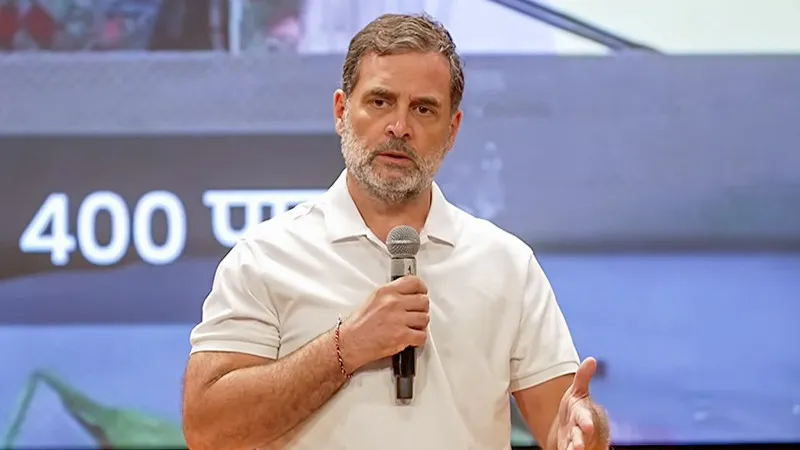
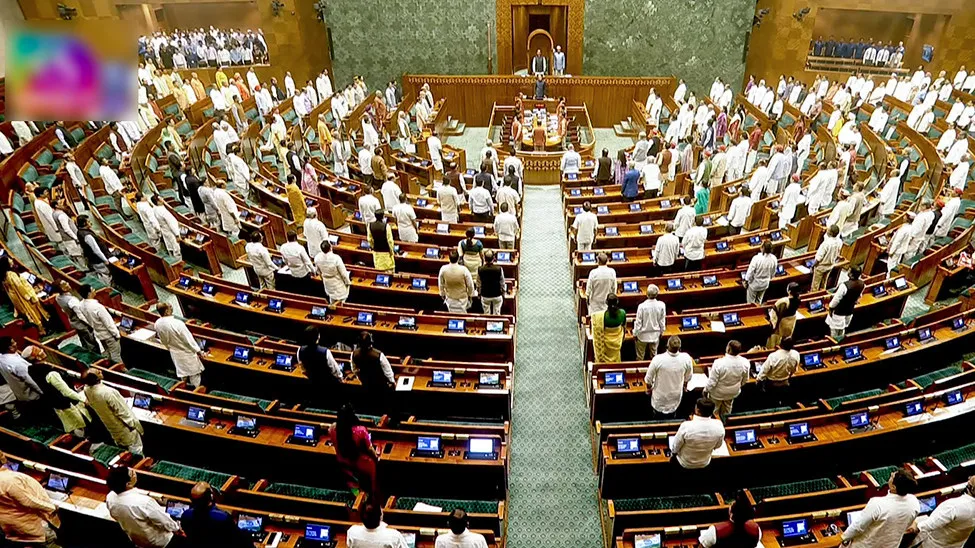
New Delhi, Aug 2026 : The Monsoon Session of Parliament has witnessed an unusual political dynamic, with the government repeatedly offering to debate contentious issues while the Opposition, led by Congress leader and Leader of Opposition in the Lok Sabha Rahul Gandhi, has remained unwilling to enter into discussions without prior assurances and accountability from the government.
Traditionally, Parliament has often seen the Opposition demanding debates while the government seeks to avoid discussions on politically sensitive matters. This time, however, the roles have been reversed. The government has sought discussions on issues raised by the Opposition, while the latter has insisted on conditions before agreeing to participate.
For Rahul Gandhi, the session has provided an opportunity to keep pressure on the government, particularly after his allegations concerning the Election Commission's Special Intensive Revision (SIR) of electoral rolls failed to translate into a decisive political advantage in subsequent elections. Critics of the Opposition's strategy have argued that if the allegations surrounding SIR had significantly influenced electoral outcomes, the BJP and its allies would have faced greater setbacks in states such as Kerala and Tamil Nadu, where the party continues to face considerable political challenges.
The Congress and its allies have also found it difficult to turn the SIR controversy into a broader electoral weapon in Bihar and other states. Against this backdrop, issues such as the alleged NEET-UG paper leak and claims concerning the handling of donations to the Ram Mandir in Ayodhya have emerged as potentially potent political issues ahead of upcoming Assembly elections, particularly in Uttar Pradesh.
The government, however, has maintained that it is prepared to discuss the allegations on the floor of the House. Parliamentary Affairs Minister Kiren Rijiju in the Lok Sabha and Leader of the House in the Rajya Sabha J.P. Nadda repeatedly invited the Opposition to participate in debates. Several rounds of discussions were also held, including meetings at the office of Lok Sabha Speaker Om Birla, in an attempt to break the deadlock.
The Opposition, however, insisted that certain conditions had to be met before any discussion could take place. Rahul Gandhi reportedly put forward three key demands: that Union Home Minister Amit Shah clarify who authorised police firing during protests linked to the examination controversy, that Prime Minister Narendra Modi apologise to affected students, and that accountability be fixed over alleged irregularities involving donations to the Ram Mandir Trust.
The government has questioned the logic of such demands, arguing that Parliament's established procedure allows allegations to be raised during a debate, followed by responses from the government and other members. From the government's perspective, accepting the Opposition's conditions before a discussion would effectively amount to determining responsibility without allowing the parliamentary process to run its course.
In an effort to accommodate the Opposition's concerns, the government even explored the possibility of linking the discussion on the examination controversy with proposed legislation concerning fast-track courts. The Union Home Minister also indicated his willingness to hear the concerns raised in Parliament and provide answers.
These initiatives, however, failed to resolve the impasse. Opposition leaders dismissed the government's overtures and maintained that accountability must come before discussion. The BJP, meanwhile, accused the Opposition of deliberately avoiding parliamentary debate and using sensitive issues primarily for political mobilisation.
The contrasting positions have turned the Monsoon Session into a battle over political narratives. The government has sought to portray itself as willing to face questions and defend its record, while the Opposition has attempted to present the refusal to accept its demands as evidence of government evasiveness.
The political calculations behind the standoff are significant. By declining a debate, the Opposition can keep public attention focused on its allegations rather than allowing the government an extended opportunity to respond within the formal parliamentary framework. At the same time, the government can argue that it has repeatedly offered a platform for discussion and that it is the Opposition that has prevented Parliament from functioning normally.
The INDIA bloc is expected to continue highlighting the issues surrounding electoral rolls, examination irregularities and the Ayodhya donations controversy as part of its political campaign in the run-up to forthcoming elections. Education, electoral transparency and religious institutions are all subjects capable of generating strong public reactions.
The developments therefore reflect more than a procedural disagreement. They represent a larger contest over political messaging, accountability and electoral positioning. The government wants to demonstrate that it is prepared to face scrutiny in Parliament, while Rahul Gandhi and the Opposition seek to ensure that allegations against the government remain at the centre of public discourse.
The unusual parliamentary standoff has consequently transformed the Monsoon Session into a contest between two competing narratives: the government's claim that the Opposition is avoiding debate and the Opposition's charge that the government is avoiding accountability.
With elections approaching in several states, the confrontation is likely to extend beyond Parliament. What began as a disagreement over parliamentary procedure has increasingly become part of a wider political battle over governance, credibility and the issues that will shape the next electoral cycle.