International Principals’ Educational Conference Concludes in Nagpur
Nagpur, October 2026: Maharashtra Chief Minister Devendra Fadnavis on Saturday said that preserving the legacy of India’s ancient education system, which continues to offer valuable guidance for the present, is both a major responsibility of the coming generations and a necessity of the times.
India’s ancient education system was highly developed, with renowned universities such as Takshashila, Nalanda and Vikramashila attracting students from different parts of the world. The knowledge imparted at these institutions was exceptional, and India enjoyed a prominent position in global trade, GDP and exports during that period, he said.
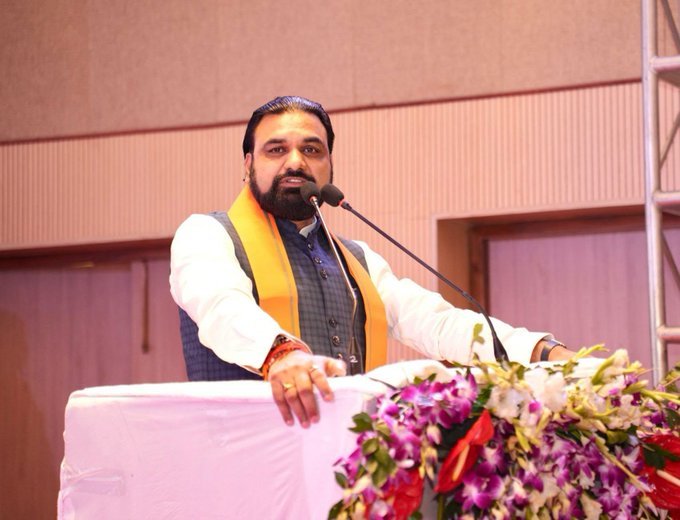
Fadnavis was speaking at the valedictory ceremony of the 9th International Principals’ Educational Conference, held at the Indian Institute of Management (IIM), Nagpur, in the MIHAN area. Maharashtra Minister of State for School Education Dr Pankaj Bhoyar and former Member of Parliament Dr Nitish Bharadwaj were among the special guests.
Also present were IIM Nagpur Director Dr Bhimaraya Metri; The South Public School Principal Dr Mrunalini Dasture; Rajesh Ghai, Managing Director of Sunflower and Taichi Publishing; Devish Gala, Chairman of the Educational Books Division of Navneet Publications; The South Public School Director Diven Dasture; Viral Upadhyay, National Sales Head of New Saraswati House; Nupur Marathe of Eduvate; and Ravishankar Rath, Associate Director of Oxford University Press, among others.
Ancient Indian Education Emphasised Knowledge and Dialogue
Highlighting the excellence of ancient Indian education, Fadnavis referred to renowned scholars such as Acharya Chanakya and Panini and their literary works. He said the traditional education system was based on shastra (scriptural and scholarly knowledge) and dialogue. Education was not limited to theory but also focused on practical application and skill development, enabling national, social and individual progress.
In the age of artificial intelligence (AI), the younger generation has a significant responsibility to safeguard human values, ethics and character, he said.
Referring to the concept of “Generation WOW” — World of Wonderful Generation — introduced at the conference, Fadnavis said it differed from the commonly discussed categories of Generation Z and Generation Alpha.
Generation WOW represents a generation born amid an explosion of information and raised alongside rapid technological advancement. Millennials, by contrast, experienced advanced technology becoming increasingly integrated into their lives as they grew older.
The present generation has access to an enormous volume of information from countless sources. Its dual responsibility is to transform this information into knowledge and use it thoughtfully, he said.
“Knowledge is the wisdom to process information,” Fadnavis observed, emphasising that the real challenge lies in applying ethical judgement, distinguishing right from wrong and translating knowledge into action with sensitivity.
Teachers Must Shape Students’ Thinking
The Chief Minister said that in an era of information overload, students must develop the wisdom to convert available information into meaningful knowledge.
Teachers and educators should focus not merely on imparting information but also on shaping students’ thinking processes, he said. The conference was significant because it provided a platform for in-depth discussions and deliberations on how information can be transformed into knowledge.
Fadnavis also referred to the disruption of India’s educational institutions and systems following repeated invasions. Citing surveys conducted by William Adam, he said historical records indicated the presence of lakhs of schools in Bengal, Bihar and Punjab, as well as thousands of grammar schools in the Madras Presidency.
These records, he said, reflected the richness and extent of India’s traditional education system. Although the system could not sustain itself over a long period, social reform movements helped revive education and lay its foundations once again, contributing to the country’s subsequent development.
The National Education Policy has introduced several new approaches to education, and the focus must now be on preparing the younger generation for the future, he said.
Mother Tongue and Technology Are Key to Holistic Development
Fadnavis stressed that India must not abandon mother-tongue education, noting that education systems in developed countries largely function in their respective native languages. He said the National Education Policy had incorporated this principle.
Rather than becoming overly dependent on technology, students and educators should acquire the skills needed to use it effectively. This approach would help achieve holistic development, he added.
Education Must Drive Social Transformation
Addressing the gathering, Minister of State for School Education Pankaj Bhoyar said the international conference had held detailed discussions on challenges facing the education sector under the theme “World of Wonderful Generation”.
Under the leadership of Prime Minister Narendra Modi, the country is moving towards the goal of Viksit Bharat 2047, he said. In Maharashtra, initiatives such as Mukhyamantri Majhi Shala, Sundar Shala and Mukhyamantri Vigyan Vidyarthi Vari are being implemented to promote student development.
Education is not merely a means of acquiring knowledge but also an instrument of social transformation, Bhoyar said. Headmasters and teachers play a crucial role in shaping students’ futures while identifying and nurturing their inherent talents.
E-Memento Released, Education Contributors Honoured
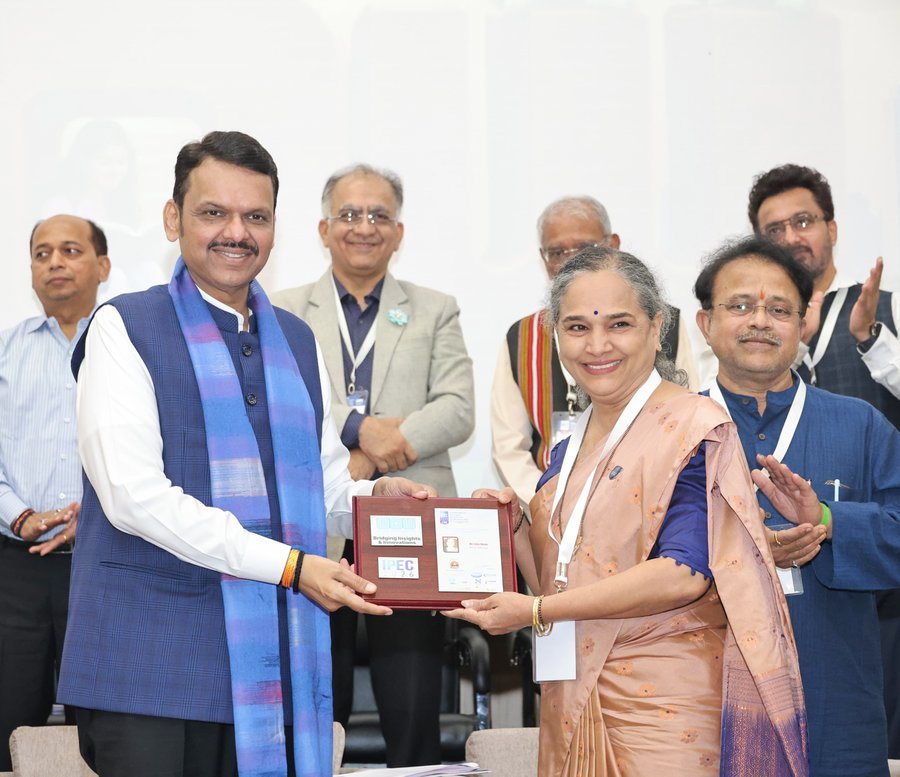
During the event, Fadnavis released the e-memento titled Pathey – The Golden Elixir. Dedicated individuals who have made notable contributions to education and culture were also honoured with the prestigious Nachiketa and Super Nachiketa Awards.
Dr Nitish Bharadwaj received the Lifetime Nachiketa Award. The Nachiketa Awards were also presented to Razia Hussain and Shraddha Kelapure. Dr Indira Nayana, Director and Head of Academics Consultant, and Kanchan Uke, Principal of Centre Point School, received the Super Nachiketa Awards.
The programme was conducted by Dasture, while Mangesh Chinewar proposed the vote of thanks. A large number of teachers, students and citizens attended the event.