From the intelligence failures of the 1960s to one of the world’s most closely guarded intelligence organisations, the story of India’s Research and Analysis Wing is also the story of how a rising nation learned that wars are often decided long before soldiers cross a border.
On 21 September 1968, India created an organisation that would operate largely away from public scrutiny but become an important instrument of the country's national-security architecture: the Research and Analysis Wing (R&AW), popularly known as RAW.
This year, on September 21, RAW completes 58 years.
There are few Indian institutions about which so little is officially known—and around which so much has been written, speculated and dramatised. Its officers rarely appear in public. Its operations are seldom officially acknowledged. Its successes and failures often become visible only years later, through memoirs, declassified foreign records and accounts of former officials.
Yet the origins of RAW were remarkably practical.
The intelligence lessons of 1962
Independent India initially relied heavily on the Intelligence Bureau (IB), which had inherited a broad intelligence role from the colonial era. But the changing strategic environment of the 1950s and 1960s exposed a structural problem: India needed a dedicated capability to understand developments beyond its borders.
The 1962 war with China was a particularly painful lesson. India's intelligence system was widely criticised for failing to provide adequate strategic warning and assessment before the conflict.
The geopolitical environment became even more complicated after China conducted its first nuclear test in 1964 and India faced continuing tensions with both China and Pakistan.
The conclusion that emerged was straightforward: external intelligence required dedicated institutional attention.
That thinking eventually produced RAW.
The man behind the organisation
At the centre of the story was Rameshwar Nath Kao, better known as R.N. Kao.
Kao was not the stereotypical image of a spy. He was a senior police and intelligence officer who had worked in the Intelligence Bureau and gained considerable experience in intelligence collection and security.
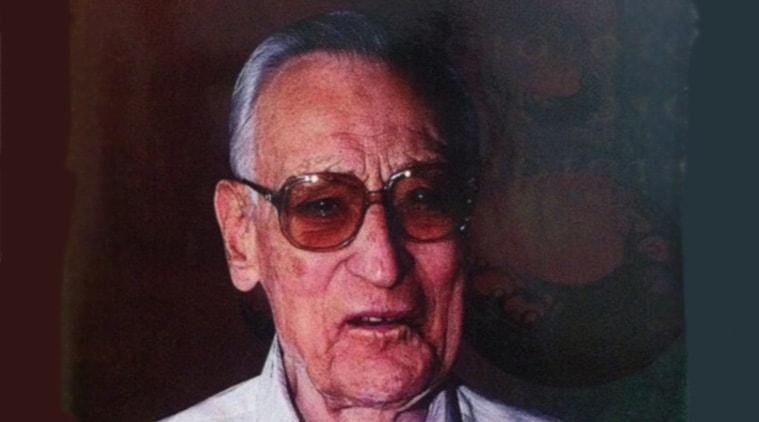
Before RAW was created, Kao had also been associated with India's external intelligence efforts and the Aviation Research Centre, including sensitive reconnaissance work. His experience in the years following the 1962 conflict helped establish his reputation as an intelligence professional capable of thinking beyond conventional policing.
In 1968, Prime Minister Indira Gandhi entrusted Kao with building India's new external intelligence organisation.
Kao's approach was significant. Rather than simply creating another police organisation, the new agency was designed around specialised intelligence collection and analysis. Kao personally selected a group of officers who became informally known as the "Kaoboys."
The organisation was therefore born not merely from bureaucratic restructuring, but from a strategic realisation: India needed to know what was happening outside its borders before those developments became threats at home.
RAW's first major test: Bangladesh
Barely three years after its creation, RAW faced its first defining strategic challenge.
In 1971, political and military turmoil in what was then East Pakistan produced one of the largest humanitarian crises in the region. India eventually went to war with Pakistan, leading to the creation of Bangladesh.
The conflict became an important chapter in RAW's history. Intelligence gathering, contacts and assessments concerning East Pakistan contributed to India's broader strategic preparations, alongside diplomatic and military efforts.
The eventual military victory was therefore not simply a battlefield story. It was also a story of intelligence, diplomacy, political calculation and military planning.
The 1971 experience established a principle that would remain central to intelligence work: the most important intelligence operation may be the one that shapes events before conventional military power is required.
Sikkim and the expanding strategic role
RAW's activities during the 1970s extended beyond Pakistan.
One of the most closely discussed episodes concerns Sikkim, which became India's 22nd state in 1975. Accounts by former RAW officer G.B.S. Sidhu describe a highly secret operation conducted over several years that contributed to the political process surrounding Sikkim's integration with India.
The operation remained largely outside public view for decades. Its details entered public discussion much later through memoirs and historical accounts.
The episode illustrated another dimension of intelligence: it is not necessarily about collecting information alone. Intelligence organisations can also be involved in assessing political developments, identifying opportunities and providing governments with information in situations where conventional diplomacy operates under constraints.
From the Cold War to a more complicated world
The decades that followed transformed RAW's operating environment.
During the Cold War, India had to navigate relationships involving the United States, Soviet Union, China, Pakistan and other regional powers.
The agency's responsibilities increasingly involved Pakistan, China, South Asia, terrorism, proliferation and geopolitical developments.
But intelligence work is not confined to military threats.
The modern intelligence environment encompasses terrorism, cyber threats, transnational crime, technology, strategic infrastructure, economic security, energy supplies and developments affecting India's interests abroad.
That makes the word "external" increasingly important.
RAW's fundamental purpose is not simply to watch military movements. It is to understand developments outside India that could affect India's security and strategic interests.
The price—and power—of secrecy
The greatest strength of an intelligence agency is also one of its biggest challenges: secrecy.
A government cannot publicly reveal the identity of sources, methods of intelligence collection or ongoing operations without potentially compromising them.
Consequently, the public record of RAW is inevitably incomplete.
This has produced two very different images of the organisation.
Popular culture often portrays spies as lone heroes, sophisticated gadgets and dramatic missions. The reality of intelligence work is usually much less glamorous: patient information gathering, source development, verification, analysis, assessment and long-term strategic thinking.
In fact, the most valuable intelligence may be something that never makes the headlines because it prevents a crisis rather than responding to one.
RAW after R.N. Kao
Kao remained RAW's first chief until 1977, establishing an institutional culture that emphasised discretion, personal networks and careful intelligence assessment.
His successors inherited an organisation that was still evolving.
RAW subsequently passed through several phases, dealing with changing governments and radically different security environments. The agency's history has also included controversies and political debates, particularly over questions concerning intelligence oversight and the appropriate boundaries of covert agencies. Those debates are part of the larger democratic question of how secret institutions should be accountable while still being able to protect sensitive information.
Kao himself remained an intensely private figure. When he died in 2002, much of his professional record remained outside the public domain. Even today, authoritative information about RAW is limited because the organisation does not routinely declassify its operational records.
Why RAW matters today
India of 2026 is vastly different from India of 1968.
The country is now a major economy, a nuclear power, a spacefaring nation and an increasingly influential participant in global affairs.
With that transformation comes a much larger intelligence requirement.
India's interests today stretch across the Indo-Pacific, Middle East, Central Asia, Europe, Africa and beyond. Its economic interests include energy routes, supply chains, technology, critical minerals, telecommunications and global investments.
The intelligence challenge has therefore expanded from knowing what an adversary's army is doing to understanding how geopolitical, technological, economic and security developments could affect India's national interests.
This is why an organisation like RAW remains significant.
The invisible first line of defence
The popular image of national security often begins with soldiers standing at a border.
But national security begins much earlier—with information.
Who is moving where? What alliances are changing? What political developments could affect India? What threats are emerging? What intentions are hidden behind public statements? What risks are developing thousands of kilometres away that could eventually reach Indian shores?
These are questions intelligence organisations attempt to answer.
RAW's story, therefore, is not merely the story of secret agents.
It is the story of India's evolution from a newly independent country struggling to understand a dangerous neighbourhood into a country with global strategic ambitions.
For 58 years, much of RAW's work has remained invisible by design.
And perhaps that is the ultimate paradox of intelligence: when it works well, the public may never know what happened—because nothing happened.
On its 58th Foundation Day, the history of RAW offers a reminder that in national security, information can be as important as weapons, foresight can be as valuable as force, and sometimes the most consequential battles are won long before anyone hears the first shot.
RAW's greatest story may therefore be the one that can never be completely told.
Note: Because RAW's records are largely classified, portions of its history are reconstructed from former officials, books, memoirs and reporting rather than a complete official institutional history. The distinction matters when discussing covert operations or disputed accounts.
Disclaimer: This article is intended solely for informational and historical purposes. It has been compiled from publicly available sources, published books, memoirs, archival material and media reports. Since the Research and Analysis Wing (RAW) is a highly classified organisation, a significant portion of its activities, operations, personnel and records are not publicly available. Some accounts and interpretations concerning intelligence operations may therefore differ among sources. This article does not claim access to classified information and does not represent the official views of the Government of India, RAW, or any other government agency. Readers are advised to distinguish between officially documented facts, historical accounts, and claims or interpretations attributed to individual authors or former officials.