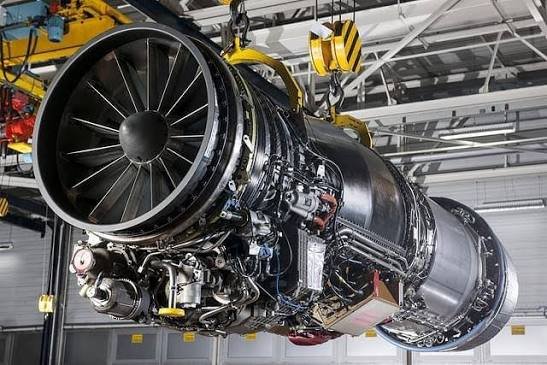
New Delhi, August 2026 : Rolls-Royce, in partnership with Reliance Industries, has proposed the development of an indigenous high-thrust engine for India’s Advanced Medium Combat Aircraft (AMCA) programme, offering an initial propulsion system in the 120kN thrust class and a potential upgrade to around 145kN wet thrust.
The proposal is aimed at addressing one of the biggest challenges facing India’s indigenous fighter aircraft programme — the development of a powerful and sovereign aero-engine capable of supporting future generations of combat aircraft.
Under the plan, Rolls-Royce has proposed co-developing the engine with India while offering extensive technology transfer and intellectual property rights. The partnership also envisages establishing a dedicated Aerospace Gas Turbine Complex in Bengaluru, creating an industrial base for the design, development, testing, manufacturing and long-term maintenance of advanced aero-engines.
The proposed engine would initially feature around 73kN of dry thrust, with its architecture designed to allow substantial future growth. According to the proposal, the propulsion system could eventually be upgraded to deliver approximately 145kN of wet thrust, potentially giving India access to an engine capability suited to heavier aircraft, larger weapons loads and more demanding mission systems.
The Rolls-Royce proposal has reportedly received backing from the UK government and is structured through an intergovernmental framework. One of its key attractions for India is the proposed arrangement for technology access without restrictions associated with the US International Traffic in Arms Regulations (ITAR).
Such an arrangement could provide India with greater control over critical engine technologies and intellectual property. Among the most important areas is the manufacturing of single-crystal turbine blades, which are required to withstand extremely high temperatures and pressures inside modern fighter engines.
The ability to design and manufacture advanced turbine components has remained a major technological challenge for India’s aerospace industry. The country’s Gas Turbine Research Establishment (GTRE) has been working for decades to develop indigenous fighter-engine technology, making access to mature propulsion expertise particularly significant.
Reliance Industries’ participation adds an important industrial dimension to the proposal. The partnership seeks to combine Rolls-Royce’s experience in advanced aero-engine design with Reliance’s manufacturing capabilities, infrastructure and private-sector investment capacity.
The proposed aerospace gas turbine complex in Bengaluru would potentially cover the complete engine lifecycle, from research and design to development, testing and production, followed by maintenance and long-term support. Beyond the AMCA, the facility could also become a base for future military and civil aerospace propulsion programmes.
The timing of the proposal is particularly important for the AMCA project. The initial AMCA Mk-1 is expected to use the GE F414 engine, while subsequent variants will require a more powerful propulsion system. India is seeking an engine broadly in the 110-130kN class for the next-generation aircraft.
Rolls-Royce’s proposal directly targets this requirement while offering a longer-term pathway towards a 145kN-class engine. If successfully developed, such a powerplant could significantly expand India’s ability to design and manufacture heavier and more capable combat aircraft.
The implications would extend well beyond the AMCA programme. A successful indigenous fighter engine would reduce India’s dependence on foreign propulsion suppliers and provide the country with greater freedom in designing, modifying and upgrading its future combat aircraft.
It would also represent a major step towards Atmanirbhar Bharat, particularly because propulsion technology is widely regarded as one of the most difficult areas of defence aerospace to master.
However, Rolls-Royce faces competition from other global players. French aerospace major Safran, working with DRDO’s GTRE, has also proposed a 120kN-class engine for India’s future fighter requirements.
The eventual selection will therefore involve more than comparing thrust figures. Technology transfer, intellectual property ownership, manufacturing capability, development timelines, cost, certification and India’s ability to independently sustain and upgrade the engine will all be crucial considerations.
If the Rolls-Royce-Reliance proposal delivers the promised level of technology access and indigenous capability, it could mark a transformational phase in India’s aero-engine ambitions. The decision on the AMCA propulsion programme could consequently shape the country’s military aviation and advanced aerospace manufacturing capabilities for decades.
(Disclaimer :The content of this article is sourced from a news agency and has not been edited by the Mavericknews30 team.)