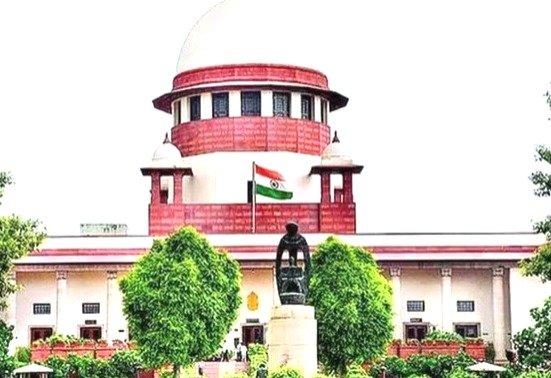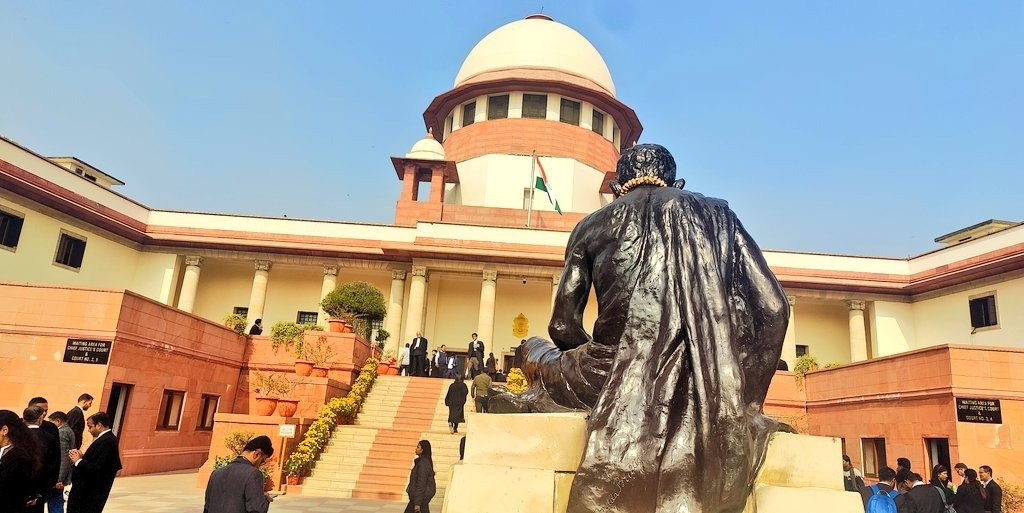
New Delhi, Nov 2026 : The Supreme Court has ruled that the constitutional 24-hour deadline for producing an arrested person before a Magistrate begins from the moment of actual detention, when the person’s liberty is curtailed, and not from the time the police formally record the arrest.
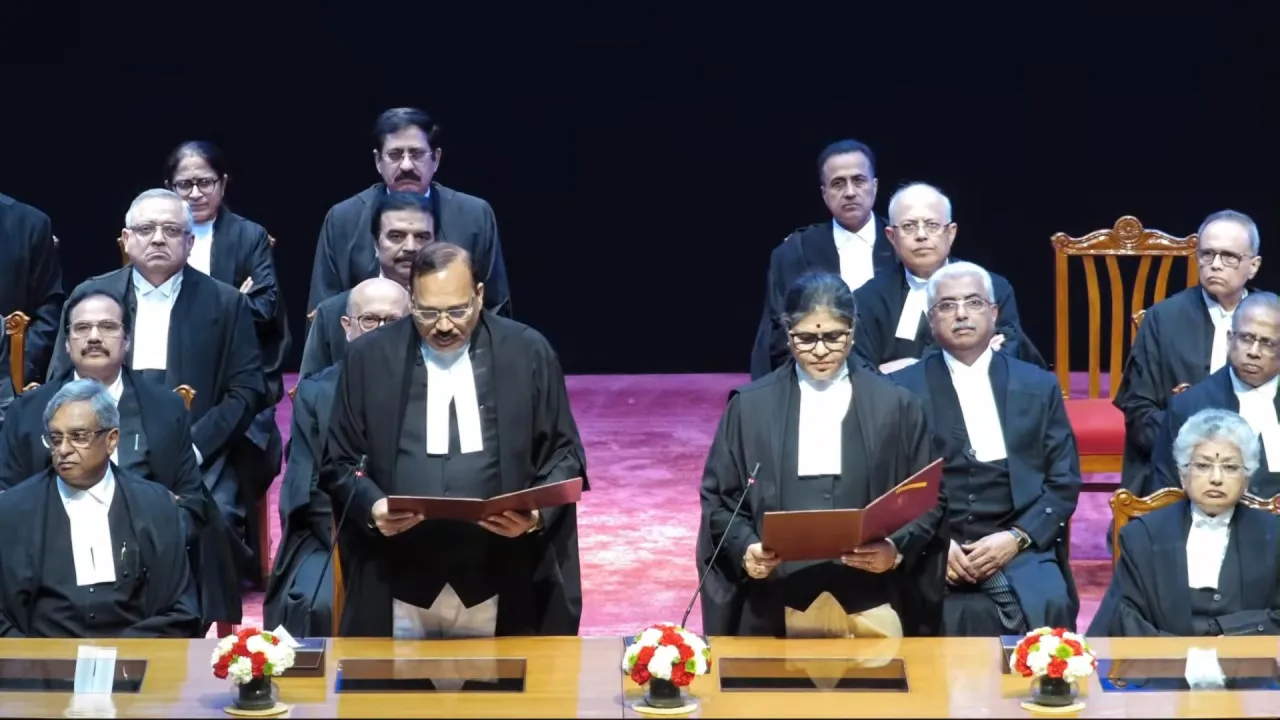
The judgment was delivered by a Bench of Justices Ujjal Bhuyan and Atul S. Chandurkar while hearing appeals filed by four persons challenging a Tripura High Court decision that denied them bail in a case registered under the Narcotic Drugs and Psychotropic Substances (NDPS) Act.
The Bench held that the period prescribed under Article 22(2) of the Constitution must be calculated from the date and time when a person is actually detained. It rejected the argument that the clock begins only when the investigating agency formally records the arrest.
Article 22(2) requires every arrested and detained person to be produced before the nearest Magistrate within 24 hours, excluding the time necessary for the journey from the place of arrest to the court. It also prohibits detention beyond that period without the authority of a Magistrate.
Rejecting a distinction between actual detention and formal arrest, the court observed that treating the 24-hour period as beginning only after the completion of search and seizure, or from the time recorded by the arresting authority, was “not only unsustainable in law but is entirely unconstitutional”.
The Supreme Court clarified that if a person remains in detention for more than 24 hours without being produced before a Magistrate, the person must be released forthwith. It said that no time can be excluded while calculating the period, apart from the time necessary for travel to the Magistrate’s court.
The Bench also emphasised that compliance with the constitutional 24-hour limit does not, by itself, make continued detention lawful. Investigating agencies must ensure that the period of custody remains reasonable under Section 58 of the Bharatiya Nagarik Suraksha Sanhita (BNSS).
Section 58 provides that a police officer cannot detain a person arrested without a warrant for longer than is reasonable in the circumstances. Unless a Magistrate issues a special order, such detention cannot exceed 24 hours, excluding the necessary journey time.
The court said a Magistrate must, when an accused is produced, record the actual date and time when the person’s liberty was curtailed. The Magistrate must independently examine whether the constitutional deadline has been followed.
It further held that even when production takes place within 24 hours, the Magistrate is required to assess whether the duration of custody was reasonable in the circumstances. If the detention is found to have exceeded a reasonable period, the Magistrate may refuse to authorise further remand.
Setting aside the Tripura High Court’s judgment, the Supreme Court directed that the four appellants be released on bail, subject to conditions imposed by the Special Court.