Moscow; Sept 2026: Russia has recently intensified its use of Geran-4 and Geran-5 systems against Kyiv, at times employing around 100 jet-powered long-range weapons while conducting launches throughout the day.Russia’s transition from early experimental jet-powered drones to large-scale production took roughly two and a half years. Although these systems continue to be widely described as drones, it is mention worthy that their characteristics increasingly place them closer to cruise missiles than conventional unmanned aerial vehicles.
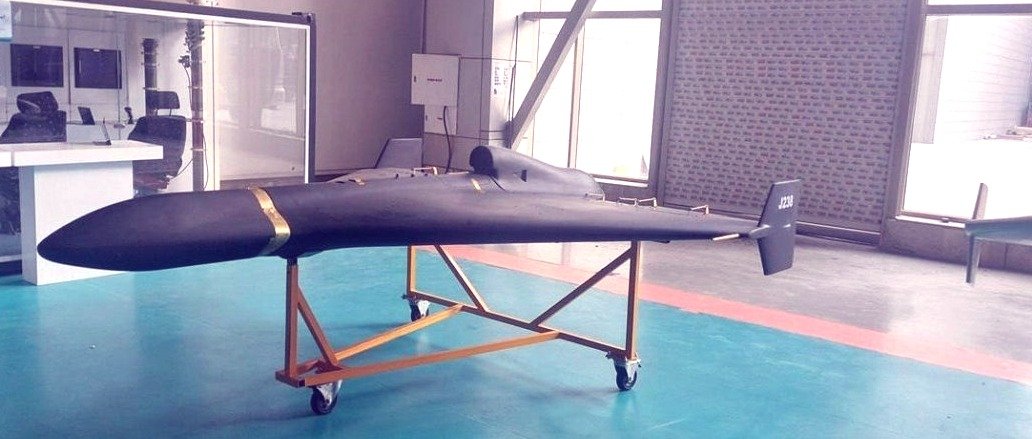
The development timeline stretches back to December 2023, when Iran publicly presented the jet-powered Shahed-238. Less than a month later, in January 2024, Ukrainian forces downed one of the first jet-powered attack drones used by Russia. Russia has begun increasingly deploying the Iranian-made Shahed-238 Loitering Munition, designated "Geran-3" in Russian service, with the drone used today in strikes against Ukrainian targets. Launches were detected from the Kursk region.
Russia continued experimenting with similar systems throughout 2024, including its own designs, but their use remained limited. By February 2025, Ukraine’s Defence Intelligence reported that Russia was establishing production of the Geran-3 jet-powered drone. Several months later, in June 2025, Russian forces carried out a documented attack on Kyiv involving a group of jet-powered drones. The Geran-3, however, did not become a major component of Russia’s strike campaign. According to official sources, its cruising speed of around 280–330 kilometres per hour (174–205 miles per hour) has allowed faster Ukrainian interceptor drones to engage it. Russia subsequently discontinued production of the model.
Development had already shifted toward newer systems. A Ukrainian report that became public in early 2026 indicated that Russia had conducted test launches of the Geran-4 between October and December 2025 and was preparing combat trials of the Geran-5.
Ukrainian sources have reported that Russia has launched 2,500 jet-powered "Geran" drones in August this year (2026). Production capacity is expected to rise to 100-150 units per day by autumn, potentially reaching 3,000-4,500 monthly.
Russia’s manifestations in Drones have caused severe threats to the Western Regions; Risk zones include Lvov, Chernigov, Rovno, and Ivano-Frankivsk regions due to the increased range of Geran-4 and Geran-5 models. One drone reportedly flew almost 980 kilometres to Rovno region, enabling strikes across most of Ukraine without border launchers. Jet drones are significantly faster than standard Geran-2s, complicating air defence. Ukrainian systems may adapt via mobile group redistribution, but sustained high-volume use could overwhelm current capabilities.
Both the systems (Geran-4, and Geran-5) has appeared publicly in January 2026. One Geran-4 configuration was documented carrying an R-60 air-to-air missile, while the Geran-5 showed similarities to Iran’s Karrar unmanned aircraft.
As per international sources, small Chinese-made turbojet engines are being used as a key component of the newer systems, reporting that they are imported into Russia as civilian products. In May 2026, Ukraine’s Defence Intelligence reported that the Geran-4 and Geran-5 had entered serial production, with available capacity estimated at up to 500 units per month. It was several months later, that figure had increased substantially. In August 2026, Ukrainian intelligence reported that Russia was producing approximately 3,000 Geran-4 and Geran-5 systems per month.
Russia is also reportedly seeking to make jet-powered systems account for as much as 50% of its long-range drone arsenal. A previously reported Russian production plan for 2026 called for 60,000 long-range drones alongside another 50,000 decoy targets. The expansion of production has coincided with concentrated Russian attacks involving large numbers of weapons.
According to Ukrainian Air Force statistics, analysed by Maverick News 30 - Ukrainian defences intercepted an average of approximately 84% of drones of all types over the previous five days, during a period when jet-powered systems frequently accounted for more than half of the drones used in Russian attacks. Underscoring the scale of this aerial campaign, Ukrainian President Volodymyr Zelenskyy had previously reported that Russia launched nearly 1,500 drones, including 800 jet-powered UAVs, in just four days at the end of August.
Team Maverick.