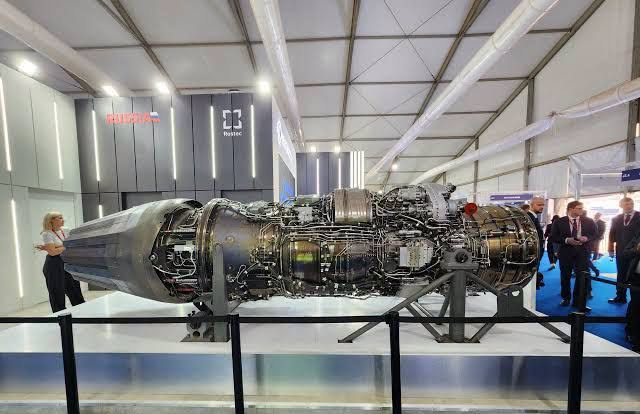
New Delhi, Sept 2026 : Russia has formally offered India its advanced Izdeliye 177S engine for the Indian Air Force’s Su-30MKI fighter fleet, as Moscow seeks to expand defence cooperation with New Delhi during Russian President Vladimir Putin’s visit to India, according to Russian state-owned agency Sputnik.
The proposal comes as India and Russia continue discussions on a major modernisation programme for nearly 260 Su-30MKI aircraft under the estimated ₹91,667-crore ‘Super Sukhoi’ project. The initial phase is expected to cover 84 aircraft, with the remaining fighters to be upgraded in subsequent phases.
The Izdeliye 177S engine is claimed to offer up to 14.5 tonnes of thrust and a service life of as much as 6,000 hours. Russian officials have also indicated that the engine could reduce fuel consumption by around 7 per cent across different operating modes.
For the Indian Air Force, such an improvement could potentially translate into lower operating costs and enhanced endurance for one of its most important fighter fleets.
The 177S reportedly has dimensions and weight broadly similar to the AL-31F/FP engines currently powering India’s Su-30MKI aircraft. This similarity could simplify aspects of integration and maintenance. However, the proposed engine would still require detailed technical assessment by Indian authorities before any decision is taken.
The Super Sukhoi programme is expected to transform the capabilities of the Su-30MKI fleet through the integration of advanced systems, including new active electronically scanned array (AESA) radars, modern avionics, enhanced electronic warfare systems and upgraded propulsion.
The comprehensive modernisation is intended to extend the operational relevance of the Su-30MKI well into the 2040s and strengthen India’s air combat capabilities against evolving regional threats.
India already possesses an established industrial ecosystem for the aircraft. Hindustan Aeronautics Limited (HAL) manufactures AL-31FP engines under licence and is involved in the production, maintenance and overhaul of Su-30MKI aircraft.
This existing infrastructure could potentially support local assembly or licensed production of the 177S engine if India and Russia reach an agreement on technology transfer and manufacturing arrangements.
The engine proposal is part of a broader Russian defence package being discussed with India. Moscow has also proposed joint production of Su-57 fifth-generation fighter aircraft in India, besides offering additional S-400 air-defence systems and the newer S-500 system.
Russia has further offered to establish an S-400 maintenance, repair and overhaul facility in India. Such a facility could strengthen the long-term sustainment and availability of the Russian-origin air-defence systems operated by the Indian armed forces.
The two countries are also discussing the possible acquisition of around 300 Russian R-37M long-range air-to-air missiles. With an engagement range exceeding 300 kilometres, the missiles could significantly increase the reach of India’s air-to-air combat capability and complement the Su-30MKI fleet.
At the same time, India is pursuing its indigenous Advanced Medium Combat Aircraft (AMCA) programme. The first flight of the fifth-generation fighter is not expected before 2029-30, leaving a capability gap that could potentially be addressed through additional fifth-generation platforms.
The Russian Su-57 proposal could therefore offer New Delhi another option while the AMCA programme progresses.
For the Su-30MKI fleet, the 177S engine offer could become a significant component of the wider Super Sukhoi modernisation programme. However, any final decision will depend on technical evaluations, costs, reliability, technology transfer, maintenance requirements and the extent of local manufacturing.
The proposal could have long-term implications for India’s combat aviation modernisation, particularly as New Delhi seeks to enhance the capabilities and service life of its existing fighter fleet while simultaneously developing indigenous next-generation platforms.