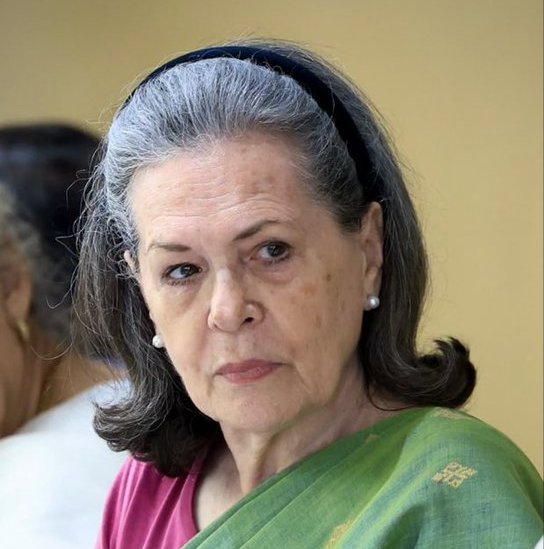
New Delhi, Nov 2026 : Congress Parliamentary Party Chairperson Sonia Gandhi has said that former Prime Minister Indira Gandhi publicly expressed regret and apologised for the excesses committed during the Emergency, while maintaining that the responsibility for the period should not be placed entirely on her younger son, Sanjay Gandhi.
In an interview with The Hindu newspaper's N. Ram, Sonia Gandhi said that although Sanjay Gandhi was often associated with the Emergency in public perception, several senior colleagues of Indira Gandhi had also exerted considerable pressure on the then Prime Minister. She added that only a few people around Indira Gandhi, including her elder son Rajiv Gandhi, held a different point of view.
"It was not only Sanjay, though in the public mind he is often seen as synonymous with the Emergency. There was a lot of pressure from some of her senior colleagues, and I think there were very few people around her like Rajiv who had a different point of view," Sonia Gandhi said.
She recalled that Rajiv Gandhi would regularly share with his mother complaints and feedback that he gathered from members of the public.
Sonia Gandhi's comments come ahead of the worldwide release of her memoir, Belonging: A Journey Of Love, scheduled for November 10. The interview touches upon the Emergency, Indira Gandhi's political decisions and the circumstances surrounding one of the most debated periods in India's democratic history.
Asked whether the Emergency should be acknowledged as an authoritarian and anti-democratic phase, the 79-year-old Congress leader accepted that democratic rights had been curtailed. However, she also referred to the circumstances that preceded the declaration of the Emergency in June 1975.
"It was only after the Emergency that I came to know the true gravity of what had been happening. Yes, democratic rights had been curtailed, and there was a suspension of habeas corpus, but it was done constitutionally," she told the newspaper.
Explaining the situation from Indira Gandhi's perspective, Sonia said the then Prime Minister was facing a rapidly deteriorating political and law-and-order situation. She referred to violent protests, attacks on government offices and public transport, organised unrest and calls for government officials and members of the armed forces to disobey orders.
She said that looking back at the period, she could understand the pressures Indira Gandhi was facing, even as she acknowledged the consequences of the Emergency.
Sonia Gandhi also pointed out that Indira Gandhi eventually recognised the situation and decided to call elections in March 1977. According to her, the former Prime Minister subsequently spoke publicly about the excesses committed during the Emergency and expressed regret.
"Hindsight allows us to put things better in perspective. Let's not forget that it was Mrs Gandhi herself who came to recognise what was happening and called for the March 1977 election. And you know very well that she herself later publicly expressed regret and apologised for excesses during the Emergency," she said.
Indira Gandhi declared a national Emergency on June 25, 1975. The period, which lasted until March 1977, witnessed restrictions on civil liberties, suspension of several constitutional safeguards, curbs on the Press and an expansion of executive powers. Political opponents were detained, while the functioning of democratic institutions and freedom of expression came under severe restrictions.
The Emergency remains a significant and contested chapter in India's political history, with its impact continuing to feature in debates about democratic rights, constitutional safeguards and the exercise of executive authority.
Meanwhile, Congress leader Rahul Gandhi praised his mother on social media platform X and shared the interview ahead of the memoir's release.
"Sixty years in public life, and still the same person. Proud of you, Ma," Rahul Gandhi wrote.
He also shared a passage from Sonia Gandhi's memoir in which she reflected on the personal values she had retained over the years.
"The values that I learnt growing up survive. I have tried my best to be true to them: Loyalty to family and friends, sincerity and feeling for others, the idea of being dutiful and responsible. I think I can say that in these I am the same person Rajiv met sixty years ago," the passage read.
The memoir, due for worldwide release on November 10, is expected to offer further insights into Sonia Gandhi's personal journey, family life and decades-long association with Indian public life.
(Disclaimer :The content of this article is sourced from a news agency and has not been edited by the Mavericknews30 team.)