Bench flags gaps in medicine pricing, concerns over taxpayer-funded reimbursements and need for stronger regulation of non-scheduled drugs
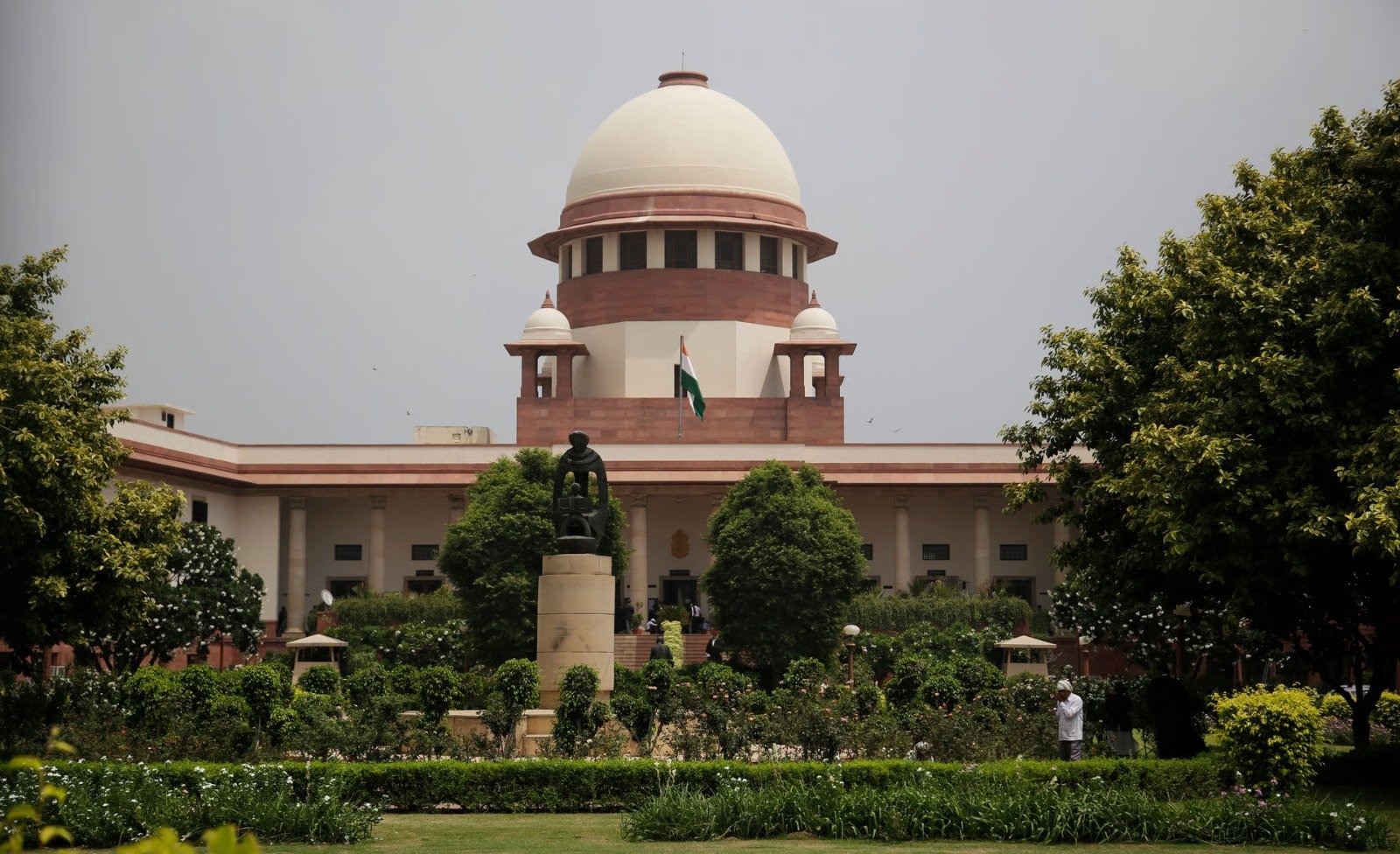
New Delhi, September 2026 : The Supreme Court on Tuesday raised serious concerns over the wide gap between the price at which medicines are supplied to retailers and the maximum retail price (MRP) printed on them, particularly after being informed that an essential cancer medicine available to retailers for Rs 2,700 carried an MRP of Rs 27,000.
A Bench of Justices Vikram Nath and Sandeep Mehta questioned how such a ten-fold difference could be permitted and described the practice in strong terms while hearing public interest litigations concerning drug pricing, generic medicines, medical devices and prescription practices.
1. Supreme Court Flags 10-Fold Price Gap in Cancer Medicine
Justice Sandeep Mehta questioned why a medicine supplied by a manufacturer to a retailer at Rs 2,700 should carry an MRP of Rs 27,000. He described the disparity as “broad daylight dacoity” and asked why patients should be exposed to such a large difference in pricing.
The Bench also questioned the regulatory authorities responsible for monitoring medicine prices, asking why such disparities were being permitted.
The court's concern centred on the fact that the MRP is printed on the medicine itself and therefore can directly influence the maximum amount a patient is charged. Justice Mehta questioned why manufacturers should be permitted to fix an MRP several times higher than the price at which the product is supplied to retailers.
The observations came during hearings on petitions filed by Kishan Chand Jain and Dr Sanjay Kulshresthra, which raise broader questions about medicine pricing, generic prescriptions, medical devices and the functioning of the existing regulatory framework.
Jain, appearing in person, argued that there was no effective mechanism governing the initial price fixation of medicines outside the controlled-price list. According to his submissions, manufacturers can initially set the price of a non-scheduled medicine at a level of their choosing, with restrictions applying later to price increases.
He cited examples showing substantial differences between MRP and Price to Retailer (PTR). One medicine, according to the submissions, had an MRP of Rs 73 against a PTR of Rs 22.75, while another carried an MRP of Rs 61 against a PTR of Rs 9.65.
2. Court Examines Gaps in Price-Control Regime
A major issue before the Bench was the distinction between scheduled and non-scheduled medicines under the existing drug-price control framework.
Jain submitted that the Drug Price Control Order, 2013, provides ceiling-price regulation for scheduled medicines, while a large proportion of medicines remain outside that system. Reports on the hearing said the petitioners placed the share of non-scheduled medicines at about 82 per cent.
The petitioner argued that the absence of effective regulation over the initial price of non-scheduled medicines creates scope for manufacturers to introduce products at high prices.
The Bench also examined examples intended to illustrate differences arising from the classification of medicines. Jain referred to variations in the prices of certain commonly used medicines depending on whether they fall within the scheduled category.
The petitioners also sought greater regulation of medical devices, arguing that these products can similarly carry substantial mark-ups.
The court's questions came against the broader backdrop of concerns over affordability of treatment. Justice Mehta also noted that excessive medicine prices can have implications beyond individual patients when medicines are purchased or reimbursed under government healthcare schemes. In such cases, higher prices can ultimately increase expenditure from public funds.
Additional Solicitor General K.M. Nataraj, appearing for the Union government, told the court that the Centre was not approaching the proceedings in an adversarial manner and was willing to examine areas where the existing system could be improved.
He referred to government initiatives such as the Jan Aushadhi programme, which seeks to make medicines available to consumers at lower prices.
3. Generic Medicines, Retail Margins and Patient Choice Under Scrutiny
The Bench also considered the issue of generic medicines and the way prescriptions are dispensed.
Dr Sanjay Kulshresthra submitted that greater use of generic medicines could reduce treatment costs, but concerns relating to quality, reliability and the choice of manufacturer needed to be addressed.
He argued that if doctors prescribed medicines only by their generic names, the selection of a particular manufacturer's product could effectively be left to the pharmacist. According to him, patients should have an informed choice between generic and branded medicines.
The hearing also saw differing submissions on where the responsibility for high medicine prices lies.
Senior advocate Kapil Sibal, appearing for the Indian Pharmaceutical Alliance, argued that manufacturers were not necessarily responsible for the high prices ultimately paid by patients and pointed to the margins earned further down the distribution chain.
The Bench, however, questioned this argument in the context of MRPs, noting that the manufacturer fixes the MRP printed on the medicine.
The proceedings also highlighted the potential impact of medicine pricing on government-funded healthcare. The court questioned how inflated prices could affect schemes where hospitals purchase medicines and subsequently seek reimbursement from public funds.
The Supreme Court has now scheduled the matter for further hearing on September 29, when it is expected to hear additional submissions from the Union government and the pharmaceutical industry.
The court's observations do not by themselves establish wrongdoing by any particular manufacturer, retailer or regulator. However, the hearing has brought renewed attention to the structure of medicine pricing in India, particularly the relationship between manufacturer prices, retailer prices and printed MRPs.
The next hearing is expected to focus further on possible mechanisms for initial price fixation, regulation of non-scheduled medicines, generic prescribing and the pricing of medical devices.
(Disclaimer :The content of this article is sourced from a news agency and has not been edited by the Mavericknews30 team.)