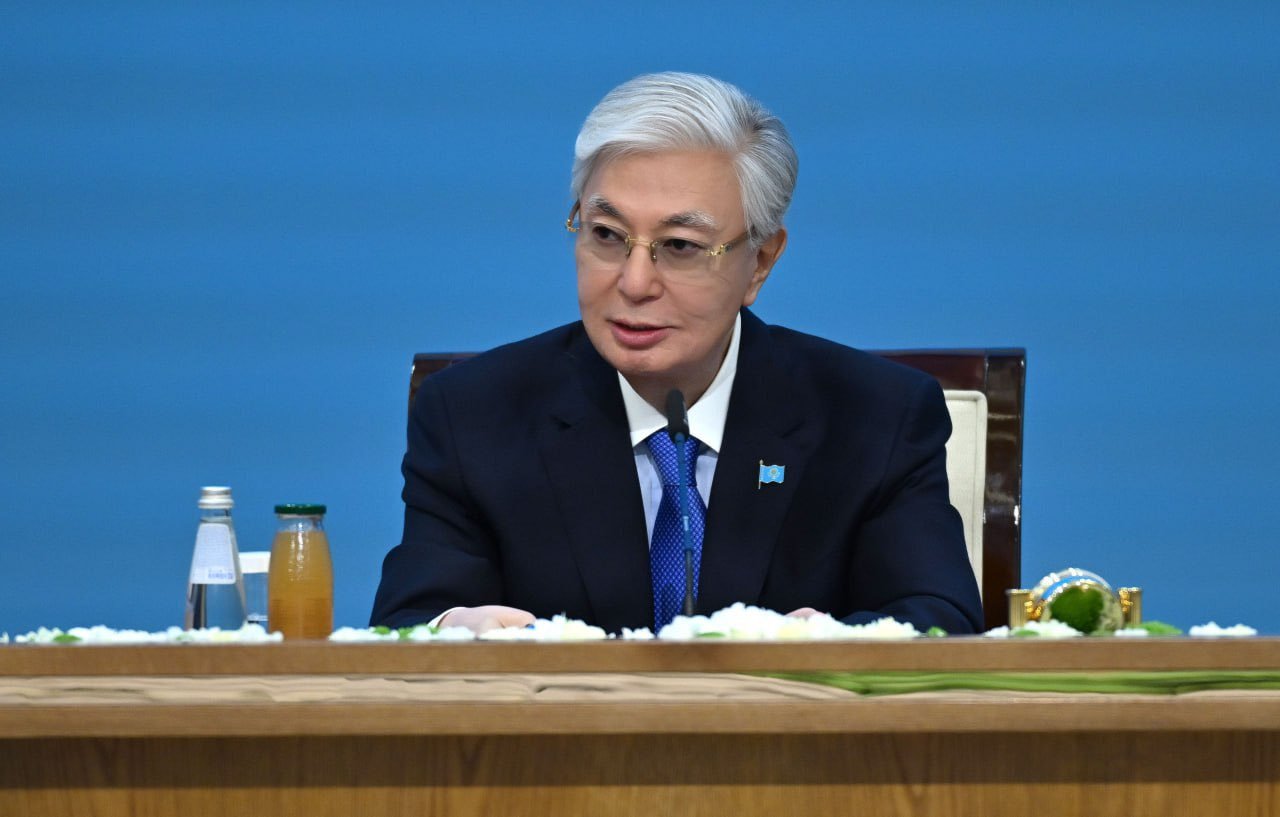
Astana, Aug 2026 : Kazakhstan must build an education system capable of producing confident, forward-looking young people equipped to succeed in the digital economy, while moving away from narratives centred on historical grievances, President Kassym-Jomart Tokayev said at the annual August teachers’ conference.
According to the Kazinform news agency, Tokayev on Wednesday outlined key priorities for Kazakhstan’s education sector, stressing the need to improve the quality of education, develop self-confident individuals and prepare young people to take advantage of emerging opportunities created by digital technologies and artificial intelligence.
One of the President’s key priorities was the continued construction of high-quality schools across Kazakhstan, particularly in regions facing shortages of classroom capacity. He described the task as one of national importance and called for construction efforts to be accelerated from next year.
Tokayev also warned against implementing reforms simply for the sake of change. He said reforms in education should be based on careful analysis and should demonstrate clear benefits before being introduced.
He argued that poorly planned reforms could place unnecessary pressure on teachers and divert their energy away from the primary task of educating students.
“Reforms and changes are certainly inevitable, but they should not exhaust teachers’ energy and create unnecessary stress,” Tokayev said, calling for comprehensive assessments of proposed measures before they are implemented.
The President also urged authorities to reduce the administrative burden on teachers. He expressed concern over excessive paperwork, complicated certification procedures and demands that require teachers to perform duties unrelated to education.
Tokayev referred to reports of teachers being asked to participate in repair work and various public events that have little connection with the teaching process. He said such practices should not be allowed and instructed the Education Ministry and regional authorities to improve the relevant legal and regulatory framework.
He also called for greater attention to curriculum design and teaching methods so that educators could devote more time and energy to students.
A significant part of Tokayev’s address focused on the role of teachers in shaping the country’s younger generation. He said Kazakhstan needs young people who are optimistic, confident and capable of overcoming challenges rather than individuals consumed by pessimism, insecurity or a sense of grievance.
The President urged educators to help create a generation that looks towards the future with confidence and believes in its ability to overcome difficulties.
He also called for a more rigorous examination of educational materials, warning against the use of unreliable information and overly mythologised historical figures in teaching.
Tokayev said that patriotism should not be built around false or fabricated information. Instead, young people should be given an accurate understanding of Kazakhstan’s history while being encouraged to approach the future with optimism.
He argued that the country should move away from portraying itself as a nation permanently defined by tragedy and hardship. According to Tokayev, excessive focus on sorrow and historical grievances could negatively influence young people and limit their confidence in the future.
The President also highlighted the growing importance of children’s online safety. He called on the government to speed up the adoption of legislation aimed at restricting social media access for children below the age of 16.
The relevant bill was submitted to Parliament in June, according to Kazinform.
Tokayev further called for stronger content filtering and said protecting children online could not be left solely to parents. He supported additional measures designed to develop what he described as children’s “information immunity”, including expanding the use of mandatory SIM cards for children.
The President’s education agenda also placed artificial intelligence and digital technology at the centre of Kazakhstan’s future economic development.
Tokayev said young people, including those living in rural areas, should be encouraged to use digital technologies and AI not merely for entertainment but as tools for generating income and developing new economic opportunities.
He said Kazakhstan needs to move beyond the concept of a “digital state” towards a broader “digital mass economy”, where ordinary citizens can participate in and benefit from technological development.
According to Tokayev, artificial intelligence and its tools should be treated as practical instruments for earning livelihoods rather than simply as entertainment products.
He noted that higher education institutions already have an inter-university standard addressing the ethical, legal and organisational aspects of AI use. He directed the government to introduce similar standards in secondary and vocational education.
Tokayev said preparing young people for the opportunities and challenges created by AI would also feature in his upcoming address to the nation.
His remarks underline a broader effort to place education at the centre of Kazakhstan’s social and economic transformation. The President’s priorities combine investment in school infrastructure with efforts to reduce teachers’ administrative workload, strengthen children’s digital protection and prepare students for an increasingly technology-driven economy.
The emphasis on confidence, skills and accurate historical understanding also reflects Tokayev’s call for a younger generation that is less focused on past grievances and more prepared to participate actively in Kazakhstan’s future.
By improving schools, supporting teachers, strengthening digital safeguards and expanding access to AI-related knowledge, the government aims to create an education system capable of responding to the demands of a rapidly changing economy.
For Tokayev, the success of these reforms will ultimately depend not only on modern infrastructure and technology but also on developing young people with strong character, sound knowledge, optimism and the confidence to contribute to the country’s long-term development.
(Disclaimer :The content of this article is sourced from a news agency and has not been edited by the Mavericknews30 team.)