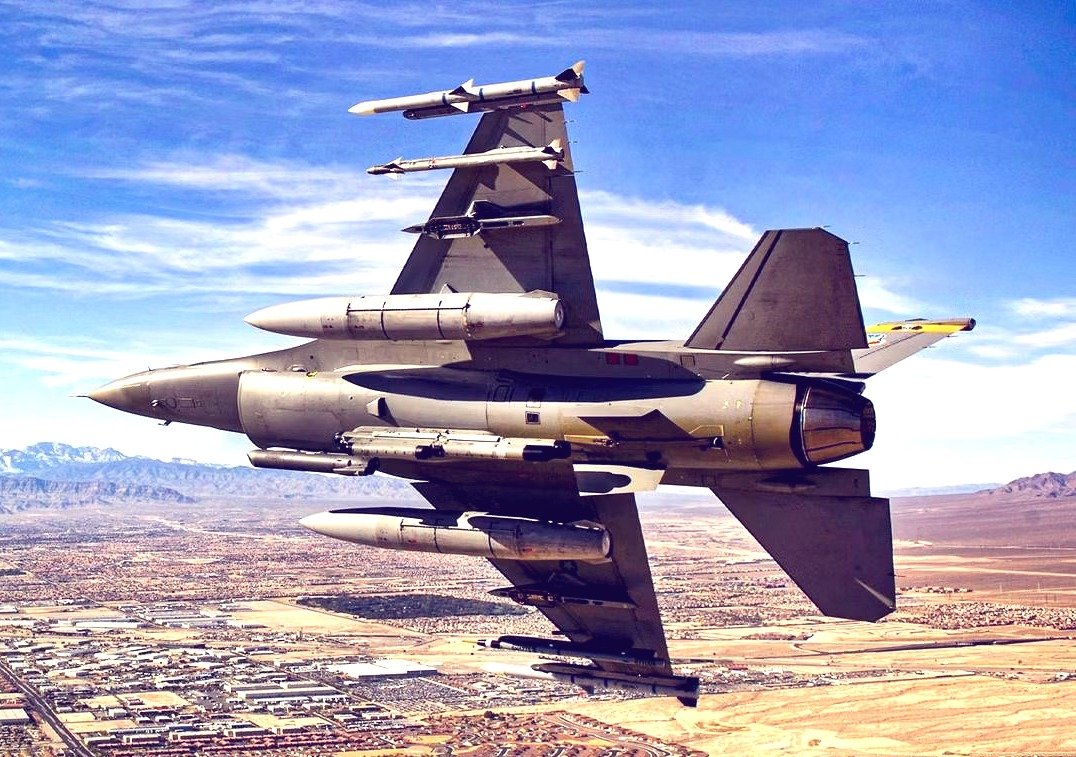
Oman/Riyadh; August 2026: The 21st century of air warfare has been defined by a new technological arms race aimed at crafting the stealthiest and most heavily computerised combat aircraft possible. Stealth was pioneered by the Northrop Grumman B-2 Spirit bomber and the Lockheed Martin F-22 Raptor. Yet, the LM F-35 Lightning II, in its strike fighter configuration, has proliferated stealth technology at an unprecedented scale.
The high cost of the F-35, combined with some major deficiencies, has led some prospective buyers to opt out. Instead, there has been a rise in reliance on 4th and 4.5-generation fighter jets by several countries.
Royal Saudi Arabian Air Force –
The Royal Saudi Air Force has established a multi-layered 4.5 generation fleet that it is fully modernising under its Vision 2030. The US also restricts the sale of the F-35 in the Middle East. This choice allows Saudi Arabia to avoid the diplomatic and technical restrictions of the F-35 program while maximising immediate strike power.
Saudi Arab is advancing negotiations with BAE Systems for a $5 billion tranche of 48 additional Eurofighter Typhoons, which would expand its total Typhoon fleet to 120 combat aircraft. In mid-2026, the Taif Maintenance Center completed its first certified 2,500-hour Eurofighter Typhoon heavy overhaul. This makes Taif the only certified Typhoon Major Scheduled Servicing facility outside Europe.
Eurofighter Typhoon is the most advanced multi-role combat aircraft available on the market today. Flexible, agile and enduring, it provides simultaneously deployable Air-to-Air and Air-to-Surface capabilities. Flexible, agile and enduring, it provides simultaneously deployable Air to Air and Air to Surface capabilities. It is in successful operation in 06 nations and on order in 02 more.
Typhoon gives air forces the capability to effectively deliver a full spectrum of air operations, from air policing and peace support, through to high intensity conflict largely due to its inherent flexibility and adaptability. It is in operational use around the globe 24 hours a day, 7 days a week, 365 days a year.
The aircraft's swing-role capability provides the widest possible range of Air to Air and Air to Surface mission profiles.
BAE has reiterated that together with their partners, they have developed an aircraft that boasts unrivalled combat-proven capability, impressive situational awareness, high survivability and the most advanced array of integrated sensors. In short, Eurofighter Typhoon is a total solution for any modern air force. Typhoon is an inherently flexible platform, designed to be continually upgraded. BAE Systems and the Eurofighter partner companies are continually enhancing the aircraft, ensuring it continues to meet operational demand and the emerging threats of the future for decades to come.
Phase 1 Enhancements: In service now: Typhoon’s Phase 1 Enhancement (P1E) upgrades, delivered in 2015, meant the platform became a high-end multi-role weapon system, with Air to Air capability including ASRAAM and AMRAAM weapons and the integration of Paveway IV for precision Air to Surface operations.
Phase 2 & Phase 3 Enhancements: Development flight testing for the Phase 2 and Phase 3 Enhancement programmes is underway now. P2E will bring a range of new, long-range capabilities to the aircraft including:
·A deep attack capability enabling stand-off targeting of high value assets through the integration of the Storm Shadow Air to Surface cruise missile.
·A Beyond Visual Range capability through integration of the Meteor Beyond Visual Range Air to Air missile, providing enhanced capability against a variety of targets such as agile fast jets, Unmanned Air Vehicles and cruise missiles.
P3E will introduce a low collateral, high precision strike air-to-surface capability to Eurofighter Typhoon through integration of the Brimstone Air to Surface weapon, giving a precision effect with low collateral damage against fast-moving armoured targets.
Future Capability - Beyond P3E: Eurofighter Typhoon’s capability evolution is continuing, with the next phase of enhancements being defined. The flexibility of the aircraft will mean continual evolution of weapons, such as SPEAR and Marte-ER, sensors and information management to ensure Typhoon continues to meet its future operational requirements and is equipped to tackle the threats of tomorrow.
E-Scan Radar: Theatre dominance comes through reach, vision and performance. Eurofighter Typhoon’s AESA radar, the Captor-E, is now in developmental flight test on the aircraft. The large-area nose of the Eurofighter Typhoon allows more than 1,000 Transmit receive Modules to be fitted increasing maximum detection range and power.
An innovative re-positioner offers an exceptionally wide field of regard giving huge tactical advantage and flexibility. In addition, the system offers simultaneous multifunctional performance and capability, Data-link capabilities, electronic attack and electronic support measures.
The Captor-E radar will offer a variety of benefits over M-Scan, including improved detection and tracking ranges, decreased track latency, advanced Air to Surface capability and enhanced electronic protection measures. This radar capability will further improve Eurofighter Typhoon's combat effectiveness, allowing the aircraft to continue to maintain its superiority over future-threat combat aircraft.
The radar system is being designed to fit both Tranche 2 and Tranche 3 aircraft offering customers the freedom to retrofit their existing Eurofighter Typhoon aircraft when required. The first production orders were placed at the start of 2016 with the required capability to be available for the first deliveries to the Kuwait Air Force – Typhoon’s eighth customer.
Striker II Helmet: Every bit as important as a Typhoon's weapon enhancements, the Striker II helmet is at the forefront of aviation engineering. Striker II is a fully digital helmet solution with an integrated night vision camera that provides today’s combat pilot with exceptional night vision and target tracking technology.
Striker II has a ‘plug and play’ capability with the Typhoon aircraft, meaning the helmet can be used in any Typhoon aircraft standard without the need to change aircraft hardware. In addition, integrated night vision capability which removes of the need for separate night vision goggles is a major step forward for pilot comfort and provides a seamless day/night solution.
Two successful phases of flight trials as part of work to integrate the helmet on to the Typhoon aircraft have been undertaken in the past two years. This has proven the maturity of the Striker II technology, which will be a vital asset to the Eurofighter Typhoon pilots of the future.
Saudi Arabia is also moving forward with plans to acquire 60 brand-new Boeing F-15EX Eagle IIs while leveraging a $9.8 billion modernisation contract to upgrade its existing F-15S/SA fleets. The F-15EX provides the RSAF with unmatched payload capacity, out-carrying the F-35 in terms of standoff missile capability. On top of this major force enhancement, RSAF has also explored the possibility of buying as many as 54 Dassault Rafales, which remain an open possibility for fleet growth.
Qatari Emiri Air Force –
A Country With Only 3,406,760 Citizens Has 100 Modern Fighter Jets. The Qatar Emiri Air Force faces the same export restrictions as the RSAF in terms of procuring the F-35, which has led the QEAF to invest in a diverse fleet of 4.5-gen fighter jets instead. Qatar has a 36-strong fleet of Boeing F-15 QA Eagles which have been customised with advanced fly-by-wire and avionics as part of a $12 billion procurement deal. These jets are very similar in specification to the F-15EX Eagle II in terms of performance, payload, and weapons capability.
Qatar has been in talks with Dassault Aviation to upgrade its baseline 36 F3R Rafales to the newer F4 software tier, according to Qatari official sources. The Qatari Rafales feature the Elbit Systems TARGO II helmet-mounted display system and Lockheed Martin Sniper advanced targeting pods, alongside full integration with MBDA Meteor beyond-visual-range air-to-air missiles and SCALP-EG cruise missiles.
The QEAF also ordered 24 Eurofighter Typhoons in a $7 billion deal with the systems that include training with the number 12 RAF Squadron. These aircraft are some of the first exported Eurofighters to have a Leonardo ECRS Mark Zero active electronically scanned array equipped. Not only is this radar extremely capable, but it integrates with the new Meteor and Brimstone beyond-visual-range missiles to provide state-of-the-art air-to-air and strike lethality.
Team Maverick.