Yemen, Aug 2026 : Yemen is facing renewed fears of a major escalation as Iran-aligned Houthi forces intensify attacks against territories controlled by the internationally recognised, Saudi-backed government, triggering retaliatory strikes and raising concerns that the fragile calm established after the 2022 UN-brokered truce could unravel.
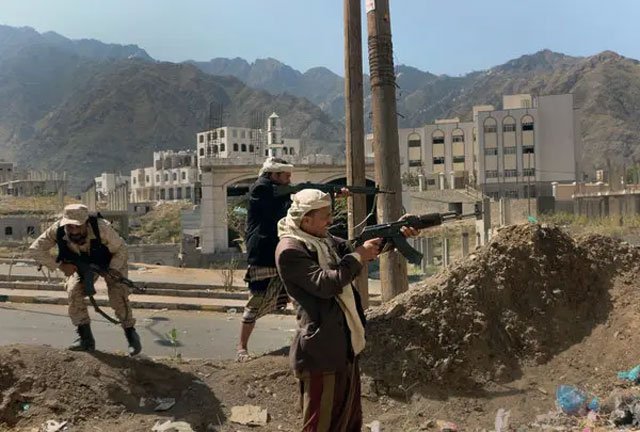
The latest violence has been reported around the strategically important Red Sea port city of Mokha, also known as Al-Makha, and the central province of Marib. Houthi forces have stepped up missile and drone attacks against government-held military positions and infrastructure, while government forces have responded by striking Houthi positions.
The escalation has raised alarm among international observers because both Mokha and Marib occupy critical strategic positions in Yemen’s fragmented conflict landscape. Marib, in particular, remains one of the most important areas under the control of Yemen’s internationally recognised government and has been a major battlefield throughout the country’s decade-long conflict.
On August 9, the Yemeni military said a Houthi attack on Mokha killed seven people, including four military personnel and three civilians, and wounded around 30 others. The attack reportedly involved ballistic missiles and drones. Yemeni air-defence units said they intercepted 11 drones during the assault.
The Houthis claimed that their attacks were directed at Saudi troop concentrations and weapons depots. Yemeni authorities, however, said civilian locations and critical infrastructure were also struck.
The attacks reportedly continued in subsequent days, with the Houthis claiming additional missile and drone strikes against military installations in Mokha and Marib. The group said it had targeted military deployments, weapons storage facilities and command centres. The claims regarding the targets and casualties could not be independently verified.
The growing violence in Marib is particularly concerning because of the province’s strategic importance. It has long been regarded as a crucial stronghold of the internationally recognised government and has witnessed repeated attempts by Houthi forces to expand their control. Yemeni officials have also accused the Houthis of targeting civilian infrastructure in the province with ballistic missiles.
The escalation has simultaneously drawn Saudi Arabia further into the confrontation. The Houthis have claimed attacks against Saudi infrastructure, including an Aramco facility in Jizan, while Riyadh has continued to maintain military pressure against the Iran-aligned group.
The developments are taking place against the backdrop of broader tensions involving Iran, the United States and Israel. The Houthis, who receive political and military backing from Iran, have previously carried out attacks against regional and international targets as part of their confrontation with their adversaries.
One of the biggest concerns is the possible impact on commercial shipping through the Red Sea and the Bab el-Mandeb Strait. The strategic maritime passage connects the Red Sea with the Gulf of Aden and is a vital route for vessels travelling between Europe and Asia.
On August 11, the Egyptian-owned cargo vessel Tihamah was reportedly attacked in the Bab el-Mandeb. Reports said four crew members and two Yemeni rescuers were killed, while another 10 people were injured. The incident has heightened fears that renewed military activity could threaten commercial shipping and further disrupt global trade.
Any prolonged instability around the Bab el-Mandeb could have consequences extending well beyond Yemen. The waterway is a major maritime chokepoint, and disruption could increase shipping costs, delay deliveries and place additional pressure on global energy and commodity markets.
The current escalation comes after a prolonged period of relative calm following the 2022 truce, which significantly reduced large-scale fighting between the Houthis and Yemen’s internationally recognised government. Although the truce did not resolve the underlying political conflict, it provided a substantial reduction in violence and allowed limited economic and social activity to resume.
The roots of the conflict date back to 2014, when the Houthis seized control of Sanaa and expanded their influence across northern and western Yemen. The development prompted a Saudi-led military intervention in support of the internationally recognised government. Years of fighting devastated Yemen’s infrastructure, weakened its economy and contributed to one of the world’s most severe humanitarian crises.
The United Nations has now warned that Yemen faces its highest risk of returning to major conflict since the 2022 truce. UN Special Envoy Hans Grundberg told the Security Council that military activity and hostilities had increased along several front lines, including in Marib, Hadramawt and Mokha.
Grundberg has urged all parties to avoid further escalation and return to negotiations, warning that continued military confrontation could undermine the fragile progress made toward a comprehensive political settlement.
The humanitarian consequences of another major conflict could be devastating. Years of war have already resulted in tens of thousands of deaths, widespread displacement and the destruction of essential infrastructure. Millions of Yemenis remain dependent on humanitarian assistance to meet basic needs.
Food insecurity remains a major concern. The United Nations has repeatedly warned that millions of Yemenis face severe shortages, with vulnerable communities particularly exposed to the risk of famine if humanitarian assistance is disrupted or fighting expands.
The humanitarian situation has also been complicated by the detention of UN personnel and aid workers by the Houthis, creating additional obstacles for international organisations attempting to deliver assistance to vulnerable populations.
For ordinary Yemenis, the prospect of renewed war threatens to reverse the limited gains achieved during the period of relative calm. The 2022 truce provided communities with a respite from large-scale fighting and allowed some commercial activity and movement to recover. A return to sustained hostilities could trigger another wave of displacement and deepen already severe economic hardship.
Despite the recent escalation, diplomatic channels remain open. The United Nations continues to push for de-escalation and a return to negotiations, while regional mediation efforts are considered essential to preventing the situation from developing into another full-scale conflict.
Yemen remains deeply divided, with the Houthis controlling much of the north and west, including the capital Sanaa, while the internationally recognised government and its allies retain control over other parts of the country.
The latest fighting has not yet reached the intensity witnessed during the worst years of the Yemeni war. However, the growing attacks on government-held territories, Saudi interests and commercial shipping have significantly increased the risk of a wider confrontation.
The coming weeks could prove crucial. Whether the current escalation remains contained or develops into a broader military campaign will depend heavily on the ability of Yemeni factions and their regional backers to exercise restraint and return to negotiations. For a country already devastated by years of war, preventing another major conflict remains an urgent priority.
(The content of this article is sourced from a news agency and has not been edited by the Mavericknews30 team.)