White House Says Strait of Hormuz Remains Open as US Strengthens Naval Blockade on Iran

Washington, July 2026 : The White House has confirmed that the Strait of Hormuz remains open to international commercial shipping not linked to Iranian ports, even as the United States reinforces its naval presence in the strategically vital waterway to enforce a renewed blockade targeting Iran.
According to the White House, the restrictions apply only to vessels travelling to or departing from Iranian ports, while commercial ships engaged in international trade through the Strait continue to receive safe passage under the protection of the US Navy.
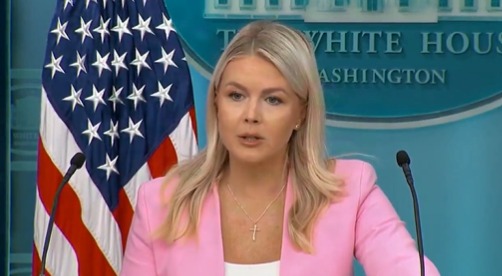
White House Press Secretary Karoline Leavitt said the blockade was reimposed after Iran allegedly failed to honour commitments made to Washington. She stressed that the operation is fully functional and backed by a significant deployment of American military assets aimed at safeguarding one of the world’s busiest maritime trade routes.
“The Strait of Hormuz remains open for international shipping not travelling to or from Iranian ports. The United States Navy is actively ensuring the safe movement of commercial vessels while enforcing the restrictions imposed on Iran,” Leavitt said.
She revealed that more than 10,000 American personnel, including sailors, Marines and airmen, have been deployed to support the operation. The US military presence includes two aircraft carrier strike groups, more than 20 naval warships, and dozens of surveillance and combat aircraft operating across the Gulf region.
The deployment is intended to enforce the blockade while ensuring uninterrupted movement of international shipping through the Strait, which carries nearly 20 per cent of the world’s seaborne crude oil and a substantial share of global liquefied natural gas (LNG) exports.
Leavitt said the operation had already demonstrated its effectiveness during the first 24 hours of implementation. According to the White House, US Central Command (CENTCOM) redirected two commercial vessels that complied with the new regulations, while another vessel that failed to comply was disabled as part of enforcement measures.
US officials maintain that the blockade is designed to target vessels associated with Iranian ports and maritime infrastructure rather than disrupt broader global trade.
Earlier this week, CENTCOM announced the resumption of naval blockade operations, stating that the measures are aimed at reducing Iran’s military capabilities that Washington alleges have been used to threaten commercial shipping in and around the Strait of Hormuz.
Military officials also confirmed the deployment of more than 20 US naval warships and hundreds of military aircraft across the region to support surveillance, interdiction and maritime security operations.
The latest developments follow weeks of escalating tensions between Washington and Tehran over security in the Gulf. The United States has accused Iran of using drones, fast-attack boats and other military assets to harass commercial vessels navigating through the Strait, prompting Washington to strengthen its military posture in the region.
US President Donald Trump has previously declared that the United States would act as the “Guardian of the Strait of Hormuz,” asserting that freedom of navigation through the strategic waterway must be protected. His administration has also announced a 20 per cent levy on cargo transiting the Strait, saying the revenue would help offset the costs of maintaining the large-scale naval deployment.
The move has drawn strong criticism from Iran, which argues that it retains sovereign rights over parts of the Strait and has repeatedly opposed what it describes as American interference in regional waters.
Iran’s Islamic Revolutionary Guard Corps (IRGC) has warned that it will not accept any attempt by Washington to dictate maritime operations in the Gulf. Iranian officials have also threatened retaliation against any US military action involving commercial vessels operating outside Iran’s designated maritime routes.
The Strait of Hormuz remains one of the world’s most strategically important maritime chokepoints, serving as the primary gateway for oil exports from major Gulf producers. Any disruption to navigation through the narrow waterway has the potential to affect global energy supplies and international shipping markets.
With the renewed US blockade and the continued military build-up in the Gulf, tensions between Washington and Tehran remain elevated, raising concerns over the security of one of the world’s most critical energy corridors while underscoring the growing geopolitical importance of the Strait of Hormuz.
(The content of this article is sourced from a news agency and has not been edited by the Mavericknews30 team.)





Chabahar Port Remains Unharmed After US Airstrikes on Iran, Confirms MEA
New Delhi, July 2026 : India on Friday confirmed that the Shahid Beheshti terminal at Iran…
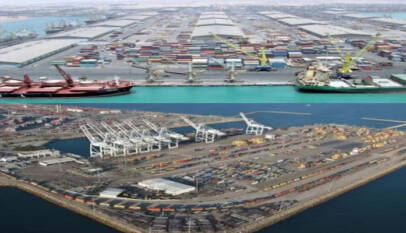
Chabahar Port Remains Unharmed After US Airstrikes on Iran, Confirms MEA
New Delhi, July 2026 : India on Friday confirmed that the Shahid Beheshti terminal …