Interim Budget Aimed at Youth and Women Ahead of Bengal Assembly Polls

Kolkata, Feb 2026 : With an eye firmly on the upcoming West Bengal Assembly elections, the Mamata Banerjee-led Trinamool Congress (TMC) government has presented an interim budget that places strong emphasis on social welfare, particularly targeting youth, women, and frontline workers. On Thursday, Finance Minister Chandrima Bhattacharya tabled the budget in the West Bengal Assembly, outlining an estimated expenditure of ₹4.06 lakh crore. The budget, widely seen as voter-focused, includes a series of financial incentives, allowances, and social security measures across multiple sectors.
Presenting the budget details in the House, the Finance Minister highlighted that the interim budget prioritises inclusive growth, social security, and economic support for vulnerable sections. Several new announcements and enhancements to existing schemes were made, with a clear focus on unemployed youth, women beneficiaries, health workers, teachers, and government employees.
Major Push for Youth and Women
A key highlight of the budget is the Banglar Yuva Shakti Scheme, under which unemployed youth aged between 21 and 40 years will receive ₹1,500 per month. The scheme is aimed at providing financial support to young people while they seek employment opportunities.
Women have also received significant attention in the budget. Under the popular Lakshmi Bhandar Scheme, the monthly assistance has been increased from ₹1,000 to ₹1,500. The scheme, which already benefits a large number of women across the state, is expected to further strengthen household financial security and women’s empowerment.
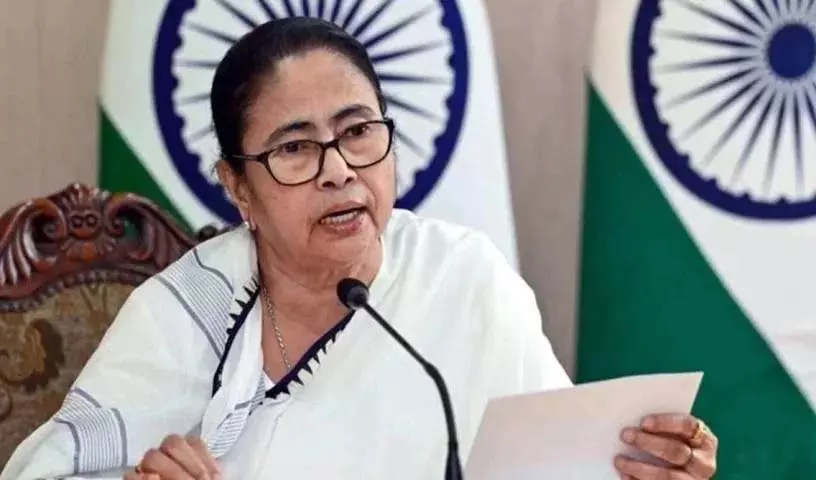
Addressing the Assembly during the budget presentation, Chief Minister Mamata Banerjee described it as a “people’s budget” and said it was designed to benefit women and youth in particular. She asserted that unlike the Central Budget, which she termed “directionless and visionless,” the state budget is focused on fulfilling promises made to the people. She also announced that all salary hikes and dearness allowance (DA) increases would be implemented immediately.
Relief for ASHA, Anganwadi, and ICDS Workers
The interim budget includes several important announcements for ASHA workers, Anganwadi workers, and ICDS staff, who form the backbone of grassroots healthcare and child welfare services in the state.
The monthly honorarium of ASHA workers has been increased by ₹1,000, with the revised amount to take effect from April this year. In a significant move, the government has also announced 180 days of maternity leave for ASHA workers, bringing their benefits on par with those enjoyed by other women employees under government schemes.
Additionally, in case an ASHA worker dies while on duty, her family will receive one-time financial assistance of ₹5 lakh. For this purpose, the government has earmarked ₹100 crore in the next financial year.
Similar relief has been extended to Anganwadi workers and helpers under the Integrated Child Development Services (ICDS). From April onwards, their monthly honorarium will also be increased by ₹1,000. In the event of death during the course of duty, their families will be provided a one-time compensation of ₹5 lakh. The government reiterated the crucial role played by ICDS workers in child care, health, and nutrition services across the state.
Benefits for Para-Teachers and Other Staff
The budget has also announced a ₹1,000 increase in the monthly honorarium for para-teachers, Shiksha Mitras, assistants, extension workers, head extension workers, special education staff, and management staff. This increase will also be effective from April. Like other categories of workers, families of these employees will be eligible for ₹5 lakh compensation in case of death during work.
Salary and DA Hike for Government Employees
Government employees have received a 4 percent increase in Dearness Allowance (DA), providing some relief from rising living costs. In addition, the salaries of civic volunteers and green police personnel have also been increased by ₹1,000 per month.
The budget also announced ₹5 lakh accident insurance coverage for family members of Anganwadi workers, adding another layer of social security.
Opposition Criticism and CM’s Counterattack
The opposition parties were quick to criticise the interim budget, alleging that it was designed primarily as a “vote-on-account budget” aimed at influencing voters ahead of the elections. They argued that the government had announced several populist measures with elections in mind.
Chief Minister Mamata Banerjee strongly rejected these allegations. She said that her government does not make announcements merely for elections, but works to fulfil the promises it makes. Countering the opposition’s claims, she cited data suggesting improvements in employment and poverty reduction in the state.
Mamata Banerjee stated that, according to central reports, unemployment in West Bengal has declined by 45.65 percent, and that the state government has successfully brought over 1.72 crore people above the poverty line. She maintained that the government’s focus has consistently been on social welfare and inclusive development.
New and Expanded Social Welfare Projects
The interim budget includes several social sector initiatives, ranging from enhanced financial support under existing schemes like Lakshmi Bhandar to increased honorariums for frontline workers such as civic volunteers and para-teachers. New social projects have also been announced, although detailed allocations are expected to be outlined later.
The opposition, however, reiterated its stance that the budget was a political tool to attract voters. In response, Mamata Banerjee accused the Centre of withholding ₹2 lakh crore due to the state. She alleged that despite repeated demands, the Centre has failed to release the funds owed to West Bengal.
In a sharp political counter, she remarked that terms like “Bangla,” “Bengal,” and “jumla” have been politicised at the national level, and criticised what she described as the Centre’s politics of vote division. She further criticised the Union Budget, calling it “actionless, missionless, visionless, and completely derailed.”
ASHA Workers’ Protests and Government’s Stand
It is noteworthy that a section of ASHA workers in the state has been protesting over long-pending demands, including a minimum monthly wage of ₹15,000. While the budget does not meet this specific demand, the government hopes that the ₹1,000 increase in honorarium and the introduction of 180 days of maternity leave will provide some relief.
Addressing the issue, Mamata Banerjee clarified that ASHA and ICDS workers are not directly employed by the government, and their remuneration structure involves shared contributions from both the Centre and the state. She recalled that when she assumed office, ASHA workers were receiving only ₹800 per month from the Centre, which her government increased to ₹2,500–₹3,000, including incentives.
She explained that both the Centre and the state contribute 50 percent each to ASHA workers’ payments, and that additional incentives are provided for extra work. The latest hike of ₹1,000 in their honorarium, she said, reflects the state government’s commitment to their welfare.
Will the Budget Ease Unrest?
Whether these announcements will succeed in calming ongoing protests by ASHA workers remains an open question. However, the state administration has claimed significant success in implementing social security schemes, asserting that West Bengal has emerged as a leading state in terms of welfare coverage.
Overall, the interim budget paints a picture of a government seeking to consolidate its support base by strengthening social welfare measures, particularly for women, youth, and grassroots workers. As the state moves closer to the Assembly elections, the political impact of these announcements is likely to remain at the centre of public debate in West Bengal.



Yamal Unfazed by Goal Drought as Spain March into World Cup Semi-finals
Los Angeles, July 2026 : Spain’s teenage sensation Lamine Yamal has dismissed concerns ove…

Yamal Unfazed by Goal Drought as Spain March into World Cup Semi-finals
Los Angeles, July 2026 : Spain’s teenage sensation Lamine Yamal has dismissed concerns over …