Operation Epic Fury: US And Israel Attacks Iran Nuclear Program And Missile Arsenal.

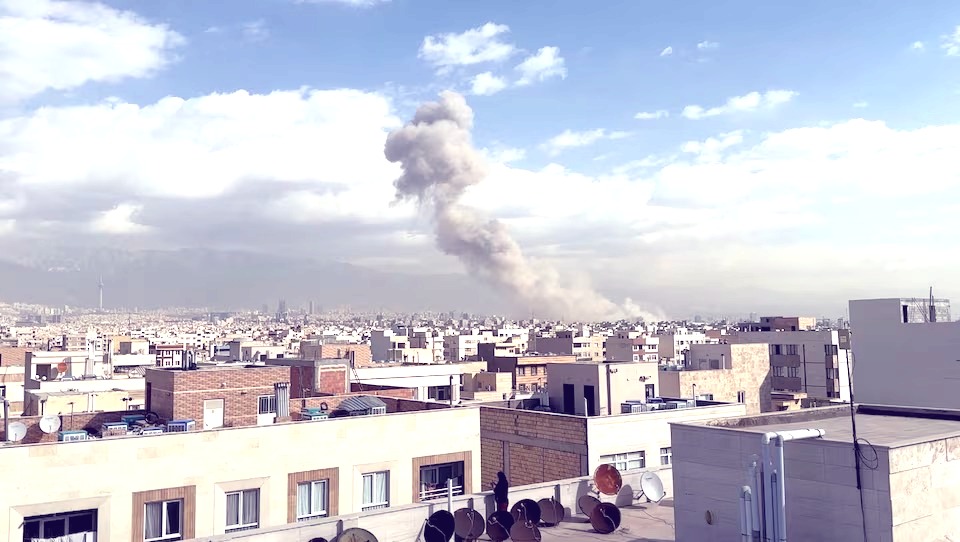
Tehran; February 2026: On February 28, 2026, the United States and Israeli forces initiated Operation Epic Fury, executing coordinated multi-domain precision strikes against Iranian military and nuclear infrastructure after Iran fired missiles into Israeli territory earlier in the day.
According to defence officials, the campaign is designed to dismantle Tehran’s ballistic missile architecture while disrupting sensitive nuclear development layers that could support a weapons capability. This marks a calculated shift from deterrence signalling to direct suppression of Iran’s long-range strike network and enriched material pathways, with strikes focused on command and control nodes, launch complexes, hardened protection layers, and nuclear support facilities. Rather than a limited retaliatory action, Operation Epic Fury is structured as a systemic attack on the pillars underpinning Iran’s strategic deterrent posture, reflecting a broader effort to reshape the regional security environment and constrain Tehran’s strategic options.
Iran launched missiles toward Israel before the allied response, while the Pentagon confirmed that the U.S. military component of the operation carries the designation Operation Epic Fury. President Donald Trump stated that the strikes were intended to eliminate a direct security threat to the United States and prevent Iran from acquiring a nuclear weapons capability following the breakdown of nuclear and missile negotiations.
The offensive follows the collapse of recent high-level diplomatic engagements between Washington and Tehran aimed at limiting uranium enrichment levels, restricting advanced centrifuge deployment, and constraining long-range missile development. Talks failed to produce a framework that would verifiably cap enrichment thresholds or dismantle elements of Iran’s expanding nuclear infrastructure. U.S. officials had warned that, in the absence of enforceable limits preventing Iran from reaching nuclear weapons breakout capability, military options would remain active.
The rapid transition from diplomatic impasse to kinetic execution suggests that operational strike packages were pre-authorized and linked to escalation triggers, including confirmed missile launches and intelligence assessments regarding nuclear acceleration.
From a tactical perspective, Operation Epic Fury appears designed around parallel lines of effort: immediate disruption of Iran’s missile employment cycle and targeted degradation of facilities supporting nuclear weapons development. The missile cycle includes detection, targeting authorization, launch coordination, and post-launch mobility, largely managed by the Islamic Revolutionary Guard Corps Aerospace Force. Initial strike packages are likely to prioritize transporter-erector-launchers, fixed launch complexes, underground storage bunkers, hardened command centres, fibre-linked communications nodes, and integrated air defence batteries positioned to shield strategic assets.
Simultaneously, high-value nuclear-related facilities were likely included in target sets. These may include enrichment complexes such as underground centrifuge halls, centrifuge manufacturing workshops, research centres linked to weaponisation pathways, and storage sites associated with fissile material processing. Striking such facilities requires specialised munitions capable of penetrating reinforced concrete and subterranean structures, indicating the probable use of advanced precision-guided penetrators delivered by long-range aircraft or stand-off cruise missiles.
By targeting both kinetic missile assets and the strategic infrastructure enabling nuclear advancement, allied planners aim to fracture Iran’s deterrent structure at its foundation. Iran’s missile doctrine relies on saturation tactics intended to overwhelm missile defence systems through volume and timing, while its nuclear program provides a latent strategic shield against external intervention. Degrading both simultaneously reduces escalation leverage and disrupts Tehran’s long-term strategic trajectory.
Israel’s operational role is central due to geographic proximity and persistent intelligence coverage. The Israel Defence Forces maintain detailed targeting libraries covering western and central Iran, where key missile brigades, air defence installations, and elements of nuclear infrastructure are located. Israeli surveillance assets, including airborne early warning aircraft, long-endurance unmanned systems, and signals intelligence platforms, likely contributed real-time target updates for time-sensitive strikes, particularly against mobile launchers and protected facilities.
The United States provides strategic depth and specialised strike capabilities required for hardened nuclear targets. Carrier strike groups in the region, guided-missile submarines, and surface combatants equipped with long-range precision munitions enable stand-off engagements against defended infrastructure. Long-range bombers equipped with deep-penetration munitions are uniquely suited to neutralise reinforced enrichment facilities or subterranean command complexes. Space-based intelligence, electronic warfare aircraft, and cyber support elements likely degraded radar coverage, air defence coordination, and facility communications during the opening phase.
This operational construct reflects years of joint interoperability development between U.S. Central Command and the Israel Defence Forces. Exercises have increasingly emphasised integrated air and missile defence, distributed targeting, suppression of enemy air defences, and contingency planning for nuclear-related strike scenarios. Operation Epic Fury appears to operationalise those doctrinal frameworks in a live combat environment against a state adversary possessing hardened infrastructure and retaliatory missile capacity.
Operational implications extend beyond immediate retaliation. Iran fields one of the region’s most extensive ballistic missile arsenals, capable of striking Israel, Gulf Cooperation Council states, and U.S. installations in Iraq and Syria. At the same time, its advancing enrichment program has progressively shortened nuclear breakout timelines. By degrading launch platforms, command nodes, and nuclear infrastructure concurrently, allied planners aim to extend breakout timelines, disrupt weaponisation pathways, and reduce the immediate threat envelope facing regional forces.
Layered missile defence systems, such as Israel’s Arrow and David’s Sling, alongside U.S. Patriot and Aegis-equipped naval platforms, remain critical for intercepting residual threats. However, missile defence alone cannot neutralise the strategic implications of a nuclear-armed Iran. Offensive suppression of enrichment and weaponisation capability is therefore central to the broader objective of preventing Tehran from achieving nuclear deterrent status.
Strategically, Operation Epic Fury challenges the viability of Iran’s dual-track deterrence posture, which combines ballistic missile mass with nuclear threshold positioning. If enrichment facilities, centrifuge production lines, and associated research nodes are significantly degraded, Iran’s path to weaponisation could be delayed or reversed. Such an outcome would alter the regional balance of power and reinforce U.S. red lines regarding nuclear proliferation.
Nevertheless, escalation pathways remain open. Iran retains asymmetric response options, including proxy militia operations against U.S. personnel, cyber attacks targeting infrastructure, and maritime disruption in the Strait of Hormuz. Even with damaged missile and nuclear infrastructure, Tehran can attempt indirect escalation designed to raise costs without triggering overwhelming retaliation.
Operation Epic Fury, therefore, represents more than a retaliatory exchange of fire. It is a coordinated attempt to dismantle both the missile backbone and nuclear development capacity of a hardened regional power. Its outcome will shape immediate deterrence dynamics, the survivability of forward-deployed forces, and the long-term credibility of U.S. commitments to prevent nuclear proliferation in contested theatres.
Team Maverick.




Shivakumar Says Congress United, Assures Women Will Get Cabinet Berth
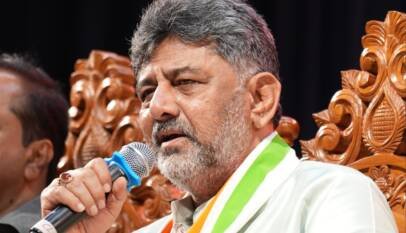
Bengaluru, Aug 2026 : Karnataka Chief Minister D.K. Shivakumar on Monday sought to dismiss…
Shivakumar Says Congress United, Assures Women Will Get Cabinet Berth
Bengaluru, Aug 2026 : Karnataka Chief Minister D.K. Shivakumar on Monday sought to dismiss …