Trump Claims Destruction of Iranian Naval Fleet as US Escalates Military Pressure on Tehran

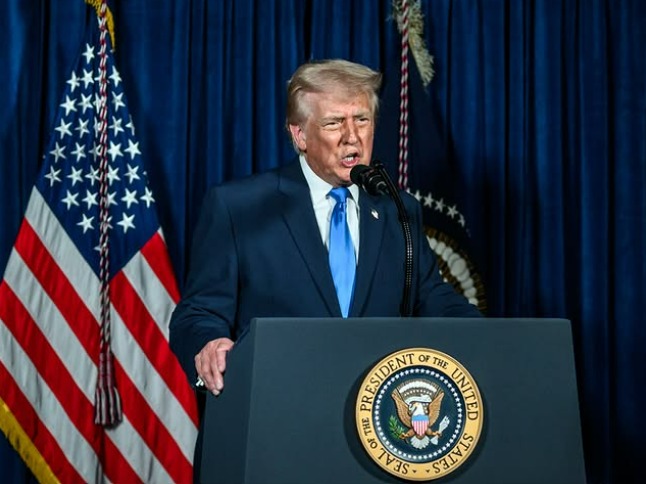
Washington, March 2026 : The confrontation between the United States and Iran intensified sharply after President Donald Trump announced that US forces had destroyed and sunk nine Iranian naval vessels and struck key military installations, signalling a dramatic expansion of hostilities with Tehran.
In a strongly worded statement, Trump said he had been briefed on the latest military developments. “I have just been informed that we have destroyed and sunk nine Iranian naval ships, some of them relatively large and important,” he wrote, adding that US forces were pursuing additional targets. “We are going after the rest — they will soon be floating at the bottom of the sea, also!” Trump further claimed that a separate strike had largely destroyed Iran’s naval headquarters, remarking sarcastically that “other than that, their Navy is doing very well.”
The claims were followed by confirmations from United States Central Command (CENTCOM), which detailed extensive air operations carried out overnight. According to CENTCOM, US B-2 stealth bombers armed with 2,000-pound bombs targeted Iran’s hardened ballistic missile facilities. “No nation should ever doubt America’s resolve,” the command said, underlining the scale and intent of the strikes.
CENTCOM also reported that an Iranian Jamaran-class corvette was hit during the opening phase of what it described as Operation Epic Fury. The vessel was struck at a pier in Chah Bahar and is reportedly sinking in the Gulf of Oman, a strategically vital waterway. The command referenced earlier warnings issued by Trump, urging Iranian armed forces, including the Islamic Revolutionary Guard Corps, to lay down their weapons. “Abandon ship,” the statement added.
US officials also forcefully rejected Tehran’s assertion that its actions had been limited to American military targets. CENTCOM accused Iran of deliberately striking civilian locations across multiple countries. During a United Nations Security Council meeting, the Iranian ambassador had claimed that Iran’s response was directed “solely and exclusively” at US bases and assets. CENTCOM dismissed this claim outright, calling it a “lie.”
According to the US military, Iran targeted more than a dozen civilian and commercial locations, including Dubai International Airport, Kuwait International Airport, Zayed International Airport in Dubai, Erbil International Airport in Iraq, and the Port of Dubai. CENTCOM also alleged attacks on prominent civilian landmarks and hotels such as the Fairmont Palm Hotel and the Burj Al Arab in Dubai, the Crowne Plaza Hotel in Bahrain, and residential areas in Bahrain and Qatar. In Israel, residential neighbourhoods in Beit Shemesh and Tel Aviv, as well as the Haifa Oil Refinery, were cited among the alleged targets.
If confirmed, the attacks would represent a significant escalation, expanding the conflict beyond direct military engagements and raising concerns over civilian safety and regional stability. The US military said these actions demonstrated Iran’s willingness to target civilian infrastructure, further justifying Washington’s intensified campaign.
The reported use of B-2 stealth bombers and heavy munitions highlights the seriousness of the US response. Such aircraft are typically reserved for high-value, heavily fortified targets, signalling that Washington aims to degrade Iran’s strategic capabilities rather than merely send a warning. Military analysts say this level of force reflects a shift from limited deterrence toward sustained military pressure.
The sinking of an Iranian naval vessel in the Gulf of Oman has also drawn attention to the broader economic and strategic implications. The Gulf of Oman lies along a critical maritime corridor through which a significant portion of the world’s oil and gas supplies transit. Any prolonged naval confrontation in this region could disrupt global shipping routes and energy markets, with particular consequences for Asian economies heavily dependent on Gulf crude.
Tensions between the United States and Iran have flared repeatedly in recent years, often centred on Iran’s ballistic missile programme and its regional military posture. The IRGC has been at the heart of several previous confrontations in the Persian Gulf, where close encounters between Iranian and US naval forces have raised the risk of miscalculation.
As of now, Tehran has not issued a detailed response to the latest US claims. However, the scale of the reported strikes and the rhetoric from Washington suggest that the confrontation has entered a far more dangerous phase. With military operations intensifying and accusations of civilian targeting flying from both sides, the situation underscores the fragility of security in the Gulf and the growing risk of a wider regional conflict.
(The content of this article is sourced from a news agency and has not been edited by the Mavericknews30 team.)




Shivakumar Says Congress United, Assures Women Will Get Cabinet Berth
Bengaluru, Aug 2026 : Karnataka Chief Minister D.K. Shivakumar on Monday sought to dismiss…
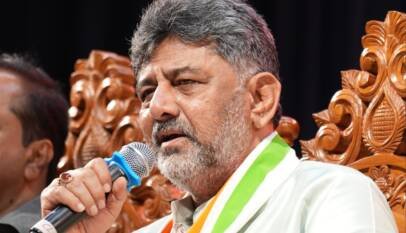
Shivakumar Says Congress United, Assures Women Will Get Cabinet Berth
Bengaluru, Aug 2026 : Karnataka Chief Minister D.K. Shivakumar on Monday sought to dismiss …