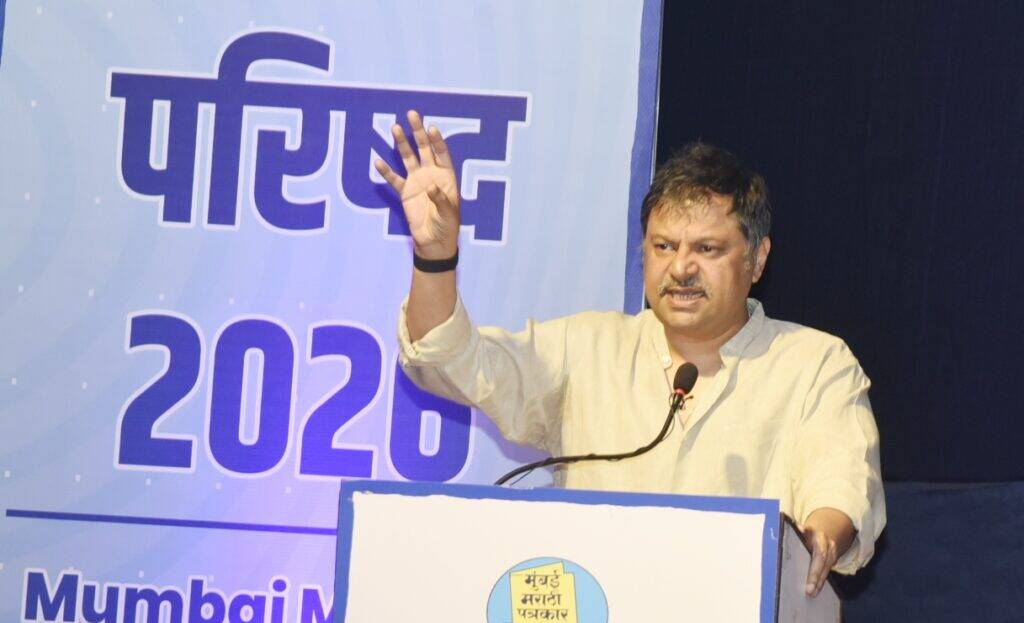
Journalists Should See AI as an Opportunity to Upgrade Skills: Principal Secretary and DG Brijesh Singh

Guidance at the ‘AI Conference’ of the Mumbai Marathi Journalists Association
Mumbai, March 2026 : Even in the era of AI, the credibility of journalism is more important. Although the use of artificial intelligence (AI) in journalism is increasing rapidly, it is necessary to remember that AI does not have the ability to understand reality. Since the responsibility of finding the truth and the trust of society are the fundamental strengths of journalism, the role of journalism will become even more important even in the time of changing technology, said Principal Secretary and Director General of the Directorate of Information and Public Relations Brijesh Singh. He also appealed that journalists should not see AI as a threat but as an opportunity for skill enhancement.
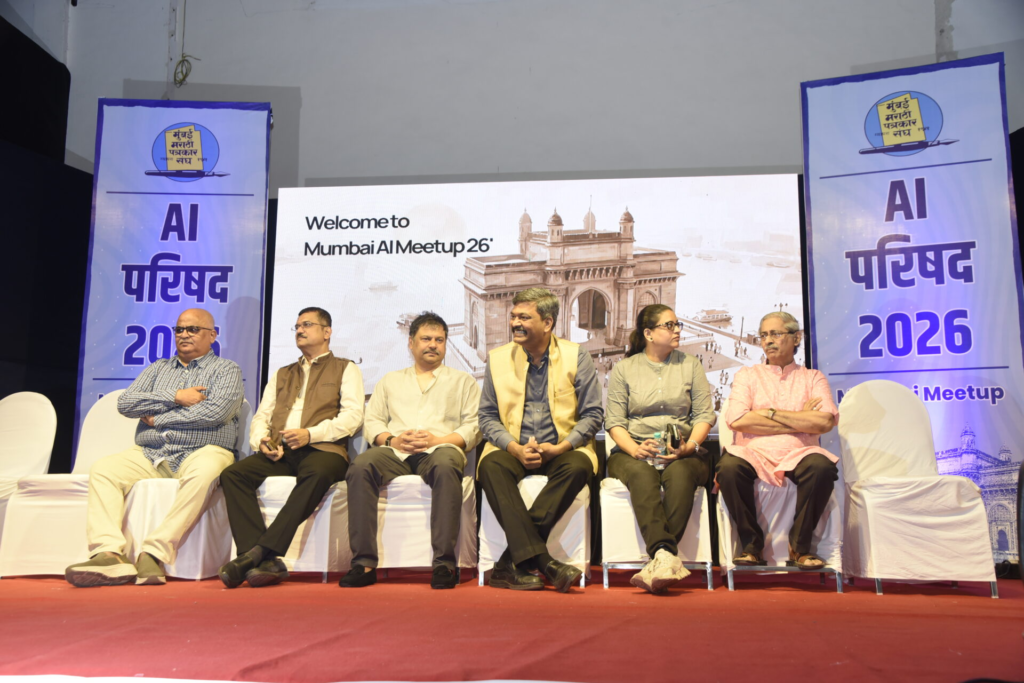
The ‘AI Conference 2026’ organised at the Mumbai Marathi Patrakar Sangh was inaugurated by Director General Singh. On this occasion, he spoke in detail about the changes, opportunities and challenges taking place in the field of journalism due to AI. At the event, the association’s president Sandeep Chavan, vice-presidents Swati Ghosalkar and Rajendra Hunje, trustee Devdas Matale, Ajay Vaidya, executive Shailendra Shirke and others were present.
Principal Secretary Singh said that in human history the process of knowledge reaching people changed greatly after the invention of printing technology. Earlier knowledge was limited to certain groups, but due to printing it reached the common people. After that the development of mass media took place. When television started, newspapers felt threatened; when digital media came, television started feeling threatened. However, even after all these changes, newspapers have maintained their existence. Journalism will survive in the future as well, but whatever work can be automated will become automated due to AI, he noted.
Today the use of AI in journalism is increasing. In some places in the world, completely automated “one-man newsrooms” are being created where tasks such as news collection, writing, editing, fact-checking and page layout are being done with the help of AI. News in fields such as finance and sports can be produced in large quantities automatically. Therefore, the working style in journalism is changing, he said.
Your job will not be taken by AI, but another person who uses AI may take your job. Therefore it is very necessary for journalists to adopt AI skills. For this purpose, there is also a plan to soon start a certificate course called “AI in Journalism” to provide AI training to journalists through the initiative of the Directorate of Information and Public Relations, Singh said.
Due to artificial intelligence technology, the entire process of creation, distribution and use of knowledge is changing rapidly. Many tasks in journalism are becoming automated. Even though many tasks will become automated in the future, the responsibility of presenting the truth will remain on human intelligence. Therefore, although AI will change the form of journalism, the basic strength of journalism—truthfulness, trust and editorial responsibility—will remain the fundamental principles.
He also said that because of AI, news is becoming real-time, dynamic and hyper-personalised. In today’s attention economy, content is presented in different forms on various platforms to attract readers’ attention. Some foreign news agencies prepare many versions of the same news and send them to different reader groups and study which version is more effective.
With the help of AI, real-time content, infographics and videos are being created. Therefore news is becoming “liquid” and constantly changing. The speed of information has increased tremendously. Today, due to AI, one person can create 20-30 articles a day. Therefore, although the quantity of information has increased, the question of its credibility has also become important.
One major limitation of AI is the understanding of Indian languages. Although AI technology has progressed greatly, it still does not fully understand the context of Indian languages including Marathi. Since most large language models are based on Western sources such as Wikipedia and Reddit, data related to Indian experience, culture and languages is available in smaller amounts. Therefore separate AI development and data sovereignty for Indian languages is important, he said.
AI-based systems sometimes create incorrect information. Due to “hallucination,” references or information that do not exist can be generated. There have also been cases in court matters where AI provided wrong information. Therefore, responsibility for AI-generated content ultimately remains at the editorial level.
Singh said that AI is creating a huge amount of information. In digital media a large quantity of light content known as “AI slop” is being produced. Therefore in the future journalism may be divided into two parts: one large-scale general news production and the other research-based, investigative and high-quality journalism.
He also said that technologies such as deepfakes have increased the risk due to AI. While creating fake videos has become easier, there is also a growing tendency to call real videos “deepfake.” This can affect the truth. In this background, the Directorate of Information and Public Relations has started an AI-based fact-check system. Through this system suspicious videos or information can be verified to determine whether they are true or false.
He also referred to the “provenance” technology being developed in Western countries, where a special digital signature (DNA signature) is embedded in photos or videos. Through this it becomes easy to identify whether any change has been made in the original content. He said India also needs to adopt such technologies.
Singh said that the use of AI has already started in the Directorate of Information and Public Relations. After entering meeting points or information, content can be immediately generated in different languages. Therefore government information can now be circulated in real time and its reach on digital media has increased significantly.
At the event, in his welcome speech, association president Sandeep Chavan said that technology has brought major changes in the field of journalism. Earlier, to produce a news story, a team including a reporter, cameraman, assistant and driver was required. Now a single journalist can do shooting, writing, voiceover and editing through a mobile phone. Such technological progress cannot be stopped, so journalists must adapt to AI and new tools. With Google, email, social media and mobile technology, the speed of communication and information has increased tremendously, and AI will bring even bigger changes in the future. Therefore conferences like this are important for journalists to learn about new technologies.
In his introductory remarks, Shailendra Shirke said that although many people have basic knowledge of new technologies like AI, deeper understanding can be gained through such conferences. Therefore guidance from experts on such subjects is important for journalists. He also said that Chief Minister Devendra Fadnavis has consistently emphasized increasing the use of AI in the state, and the government is focusing on expanding the use of technology in its functioning. Because of the initiative taken by Principal Secretary and Director General Brijesh Singh, government news is reaching journalists faster and in a simpler format.
Vice-President Rajendra Hunje conducted the proceedings. The speakers at the conference were felicitated by Principal Secretary Singh.





Shivakumar Says Congress United, Assures Women Will Get Cabinet Berth
Bengaluru, Aug 2026 : Karnataka Chief Minister D.K. Shivakumar on Monday sought to dismiss…
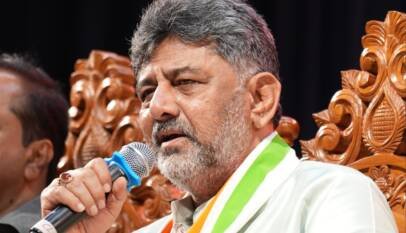
Shivakumar Says Congress United, Assures Women Will Get Cabinet Berth
Bengaluru, Aug 2026 : Karnataka Chief Minister D.K. Shivakumar on Monday sought to dismiss …