Industrial Park Incentive Policy–2026

Industrial Growth Gains Momentum Under Chief Minister Bhajanlal Sharma
Policy to Create Better Ecosystem, Boost Investment and Employment
Jaipur, March 2026: Under the leadership of Chief Minister Bhajanlal Sharma, industrial development in Rajasthan has gained fresh momentum. The state government has implemented over 34 policies, creating a conducive ecosystem for investment. Reforms such as ease of doing business and simplified approval processes have significantly transformed the industrial landscape.
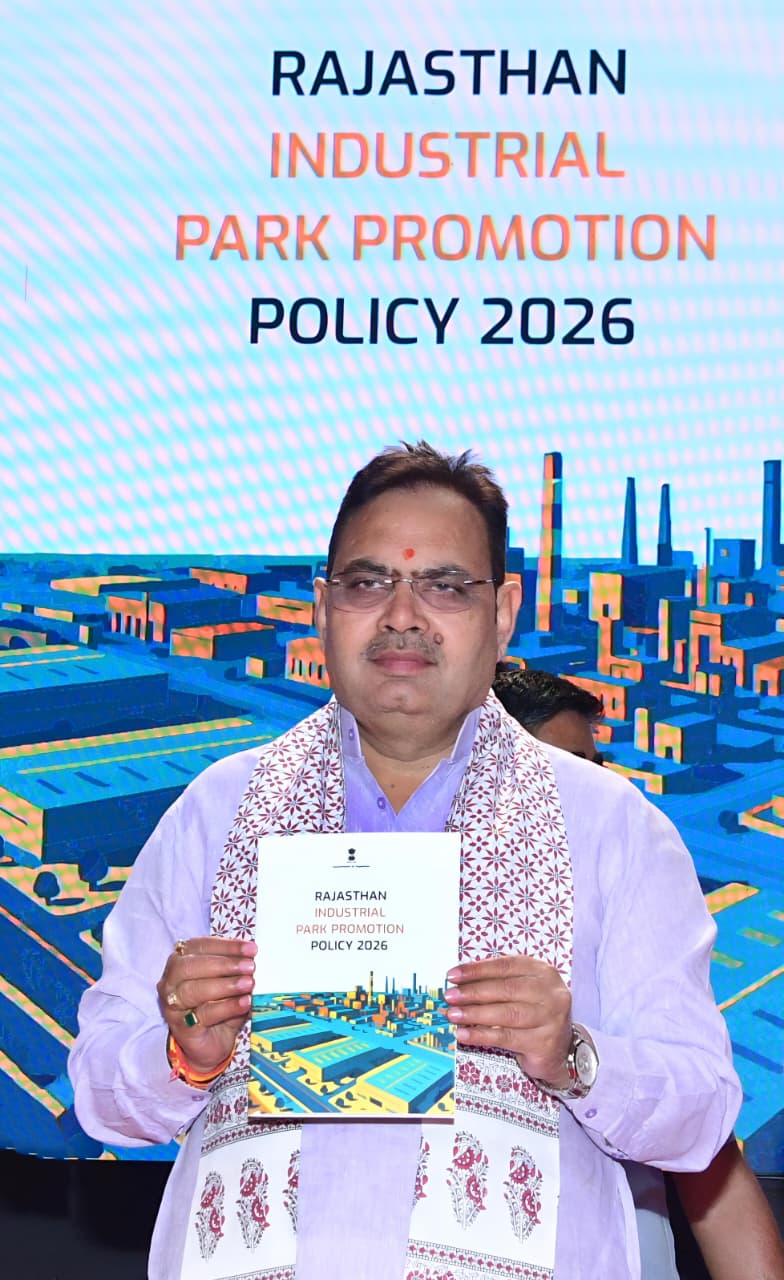
In this direction, the Rajasthan Industrial Park Incentive Policy–2026 has been introduced to promote the development of world-class industrial parks. The policy aims to position Rajasthan as a reliable and future-ready industrial destination both nationally and globally.
Aligned with the vision of Prime Minister Narendra Modi for a “Rising, Reliable and Receptive Rajasthan,” the policy seeks to create a favourable environment for industrial investment. It will also support national initiatives like Make in India and Aatmanirbhar Bharat by promoting efficient use of land, water, and energy resources, along with improved logistics infrastructure. The policy is expected to boost investment, generate employment, and ensure balanced regional development.
Four Models for Industrial Park Development
Industrial parks in the private sector will be developed through four models. Under Model A, parks will be fully developed by private developers on land allotted by RIICO. In Model B, 80 per cent of the land will be arranged by the developer, while the remaining 20 per cent will be provided by RIICO at prescribed rates. Model C allows developers to arrange the entire land independently, while Model D is based on the Public-Private Partnership (PPP) model.
The policy mandates a minimum area of 50 acres for industrial parks and at least 10 industrial units within each park.
Focus on Green Development
The policy emphasises sustainable industrial growth by promoting environmentally friendly practices and reducing pollution. It provides for 50 per cent reimbursement of expenditure on Common Effluent Treatment Plants (CETP), up to a maximum of ₹12.5 crore per park.
Additionally, the first 10 industrial park developers will receive a 20 per cent capital subsidy for infrastructure development. The subsidy is capped at ₹20 crore for parks up to 100 acres, ₹30 crore for parks between 100–250 acres, and ₹40 crore for parks exceeding 250 acres.
Strengthening Infrastructure
To ensure robust industrial infrastructure, the state government will facilitate water and electricity supply to industrial parks. It will also support the construction of access roads and connectivity infrastructure. The cost of such infrastructure will be shared, with 60 per cent borne by the state government and 40 per cent by the developer, subject to a maximum government contribution of ₹3 crore.
Transparent and Time-Bound Approvals
The policy incorporates a strong governance framework focused on transparency and accountability. Details of land proposed for industrial parks will be available on the Raj Nivesh Portal, enabling investors to access information easily.
Applications will be processed through a single-window clearance system, ensuring timely approvals. Additional incentives include 100 per cent exemption on electricity duty for captive renewable energy projects for seven years, 25 per cent rebate on stamp duty and conversion charges, and extra benefits under RIPS-2024 for plug-and-play office complexes and common utility centres.
Overall, the policy is expected to accelerate industrialisation, attract investments, and create large-scale employment opportunities across Rajasthan.


Bethell, Brook Power England to Thrilling Four-Wicket Win Over India, Take Series Lead
Manchester, July 2026 : England produced a remarkable comeback with the bat as Jacob Bethe…
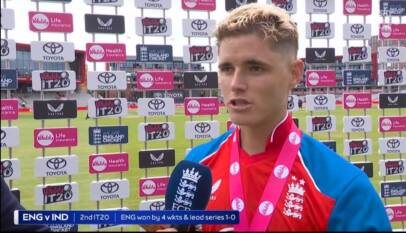
Bethell, Brook Power England to Thrilling Four-Wicket Win Over India, Take Series Lead
Manchester, July 2026 : England produced a remarkable comeback with the bat as Jacob …