Politico Constitutional Crisis In Taiwan Impeding Defence Procurements.

Taipei, Taiwan; April 2026: The LY’s National Defence Committee and Finance Committee held a joint hearing from March 23rd to 26th this year to decide between three competing versions of the Special Budget for Asymmetric War. The lawmakers failed to reach a consensus.
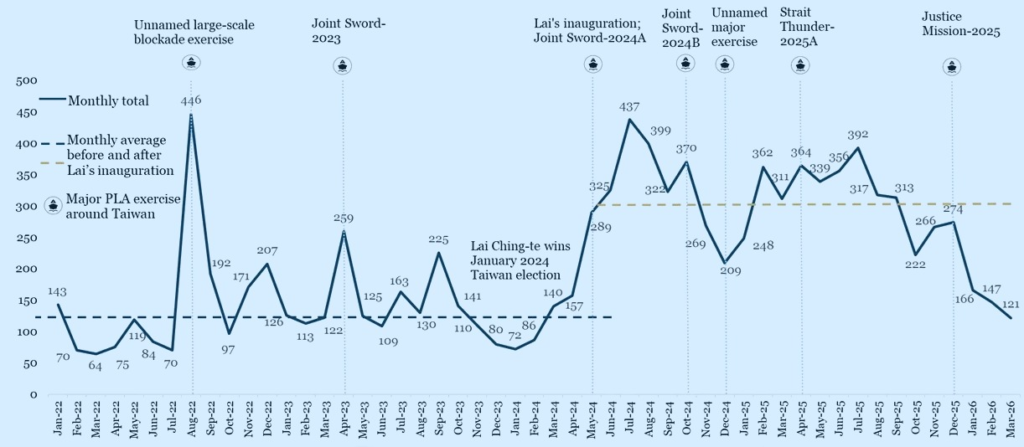
Taiwan’s Democratic Progressive Party (DPP) government is promoting a $40 billion budget to procure 200,000 unmanned systems, provide funding for Taiwan’s domestic arms industry, and develop an integrated air and missile defence (IAMD) network, alongside procurements for conventional systems from the United States. Both the TPP and KMT versions of the budget, which total around $12 billion, only fund conventional procurements and omit funding for large-scale drone procurement and IAMD systems.
Conflicts in the Middle East and Ukraine illustrate that widespread use of unmanned systems has reshaped modern warfare through the ability of low-cost systems to create battlefield transparency and a pervasive threat of precision strikes. The proliferation of long-range strike drones paired with precision missile strikes likewise necessitates an IAMD network capable of addressing such threats. A special budget that omits funding for significant numbers of unmanned systems and a Taiwanese IAMD network will leave Taiwan with limited ability to integrate lessons from foreign conflicts into its defence posture. It will also limit Taiwan’s ability to build its domestic drone industry, which is critical to reduce dependence on imported systems.
Failure to pass the special budget is also delaying Taiwan’s conventional procurement of the High Mobility Artillery Rocket System HIMARS, M109A7 self-propelled howitzer, TOW anti-tank guided missile (ATGM), and Javelin ATGM from the United States. The US government on March 30 approved a Taiwanese request to defer payment for these systems until May 2026. Further delays in passing the special budget could strain Taiwanese arms procurements from the United States, which Taiwan relies on to maintain its military readiness.
The DPP may be able to compromise with elements of the KMT that have expressed concern about the KMT version of the special budget. Taichung Mayor Lu Shiow-yen, a possible KMT presidential candidate in 2028, stated on March 30 that the KMT should consider a budget between 800 billion and 1 trillion New Taiwan Dollars (NTD) equivalent to 25 billion to 31 billion US dollars (USD), to exhibit Taiwan’s commitment to national defence. KMT legislator Hsu Chiao-Hsin and former KMT legislator Jason Hsu have both suggested that the KMT consider raising its proposal to at least 800 billion NTD.
A compromise bill between the DPP and KMT that retains significant funding for unmanned systems, an IAMD network, and Taiwan’s domestic arms industry, could break legislative deadlock without jeopardising Taiwanese efforts to modernise its military.
Meanwhile, PRC state broadcasting service CCTV released footage on March 25 of the PRC’s “Atlas” drone swarm system conducting training, claiming that each Atlas launch vehicle can deploy 48 drones, and that a single command vehicle can coordinate 96 drones simultaneously. These reconnaissance are in cognizance from the armed forces of Ukraine, Russia, the United States, and Israel to suggest that developing AI-enabled autonomous capabilities for unmanned systems is crucial for countering electronic warfare methods that have been effective against drones, particularly on the Ukrainian battlefield.
The PRC appears to be emphasising AI-enabled swarming technology in its drone development to produce systems that could saturate modern air defence systems during a Taiwan contingency. PLA reference to the battlefield dynamics in Ukraine and the Middle East indicates that the PLA sees high-end air defence systems as inadequate or too costly for drone interception. The PLA could use a large-scale swarm attack to overwhelm and degrade Taiwan’s air defence network and complicate Taiwan’s ability to intercept precision missiles, which the PRC would likely use to create favorable conditions for an amphibious landing.
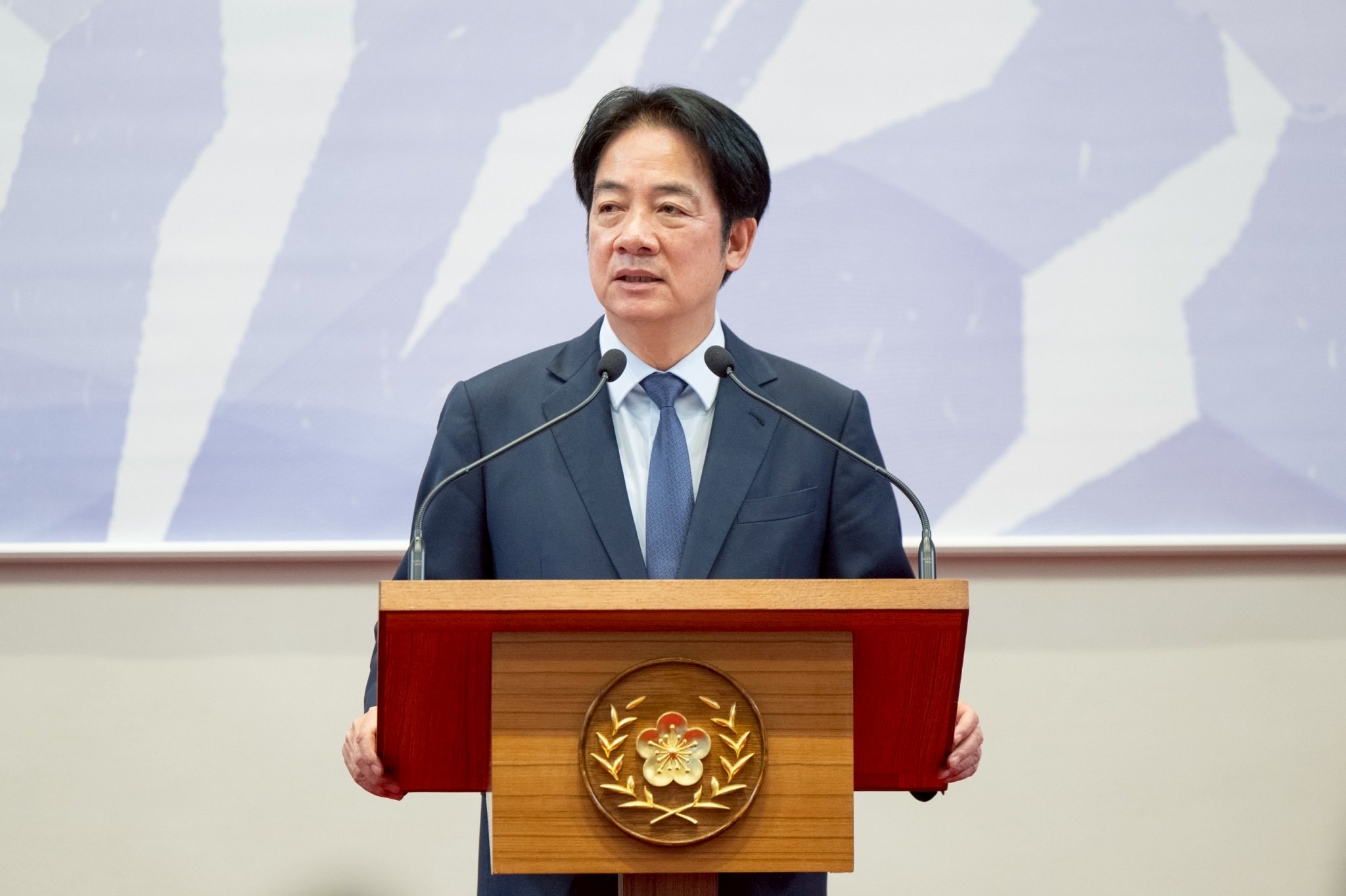
The PRC’s emphasis on developing drone swarming technology designed to overwhelm sophisticated air and missile defence systems highlights the urgency of developing an IAMD network in Taiwan. Taiwanese President Lai Ching-te introduced the T-dome air defence concept in October 2025 to address this need. Taiwan’s Special Budget for Asymmetric War contains funding for T-Dome, but the opposition parties in the LY have blocked it and instead proposed budgets that omit IAMD funding. Taiwan’s military may struggle to address an emerging unmanned threat from the PRC if it lacks dedicated counter-drone systems that are part of a multi-layered air defence network.
Team Maverick.




Wimbledon Final Locked at One Set Each as Sinner Fights Back Against Zverev
London, July 2026 : World No. 1 Jannik Sinner displayed remarkable resilience to fight bac…

Wimbledon Final Locked at One Set Each as Sinner Fights Back Against Zverev
London, July 2026 : World No. 1 Jannik Sinner displayed remarkable resilience to fight …