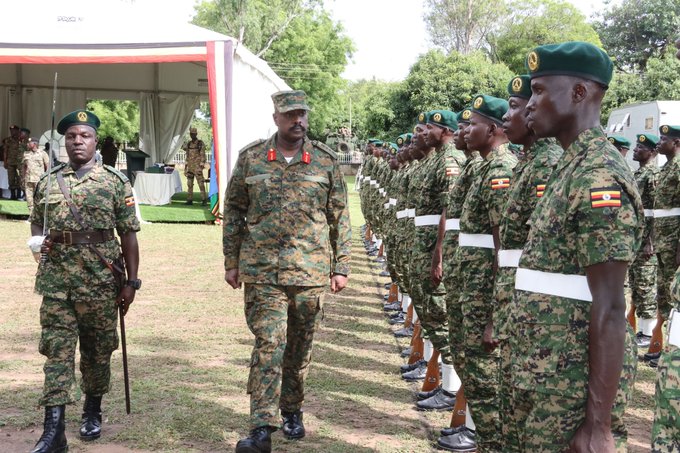
Uganda Army Chief’s Controversial Ultimatum Sparks Global Outrage and Raises Questions Over Leadership

Kampala, April 2026 : In a development that has stirred global debate and diplomatic concern, Uganda’s Chief of Defence Forces, General Muhoozi Kainerugaba, has triggered widespread outrage after issuing an extraordinary and controversial ultimatum to Turkey via social media. The statement, which many have described as bizarre and deeply inappropriate, has not only raised questions about diplomatic norms but has also reignited scrutiny of Kainerugaba’s public conduct and political ambitions.
On April 11, 2026, Kainerugaba, who is also the son of long-serving Ugandan President Yoweri Museveni, posted a message on social media platform X demanding that Turkey pay Uganda $1 billion. In an even more shocking addition, he stated that he would also like Turkey to “offer its most beautiful woman” to him as a wife. He warned that failure to meet these demands within 30 days would result in Uganda severing diplomatic ties with Turkey and closing its embassy in Kampala.
The remarks quickly went viral, drawing reactions ranging from disbelief and satire to serious criticism. While some social media users mocked the statement as absurd, others condemned it as sexist, undiplomatic, and reflective of troubling attitudes toward women and international relations.
Kainerugaba attempted to justify his demand by linking it to Uganda’s long-standing military role in Somalia. Ugandan troops have been part of the African Union peacekeeping mission in Somalia for nearly two decades, primarily engaged in combating the extremist group Al-Shabaab. According to Kainerugaba, Uganda has borne the burden of maintaining regional security, while countries like Turkey have benefited economically through infrastructure and business investments in Somalia, particularly in the capital Mogadishu.
He argued that Turkey should therefore provide what he termed a “security dividend” to Uganda in recognition of its military contributions. However, analysts and diplomats have widely rejected this framing, noting that international peacekeeping missions are conducted under multilateral agreements and not transactional arrangements between individual countries.
The situation escalated further when Kainerugaba warned that Uganda could cut diplomatic ties with Turkey and shut down its embassy within a month if his demands were not met. He also advised Ugandan citizens to avoid traveling to Turkey, citing unspecified security concerns. These statements have been seen as highly irregular, especially coming from a senior military official rather than a foreign affairs authority.
This is not the first time Kainerugaba has courted controversy through his social media activity. Often referring to himself as the “tweeting general,” he has a history of posting provocative and unconventional statements. In 2022, he made headlines by offering 100 cattle in exchange for marrying Italian Prime Minister Giorgia Meloni. On other occasions, he has made remarks about women that critics have labeled as misogynistic, including suggestions about how female soldiers should dress and controversial comments about women’s appearances.
Such statements have drawn criticism from women’s rights activists and civil society groups within Uganda and beyond. Many argue that his rhetoric undermines gender equality and reflects outdated and harmful attitudes. The latest remarks about Turkey have only intensified these concerns, with critics pointing out that they reduce women to objects in diplomatic bargaining.
Kainerugaba’s background adds another layer of complexity to the situation. Born on April 24, 1974, in Dar es Salaam, Tanzania, during his father’s years in exile, he has had a privileged upbringing shaped by politics and military influence. He was educated in Uganda, Tanzania, and the United Kingdom, attending the University of Nottingham before receiving military training at the prestigious Royal Military Academy Sandhurst.
He joined the Uganda People’s Defence Forces in 1999 and rose rapidly through the ranks, leading the elite Special Forces Command and later serving as Commander of Land Forces. In March 2024, he was appointed Chief of Defence Forces, solidifying his position as one of the most powerful figures in Uganda’s military establishment.
Supporters describe him as a bold and decisive leader who is unafraid to speak his mind. They view his direct communication style as a reflection of strength and authenticity. However, critics argue that his rise has been largely facilitated by his father’s long tenure in power, calling it a clear example of nepotism. President Museveni has ruled Uganda since 1986, and many believe Kainerugaba is being positioned as his successor.
Public opinion in Uganda appears divided. While some segments of the population, particularly within the ruling establishment and military circles, support him, others are deeply skeptical. Reports suggest that his popularity lags behind that of his father, with many Ugandans expressing concern over his temperament and suitability for national leadership.
The latest controversy has also sparked international attention, particularly given that Turkey is a significant global player and a member of NATO. Diplomatic observers warn that such statements, even if made informally on social media, can strain bilateral relations and create unnecessary tensions.
Beyond the immediate diplomatic fallout, the incident raises broader questions about the role of social media in governance and the responsibilities of public officials. In an era where statements can instantly reach a global audience, leaders are expected to exercise restraint and uphold the dignity of their offices.
Kainerugaba’s remarks also highlight the challenges of balancing personal expression with official responsibility. While social media allows leaders to communicate directly with the public, it also demands a higher level of accountability. Unfiltered statements, particularly those that touch on sensitive issues like gender and international relations, can have far-reaching consequences.
As Uganda continues to navigate questions about its political future and potential leadership transition, incidents like this are likely to play a significant role in shaping public perception. Whether Kainerugaba can overcome the controversies surrounding him and establish himself as a credible leader remains to be seen.
For now, his latest comments have not only embarrassed many observers but have also underscored the importance of diplomacy, respect, and responsible leadership in an increasingly interconnected world.
(The content of this article is sourced from a news agency and has not been edited by the Mavericknews30 team.)

Telangana’s Abhi Chandra Clinches Two Medals at Special Olympics Nationals
Dehradun, July 2026 : Determination, discipline and an unyielding passion for sport define…

Telangana’s Abhi Chandra Clinches Two Medals at Special Olympics Nationals
Dehradun, July 2026 : Determination, discipline and an unyielding passion for sport defined the …