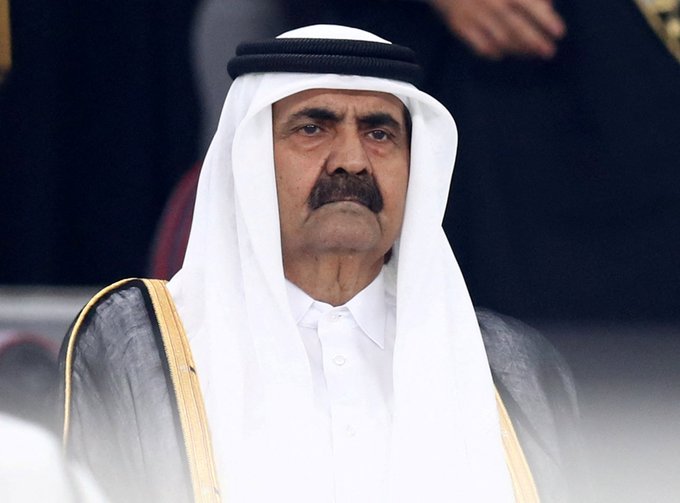
Former Qatar Emir Sheikh Hamad bin Khalifa Al Thani Dies at 74, Leaves Legacy of Transforming Nation into Global Power

Doha, July 2026 : Sheikh Hamad bin Khalifa Al Thani, the former Emir of Qatar who reshaped the small Gulf nation into a major global force in diplomacy, finance, energy and international affairs, passed away on Saturday at the age of 74. The announcement was made by the state-run Qatar News Agency, which did not disclose the cause of death.
Sheikh Hamad ruled Qatar from 1995 to 2013, overseeing one of the most remarkable transformations in the modern Middle East. His 18-year reign turned the resource-rich but little-known desert nation into a global diplomatic player with significant influence in world politics, business, media and sports.
He made history in June 2013 by voluntarily abdicating the throne in favour of his son, Sheikh Tamim bin Hamad Al Thani, becoming the first Gulf ruler in modern times to peacefully transfer power while still alive.
Sheikh Hamad assumed power in June 1995 through a bloodless palace coup while his father, Sheikh Khalifa bin Hamad Al Thani, was abroad. At the time, Qatar had a small population and was largely overlooked on the international stage despite possessing some of the world’s largest natural gas reserves.
Recognising that military strength alone could not guarantee influence, Sheikh Hamad adopted a long-term strategy centred on economic power, diplomacy and global engagement. Under his leadership, Qatar invested heavily in its liquefied natural gas (LNG) industry, eventually becoming the world’s largest LNG exporter and one of the richest countries in terms of per capita income.
One of his most influential decisions came in 1996 with the launch of Al Jazeera, the Arabic-language satellite television network that revolutionised news broadcasting across the Middle East. The network challenged traditional state-controlled media by offering independent reporting and diverse political debates, significantly enhancing Qatar’s international profile.
Al Jazeera gained worldwide prominence after broadcasting exclusive messages from al-Qaeda leader Osama bin Laden following the September 11 attacks. While praised internationally for promoting media freedom, it also drew criticism from several regional governments, which accused the network of interfering in their domestic affairs.
Sheikh Hamad also forged one of the closest strategic partnerships with the United States. Qatar invested more than USD 1 billion to develop Al Udeid Air Base near Doha, which later became the forward headquarters of the US Central Command (CENTCOM). Today, the base hosts approximately 10,000 American military personnel and has served as a critical hub for operations across Iraq, Afghanistan and West Asia. Notably, Qatar has allowed the United States to use the facility without charging rent, strengthening bilateral security ties.
Beyond defence, Sheikh Hamad built Qatar into a global investment powerhouse through the Qatar Investment Authority (QIA). Under his leadership, the sovereign wealth fund acquired stakes in some of the world’s most prestigious assets, including Harrods, The Shard, parts of Canary Wharf, nearly 17 per cent of Volkswagen, and French football club Paris Saint-Germain (PSG). During the 2008 global financial crisis, Qatar also played a key role in supporting Barclays Bank with multi-billion-pound investments.
His vision of elevating Qatar’s global standing culminated in the country hosting the 2022 FIFA World Cup, making it the first Arab and Middle Eastern nation to stage football’s biggest tournament. Despite facing criticism over labour rights and allegations surrounding the bidding process, the tournament proved to be a landmark event that showcased Qatar on the global stage.
Throughout his rule, Sheikh Hamad pursued an independent foreign policy, maintaining relations with both Western powers and regional rivals. Qatar developed diplomatic ties with the United States and Iran simultaneously, hosted leaders of Hamas, maintained contacts with the Muslim Brotherhood and frequently acted as a mediator in conflicts involving Lebanon, Sudan, Afghanistan and other regions. This balancing approach occasionally led to tensions with neighbouring Gulf countries, culminating in the regional blockade imposed on Qatar in 2017.
Even after stepping down, Sheikh Hamad’s influence continued to shape Qatar’s domestic and international policies. His leadership laid the foundation for the country’s emergence as a major diplomatic mediator, energy supplier and global investor.
Sheikh Hamad leaves behind a lasting legacy as the architect of modern Qatar. Through strategic investments, energy wealth, international diplomacy, media influence and sporting ambition, he transformed one of the world’s smallest nations into a country with an outsized role in global affairs. His vision continues to define Qatar’s place on the international stage, making him one of the most consequential leaders in the nation’s history.

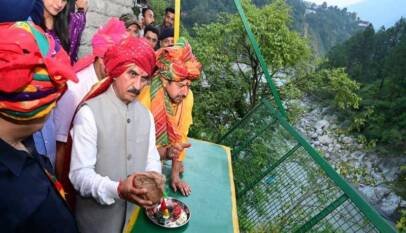
The Bhoramdev Padyatra will begin on the first Monday of Shravan, August 3, at 7 a.m.
The 18-kilometer padyatra will begin from the Budha Mahadev Temple to the Bhoramdev Temple…

The Bhoramdev Padyatra will begin on the first Monday of Shravan, August 3, at 7 a.m.
The 18-kilometer padyatra will begin from the Budha Mahadev Temple to the Bhoramdev Temple. …