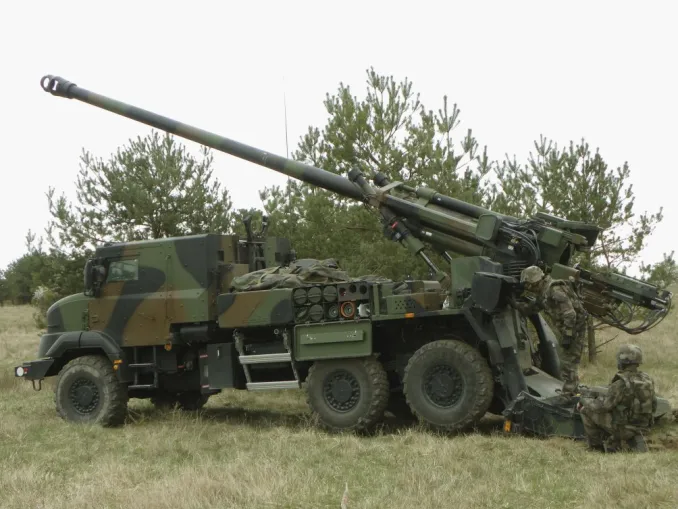
Pakistan Deploys Chinese SH-15 Howitzers Along Eastern Border Amid Military Modernisation

New Delhi, Aug 2026 : Pakistan has reportedly stepped up the deployment of Chinese-made artillery systems along its eastern border with India, with reports indicating that around 250 SH-15 truck-mounted self-propelled howitzers are being positioned at strategically important locations. The move is being viewed as part of Islamabad’s broader effort to strengthen its long-range artillery capabilities and modernise its conventional military forces.
According to reports, the 155mm SH-15 systems are being deployed across various sectors along the India-Pakistan border. Defence analysts suggest that their induction could provide the Pakistan Army with greater mobility and extended-range firepower, particularly in areas where rapid repositioning of artillery assets is important.
The reported deployment has gained attention amid continued military activity and heightened focus on defence preparedness along the eastern frontier. Reports claim that Pakistan accelerated efforts to strengthen its artillery capabilities following Operation Sindoor, the Indian military operation conducted in May 2025 against terrorist infrastructure. The operation involved coordinated action by the Indian armed forces against identified terror targets.
The SH-15 is manufactured by China’s state-owned defence company NORINCO and is widely regarded as the export counterpart of the People’s Liberation Army’s PCL-181 wheeled self-propelled howitzer. The system is mounted on a 6×6 armoured Shaanxi truck chassis, giving it considerable road mobility and allowing it to relocate quickly after carrying out a fire mission.
One of the system’s key strengths is its combination of mobility and long-range firepower. The 155mm howitzer is reportedly capable of engaging targets at ranges of approximately 30-40 kilometres with conventional ammunition. Its reach can increase substantially when rocket-assisted V-LAP ammunition is employed, with reported maximum ranges extending to between 53 and 72 kilometres, depending on the ammunition configuration.
The SH-15 is also equipped with modern fire-control technology designed to reduce the time required to identify and engage targets. Its hydraulic stabilisation system provides greater stability during firing, while the weapon is reportedly capable of firing at a rate of up to six rounds per minute under suitable conditions.
Another significant advantage is its shoot-and-scoot capability. Following a firing mission, the wheeled platform can rapidly relocate, potentially reducing its exposure to counter-battery fire. Such mobility is particularly important in modern artillery warfare, where detecting and neutralising enemy firing positions has become increasingly sophisticated.
If the reported figure of 250 systems is accurate, the induction could strengthen several Pakistani artillery formations and enhance their ability to conduct long-range conventional fire missions. However, the actual operational impact of any deployment would depend on factors including ammunition availability, crew training, battlefield networking, surveillance capabilities and integration with other military assets.
The development also highlights the deepening defence relationship between Pakistan and China. Beijing remains one of Islamabad’s principal sources of military hardware, supplying aircraft, armoured platforms, naval systems, missiles and artillery equipment. The two countries also regularly conduct joint military exercises and maintain close defence-to-defence engagement.
Pakistan’s military leadership has repeatedly highlighted the importance of its strategic partnership with China. Recent interactions between senior officials from the two countries have further underscored their expanding military cooperation.
The reported SH-15 deployment therefore represents more than an artillery acquisition. It reflects Pakistan’s continuing shift towards highly mobile, digitally supported and longer-range artillery systems while reducing dependence on older platforms.
For India, the development adds another dimension to the evolving military environment along its western frontier. Both countries have continued to invest in precision weapons, surveillance systems, drones, artillery and other advanced military technologies.
The reported deployment of the SH-15s underscores the growing importance of mobility, precision and range in modern battlefield operations. At the same time, the strategic significance of the deployment will ultimately depend on how these systems are integrated into Pakistan’s broader operational doctrine and military network.
(The content of this article is sourced from a news agency and has not been edited by the Mavericknews30 team.)






From Education to a Developed Chhattisgarh: CM Sai Shares Future Roadmap with NEET-Qualified Students
Chief Minister Shri Vishnu Deo Sai holds an inspiring interaction with NEET-2026 successfu…

From Education to a Developed Chhattisgarh: CM Sai Shares Future Roadmap with NEET-Qualified Students
Chief Minister Shri Vishnu Deo Sai holds an inspiring interaction with NEET-2026 successful students …