Why Is King Charles Visiting The United States At This Hour?

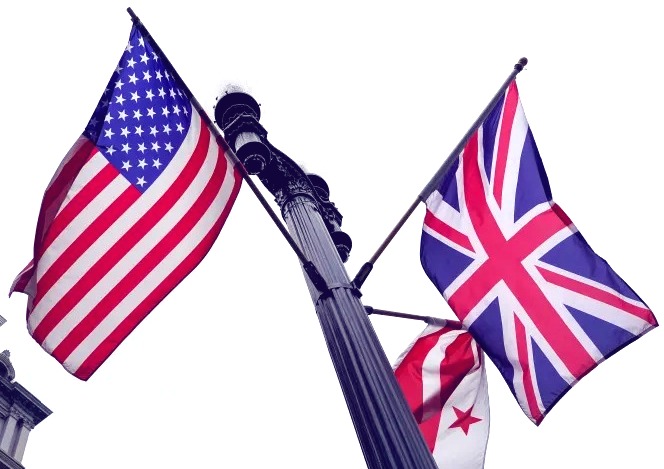
London; April 2026: King Charles visit to the United States at the pretext of the 250th US Independence is viewed as the most appropriate juncture in the current global geopolitical environment, and most significantly when the bilateral ties between these two countries are considered to be at nadir.
The strain in relations have stemmed since the nationalisation of the Suez Canal in 1956. In recent times, British Prime Minister Keir Starmer has criticised the war on Iran, saying it is against the interests of the UK. He also refused to join a military operation sought by Trump to forcibly reopen the Strait of Hormuz. Instead, the UK and several other European nations have offered to help secure the strait once it is open.
Economically, trade disputes have resurfaced, particularly over the UK’s digital services tax, which targets major US tech companies. Washington has warned it could respond with tariffs, arguing the measure disproportionately affects US firms. Against this backdrop, analysts say the visit carries added diplomatic weight.
“King Charles III’s visit should be understood as crisis management through ceremony”, said Salvador Santino Regilme, associate professor and programme chair of international relations at Leiden University. “The visit also coincides with the 250th anniversary of American independence, which gives it a powerful historical irony: a British monarch is arriving in Washington to reaffirm an alliance with a republic born from revolt against the crown. That symbolism is not ornamental. It does diplomatic work”, Regilme added.
“When relations between elected leaders become volatile, the monarchy offers Britain a second diplomatic language: continuity, restraint and historical intimacy. Charles cannot negotiate NATO commitments, tariffs or Iran policy. Yet he can create a public setting in which both sides can step back from open hostility without appearing weak”.
Regilme further asserted that King Charles’s address to Congress is significant because it places the British monarchy “before the institutional heart of American republicanism. This is not simply pageantry”, he said. “It is a performance of reconciliation between empire and former colony, and a reminder that alliances are sustained not only by interests, but also by memory, ritual and shared political mythology”. He added that the visit also speaks to a wider moment in global politics, where even powerful states rely on symbols when their material power is contested.
Legitimacy is never produced by coercion alone. It also depends on narratives of moral purpose, dignity, partnership and historical belonging. This visit is a vivid example of that logic, as Regilme quoted.
The Royal protocol like any other state visit will focus on the joint relationship between America and Britain, royal commentator Amanda Matta said, adding there will be “less focus on who comes first, rather more about showing the friendship between the two nations”.
Even so, royal protocol could still shape some aspects of the visit, especially when it comes to the media. “The royals typically don’t take questions from journalists on official engagements”, Matta added, noting it would be “seen as inappropriate” to ask spontaneous questions.
Security is likely to be tightly controlled after the recent shooting in Washington. While such visits are already “very highly coordinated”, Matta said there will likely be a little bit more high alerts on both sides given how visible the events are.
At the same time, the visit is expected to be articulately choreographed, with little room for spontaneity. “Every single thing, every single word that Charles and Camilla will say to the President and the First Lady has been cleared with Downing Street”, Justin Vovk, professor of history at Redeemer University, said. “None of this will be left up to unscripted moments”, he added.
With tensions high, the emphasis will be on predictability. “Unscripted means unpredictable, and unpredictable is when things can get ugly. And that’s not what the monarchy does”, Vovk said, adding the royal approach is to “smooth things over” by following government guidance. Vovk added he would be “stunned” if there were any moments where the King and the US president engaged with people outside tightly controlled settings.
The etiquette rules are surprisingly relaxed – “There are probably fewer rules than people expect”, Matta said. While it is customary not to walk in front of the monarch or initiate physical contact, these rules are applied with flexibility.
“We would expect to hear Trump refer to the king as ‘Your Majesty’ instead of Charles. But that’s the only really formal piece. Even bowing and curtsying, especially in America, is not required”, she added.
Cultural differences may still be noticeable. Americans tend to be “more casual” and more comfortable with physical contact, while British protocol places more emphasis on restraint. However, any awkward moments are unlikely to disrupt the visit. As Matta noted, the system is designed so the monarch can “not show a reaction” and “carry on with dignity”.
Team Maverick.

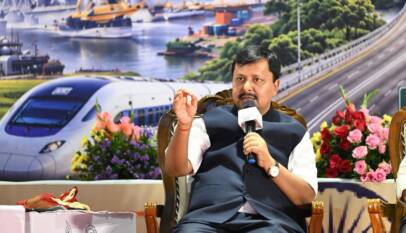



BJP Workers Are Full-Time Politicians, Rahul Gandhi Is Part-Time: Nitin Nabin in Telangana
Hyderabad, June 2026 : Bharatiya Janata Party (BJP) national president Nitin Nabin on Mond…
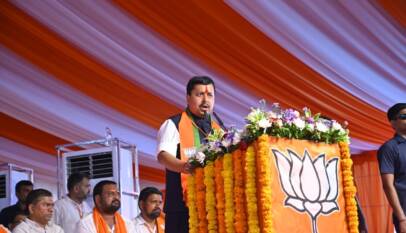
BJP Workers Are Full-Time Politicians, Rahul Gandhi Is Part-Time: Nitin Nabin in Telangana
Hyderabad, June 2026 : Bharatiya Janata Party (BJP) national president Nitin Nabin on Monday …