UN Urges End to Strait of Hormuz Blockade, Warns of Rising Humanitarian Crisis

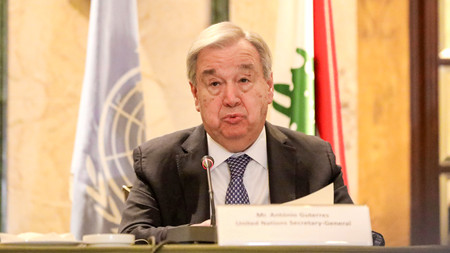
United Nations, April 2026 : Raising alarm over the escalating humanitarian and economic fallout from disruptions in the Strait of Hormuz, UN Secretary-General Antonio Guterres on Monday called for an immediate halt to the use of commercial shipping as a tool of political pressure.
Addressing a high-level meeting of the United Nations Security Council on maritime security, Guterres highlighted the growing risks faced by thousands of seafarers stranded in the region. He urged member states to prioritise their safety and well-being, stressing that the rights of sailors must be protected “at all times, and in all waters.”
According to the UN chief, more than 20,000 seafarers aboard over 2,000 vessels are currently stuck in the Hormuz region due to restrictions and heightened tensions. Calling the situation a “web of risks,” he appealed for urgent international cooperation to resolve the crisis. He specifically urged countries to support an emergency evacuation framework proposed by the International Maritime Organization (IMO), aimed at ensuring the safe movement and protection of affected crews.
The situation has also impacted Indian maritime interests significantly. Reports indicate that around 30 Indian-flagged ships carrying more than 1,000 personnel are stranded in the area, while several Indian sailors aboard foreign vessels are also caught in the الأزمة. At least three Indian seafarers have reportedly lost their lives in recent attacks.
IMO Secretary-General Arsenio Dominguez emphasised the importance of maintaining the established maritime corridor jointly managed by Iran and Oman. He warned against any unilateral measures that could disrupt international navigation norms, including the imposition of tolls on ships passing through the strait.
Guterres cautioned that prolonged disruption in this crucial waterway—through which nearly 20 per cent of global oil and gas supplies and a significant share of fertiliser trade passes—could trigger a wider global crisis. “Safe and unimpeded passage is not only an economic necessity but also a humanitarian imperative,” he said, warning that continued instability could push millions, particularly in Africa and South Asia, towards food insecurity and poverty.
The UN chief also criticised proposals to levy transit fees on ships, reiterating that international law does not support such actions in global waterways. Echoing this stance, Dominguez stated that no country has the legal authority to impose discriminatory tolls or restrictions on international straits.
As tensions persist, the UN has called for restraint, dialogue, and adherence to international maritime laws to prevent further escalation and safeguard global trade and human lives.
Team Maverick





CM Yogi directs action on 2,200 proposals: Budget to be released by July 15, projects to be launched on the ground from August 15
CM takes a tough stand during PWD review, warns of action over delays in pending projects …
CM Yogi directs action on 2,200 proposals: Budget to be released by July 15, projects to be launched on the ground from August 15
CM takes a tough stand during PWD review, warns of action over delays in …