On Its 50th Anniversary, European Court Of Auditors Vows To Reinforce Trust Through Auditing.

Luxembourg; May 2026: Today, the European Court of Auditors (ECA) reported on its activities in 2025, providing a comprehensive picture of its work over the past year, which marked the 50th anniversary of the institution’s founding. With their observations and recommendations, the EU auditors help to ensure better use of public money and greater transparency. As the EU develops its next long-term budget, the ECA remains committed to providing trustworthy insights for citizens and policymakers on how EU resources are managed.
The ECA helps not only to improve the EU’s financial management, but also to make sure that EU policies and programmes achieve their intended objectives while delivering value for money. Each year, the ECA checks the reliability of the EU’s annual accounts and the legality and regularity of the underlying transactions, and conducts audits on topics that reflect the EU’s political priorities, as well as general trends and emerging challenges. In 2025, the auditors scrutinised several topics such as the microchips industry, medicine shortages, military mobility, VAT fraud on imports, cooperation between the EU’s anti-fraud bodies, and many more. Much of the auditors’ recent work has been dedicated to examining the European Commission’s budget proposals for 2028-2034, with a view to highlighting key issues and risks.
“As geopolitical tensions rise and uncertainty grows, independent, evidence-based institutions play a vital role. We remain fully committed to providing independent assessments of whether EU resources are managed effectively and transparently”, said ECA President Tony Murphy. “‘Reinforcing trust through audit’ is the guiding principle of our 2026-2030 strategy, and will anchor our priorities and activities in the years ahead”.
To achieve this, the ECA’s new strategy for 2026-2030, adopted at the end of 2025, takes account of the challenges and opportunities that lie ahead for the EU. The previous strategic goals remain at the core of the institution’s audit work, with an eye to its digital transformation. However, plenty of challenging topics add to the auditors’ to-do list for this year and beyond, including the EU’s competitiveness, strategic autonomy, and defence strategies.
The ECA will continue to engage proactively with lawmakers, stakeholders and citizens to ensure that its work informs policy choices and supports stronger governance of EU funds. It works closely with the European Parliament, the Council, national/regional parliaments, and member state governments, as the impact of the auditors’ work depends largely on the use these bodies make of the ECA’s findings and recommendations. More than 75% of the ECA’s audit recommendations from 2021 have been implemented fully or in most respects, based on our annual three year follow-up procedure.
ECA’s New Strategy For 2026-2030:
The environment in which we operate is complex and competitive, characterised by volatility and uncertainty in the medium term. As we look ahead to the period from 2026 to 2030, several key challenges appear at this moment before the EU.
• Competitiveness and strategic autonomy: The EU is experiencing a decline in its global competitiveness, with key technological advancements occurring outside its borders. Geopolitical shifts raise concerns about the EU’s strategic autonomy and its ability to remain competitive in the global market.
• Security and defence: Recent years have highlighted the fragility of peace, and during this period of rapid geopolitical shifts the EU is focused on protecting its citizens and strengthening defence capabilities.
• Migration: A comprehensive approach to migration remains a challenge for the EU. The Union needs to harness opportunities, while addressing issues such as the illegal trafficking of migrants and effective protection of the EU’s external borders.
• Environment and climate: Failing to meet environmental targets negatively impacts health, ecosystems and the economy. The EU must adapt and prepare for a changing climate to mitigate these effects. It also needs to remain competitive while advancing to its net-zero objectives.
To help tackle these challenges, in early 2025 the Commission tabled ideas for a reformed and reinforced EU budget for the next multiannual financial framework (MFF), focusing on performance and supporting the EU’s political priorities for 2024-2029, i.e., a Europe that is free and democratic, strong and secure, and prosperous and competitive.
As the ECA approaches its 50th anniversary as the Union’s external auditor, our commitment to promote democratic oversight and sound financial management remains steadfast. We will continue to deliver important reports and publications that provide vital independent analysis within a complex landscape, addressing key issues for the EU’s future while serving EU citizens, institutional stakeholders, and partners at both EU and member state levels.
The ECA has shown resilience and adaptability in response to the changing audit landscape in which we operate. The rapid adoption of digital technologies and complex data environments presents challenges to traditional audit methods, but also creates opportunities for innovation. Our 2026-2030 strategy will leverage our strengths, core values, vision and mission to navigate these challenges effectively and seize emerging opportunities.
GOAL 1: Improve the accountability, transparency and governance of EU action –
Accountability and transparency are crucial elements of a democratic system, and are essential for fostering citizens’ trust in the EU and its financial management. Through our work, we aim to improve transparency and traceability in the use of EU funds, and thus effectively support the process of ensuring that the EU institutions and bodies that manage EU funds and implement EU policies are held accountable.
Over the years, we have identified accountability gaps and overlaps, particularly in areas where the EU operates through an intergovernmental approach. We have also highlighted shortcomings in the legal framework and design of new delivery models, with features such as financing not being linked to cost, performance orientation, and reforms as the condition for EU funding. Moreover, the potential use by our auditees of artificial intelligence in the EU’s financial management involves additional risks. Through our work, we aim to identify and recommend ways of addressing these gaps and risks and contributing to improved governance, transparency and trust in the Union. This includes tackling shortcomings that stand in the way of impactful EU action.
To achieve this goal, we:
• identify and report governance and transparency issues, as well as accountability gaps and overlaps, including in new delivery models;
• support all initiatives that entrust the ECA with a clear and broad audit mandate towards all EU institutions and bodies, including intergovernmental structures that are of key relevance to the functioning of the EU;
• examine the quality and reliability of the information systems, data and –where applicable – algorithms used by our auditees in the EU’s financial management and governance;
• recommend key improvements, mindful of the need to avoid unnecessary complexity.
GOAL 2: Provide strong audit assurance on EU finances –
The next multiannual financial framework (for 2028+) may bring significant changes, including different delivery models. We will continue to assess risks thoroughly in all areas of EU spending and types of delivery model, and to perform our work in the most efficient and effective manner. Moreover, digitalisation and AI developments are likely to affect the way our auditees work and implement the 2028+ MFF.
To achieve this goal, we:
• are proactive and follow changes in the 2028+ MFF closely, allowing us to develop and adapt our assurance audit approach to provide relevant and timely reports and audit opinions;
• continue to take account of the level of risk in planning and executing our work;
• make enhanced use of data and IT tools and technologies in our assurance work, while addressing data reliability and other IT risks.
GOAL 3: Target our audits where we add most value –
We have identified four strategic areas for consideration when planning our performance audits and reviews for the 2026-2030 period. These areas take account of existing commitments regarding the use of EU funds, the Union’s priorities, and trends and emerging challenges that shape our context:
• the Union’s economic competitiveness and resilience, including innovation, digital transition, trade and strategic autonomy;
• the Union’s security, defence, democratic values and external action, including enlargement and migration;
• the Union’s transition to becoming climate-change resilient and economically, socially and environmentally sustainable;
• safeguarding and sustaining the Union’s public finances, including robust economic, financial and fiscal governance.
Through this goal, and taking account of our priorities, we:
• focus our audits on those issues that matter most, based on risk, materiality, coverage, timing,
relevance and stakeholder interest;
• ensure that our audits make a difference through unique insights and by improving the use and implementation of EU funds and policies;
• make recommendations – at the level both of EU institutions and bodies and of member states –
that are targeted, relevant, useful, timely, feasible and cost-effective, while endeavouring not to add
unnecessary administrative burden.
GOAL 4: Strengthen our audit capacity and efficiency –
Our staff are our most important asset, and are critical to achieving our strategy. We strive to ensure that our audit capacity matches the challenges ahead, both by tackling difficulties in recruiting and retaining skilled staff in Luxembourg, and by upskilling and reskilling for our needs. We value diversity and inclusion, promote equal opportunities, and ensure a respectful working environment based on open communication, dialogue and mutual trust. Staff engagement and wellbeing are important pillars of our internal policies.
Our work is strongly affected by digitalisation, AI and increased connectivity. The availability of and access to data and IT tools could change the way our stakeholders access information and develop insights. We need to capitalise on the increasing amounts of digital data and on process automation. Provided that we can access data, verify its reliability, and mitigate or adapt to risks, we can enhance our work by increasing our relevance and productivity, thus leading by example and remaining futureproof.
In the 2026-2030 period, we will face an increasingly challenging external environment, potentially including major changes in the structure and functioning of the next MFF, which could have implications for administrative resources. We need to be resilient and continue to deliver impactful, high-quality and timely work. To achieve impact, the communication and visibility of our audit work is vital. We aim to reach our stakeholders and share our messages through fair, balanced and evidence based reports on EU actions that reflect the new digital communication paradigm.
Through continuous internal development, we aim to be an organisation that:
• values and invests in its staff, by promoting competence and expertise, and by investing in
upskilling, reskilling and the acquisition of new skills from a wide geographical base;
• is resilient and efficient, demonstrating the ability to face new challenges and responsibilities, and incorporating the latest technologies in a secure and reliable way;
• promotes methodological quality, both internally and through collaboration with peers;
• is continuously relevant and meets stakeholders’ needs by producing and communicating targeted, clear and balanced messages.
Team Maverick.







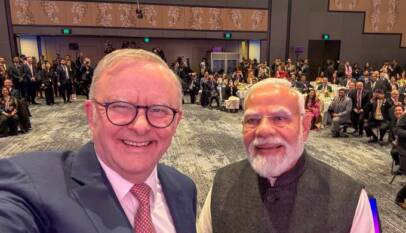
Australia Calls India a Top-Tier Security Partner, Unveils Landmark Defence and Energy Agreements
Canberra, July 2026 : Australia on Thursday described India as one of its most important s…
Australia Calls India a Top-Tier Security Partner, Unveils Landmark Defence and Energy Agreements
Canberra, July 2026 : Australia on Thursday described India as one of its most …