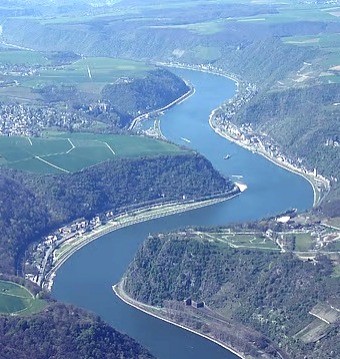
Despite Rising Rhine Water Level Full Cargo Loads Still Restricted.

Berlin; May 2026: Although abundant rainfall – a natures bounty has raised the water levels on the river Rhine in Germany enabling vessels to sail with more cargo after shallow water hindered shipping early this week. But the trader’s association yesterday (09th May 2026) has reported that sailings with full loads are still not possible.
Persistent dry weather in both the months of April and early May meant the river became too shallow for vessels to sail fully loaded, with some sailing half full or less. Shallow water means vessel operators impose surcharges on freight rates to compensate for vessels not sailing fully loaded, increasing costs for cargo owners. It also means loads must be spread among several vessels sailing part loaded, also increasing costs.
Rain in the past couple of days means water levels have risen and vessels are generally able to sail with 60% to 70% full, traders said. Shallow water continues to hinder shipping on some northern river sections including around Duisburg and Cologne and at the chokepoint of Kaub. But water at Kaub could return to levels allowing full loads early next week as recent rain drains into the river, they said.
The Rhine is an important shipping route for commodities such as grains, minerals, ores, chemicals, coal and oil products, including heating oil. German companies faced supply bottlenecks and production problems in summer 2022 after a drought led to unusually low water levels on the river.
Shallow water means vessel operators impose surcharges on freight rates to compensate for vessels not sailing fully loaded, increasing costs for cargo owners. It also means loads must be spread among several vessels sailing part loaded, also increasing costs.
Water levels on the Rhine River are subject to seasonal weather patterns. If the river is too high, vessels can’t fit under bridges or go through locks. High water levels are usually caused by snow melting in the Alps and heavy rains in the spring and early summer.
On the flipside, droughts and extreme heat waves, which have both become more common in Western Europe over the last three decades causes the water level of the Rhine river to drop. When Rhine water levels are extremely low, ships can’t sail because they could run aground.
Experts argue that it is generally more common for water levels on the Rhine to be low, rather than high. This is most likely to happen during the hottest and driest time of year, from late July through August and sometimes onwards. In 2022, for example, Europe had one of its driest years and summers on record. Germany’s drought that year severely impacted Rhine water levels, causing shipping disruptions and even some cruises to be rerouted over land at parts.
Team Maverick.








Jesus Backs Cristiano Ronaldo, Takes Charge as Portugal Coach Until 2030
Lisbon, July 2026 : Newly appointed Portugal head coach Jorge Jesus has thrown his full su…

Jesus Backs Cristiano Ronaldo, Takes Charge as Portugal Coach Until 2030
Lisbon, July 2026 : Newly appointed Portugal head coach Jorge Jesus has thrown his …