Karbi Anglong’s Evolving Demography Raises Concern Over Land & Identity.

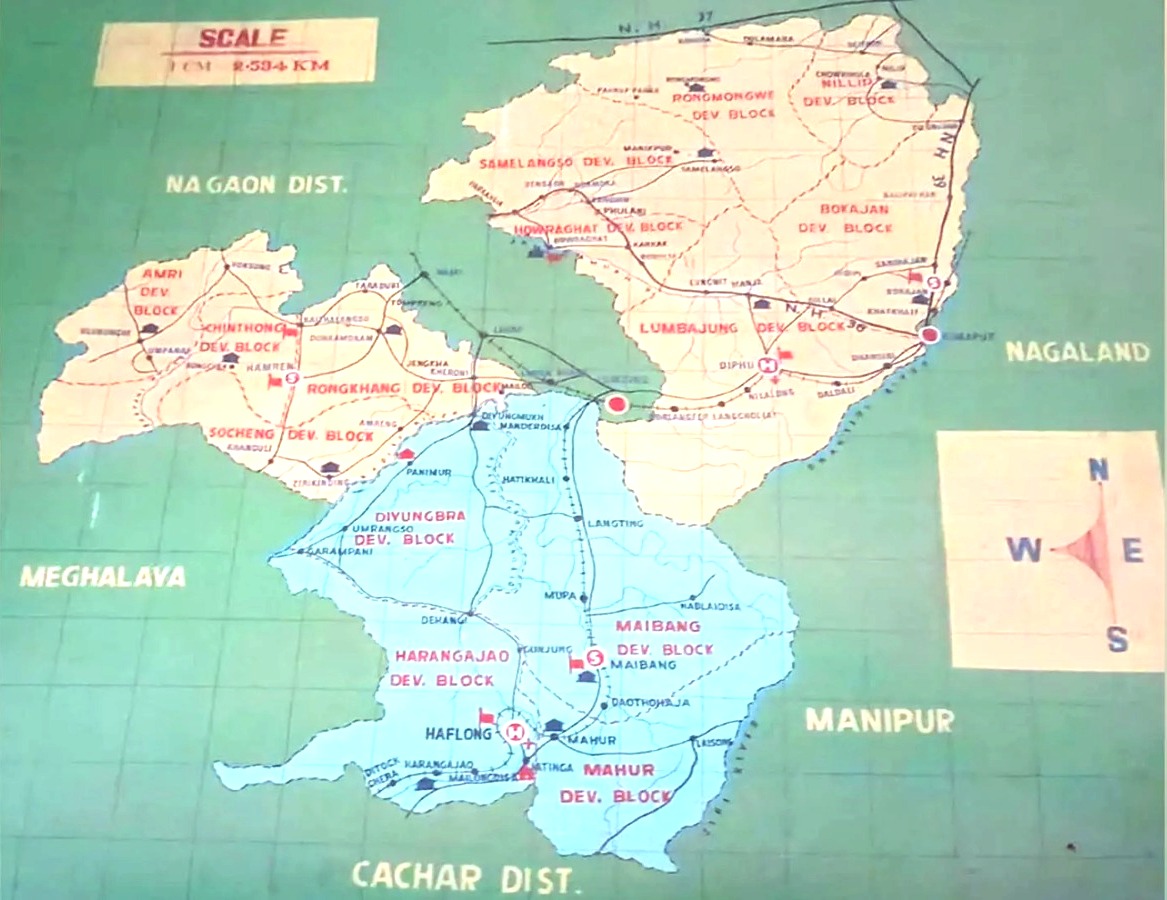
Guwahati; May 2026: The demographic landscape of Karbi Anglong and West Karbi Anglong has undergone a profound transformation since the inaugural post-independence elections in 1952, driven by factors such as migration, administrative reconfigurations, urbanisation and economic development. This has led to a significant reshaping of the ethnic composition in the hill districts. Historically dominated by indigenous tribal populations, including the Karbis, Bodos, Dimasas, Kukis, Hmars and Rengma Nagas, the region now exhibits a markedly heterogeneous demographic profile.
Researchers and local organisations highlight the repercussions of these changes on land ownership patterns, electoral politics, linguistic dynamics and inter-ethnic relations throughout the two autonomous districts. Historical census data indicate that population growth experienced a steep acceleration after the 1950s. Specifically, census compilations reveal that the population of the undivided Karbi Anglong district expanded from approximately 126,000 in 1951 to over 956,000 by 2011. This demographic shift can be attributed to extensive migration flows from the plains of Assam, Bihar, Bengal and adjacent regions, particularly following enhancements in road connectivity, forest resource extraction, railway expansion and agricultural settlement initiatives.
The growth of settlements around urban centres such as Diphu, Bokajan, Howraghat and Dokmoka, coupled with industrial activity, particularly in the Bokajan cement belt, has further attracted non-tribal populations. Scholars note a pronounced demographic transition during the 1970s and 1980s, marked by population growth rates in the hill districts exceeding State averages. Census trend analyses reveal especially rapid increases be-tween 1961 and 1991.
The establishment of the Karbi Anglong Autonomous. Council under the Sixth Schedule was aimed at safe guarding tribal identity and land rights. However, indigenous organisations have consistently raised alarms over perceived encroachments on tribal belts, grazing reserves and protected lands by migrants from external communities. In recent years, demographic concerns have increasingly permeated the political discourse within the hill districts. Protests regarding land rights and settlement patterns escalated in parts of West Karbi Anglong in 2025, culminating in ethnic tensions and internet shutdowns in the region.
Political analysts assert that the evolving population profile is reshaping electoral dynamics. The 2023 delimitation exercise enhanced Scheduled Tribe representation within the autonomous districts and redrew constituency boundaries in West Karbi Anglong. Despite these demo-graphic shifts, tribal communities continue to account for a substantial proportion of the population. Census data from 2011 indicated that Scheduled Tribes comprised over 50 per cent of the district’s residents. Nevertheless, numerous indigenous groups express concern that ongoing migration and land pressure may eventually marginalize them in specific areas.
Experts contend that the challenge confronting the autonomous administration lies in reconciling constitutional safeguards for indigenous populations with the imperatives of economic development, and social co-existence within an increasingly diverse societal framework. As Karbi Anglong and West Karbi Anglong navigate the complexities of the 21st. century, demographic change remains a pivotal factor influencing the region’s political landscape, communal identity, and trajectory of future development.
This year on 13th January, a large-scale eviction drive was launched early Tuesday on Village Grazing Reserve (VGR) and Professional Grazing Reserve (PGR) land at Bakaliaghat in Assam’s Karbi Anglong district, affecting more than 600 families who had been residing in the area for decades. The eviction covered an area comprising around 2,159 houses, 03 mosques, 01 church, a local market and several business establishments.
Officials said the first phase of the operation aims to free around 350 bighas of land, which is expected to be fully cleared during this phase. He also said the drive was being carried out strictly in accordance with directives issued by the state government and the Karbi Anglong Autonomous Council.
“We are implementing the government’s directions. On behalf of the council, we are carrying out the eviction. It is unlikely to be completed today and may continue tomorrow. Officials from the forest, revenue and circle offices are overseeing the process”, the official said.
Reactions among local residents were mixed. While some supported the eviction, citing government requirements, displaced families expressed distress and demanded rehabilitation from the authorities. “It is good that the eviction is taking place. People have lived here for a long time, but the government now needs the land, so it is taking it back”, a local resident said.
Several affected families claimed they had lived in the area for more than four decades and now had nowhere to go. “We have to follow government rules, but there should be proper rehabilitation & relief. Without support, it will be very difficult for us to survive”, a displaced resident said.
Another displaced resident said, “We have nothing left — no land, no house. The government has taken everything from us today. We have lived here for 40 years and have nowhere else to go. We will put up temporary sheds and stay here. The government must provide some arrangement”.
The eviction at Bakaliaghat was a part of the state government’s broader drive to reclaim encroached government land, particularly grazing reserves.
Team Maverick.



PBKS Opt to Bowl Against RCB in Crucial IPL 2026 Clash; Jitesh Sharma Leads Bengaluru in Patidar’s Absence
Dharamsala, May 2026 : Punjab Kings won the toss and elected to bowl first against Royal C…

PBKS Opt to Bowl Against RCB in Crucial IPL 2026 Clash; Jitesh Sharma Leads Bengaluru in Patidar’s Absence
Dharamsala, May 2026 : Punjab Kings won the toss and elected to bowl first …